
By RK Shih / Staff -Images via Pingtung County Govt.
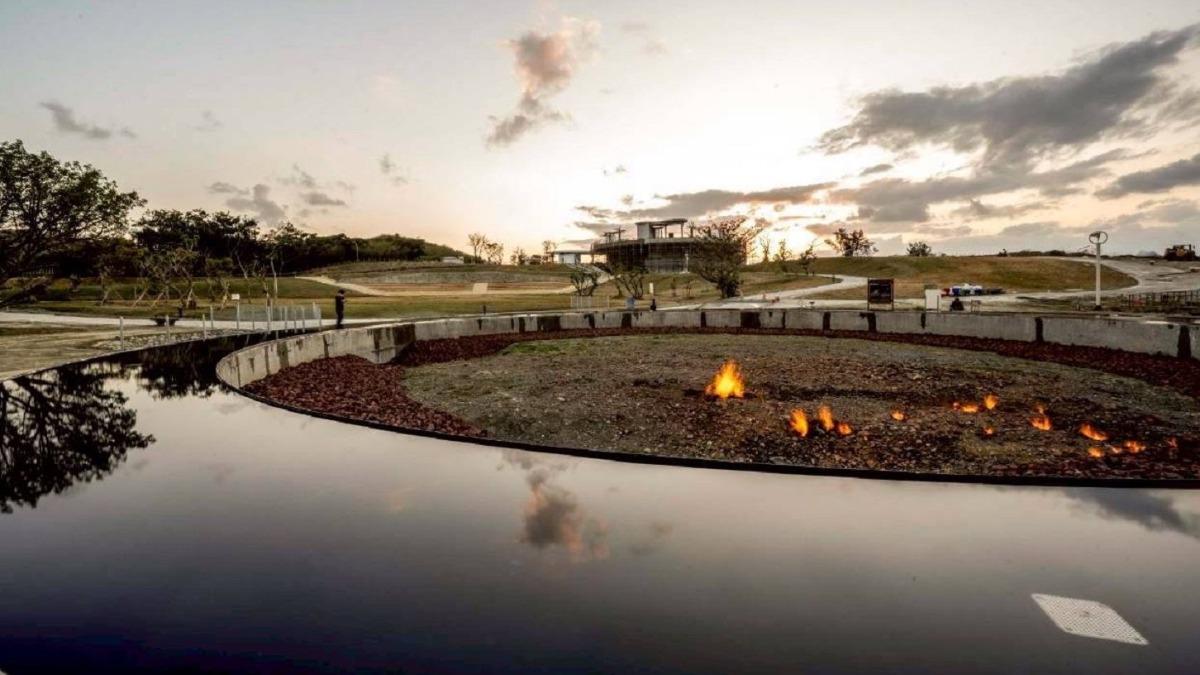
PINGTUNG — Pingtung County is set to officially open the Hengchun Fire Geological Park (恆春出火地質公園) on Sunday, February 1, unveiling a new public space built around one of southern Taiwan’s most unusual natural features: naturally occurring ground fire fueled by underground gas seepage.
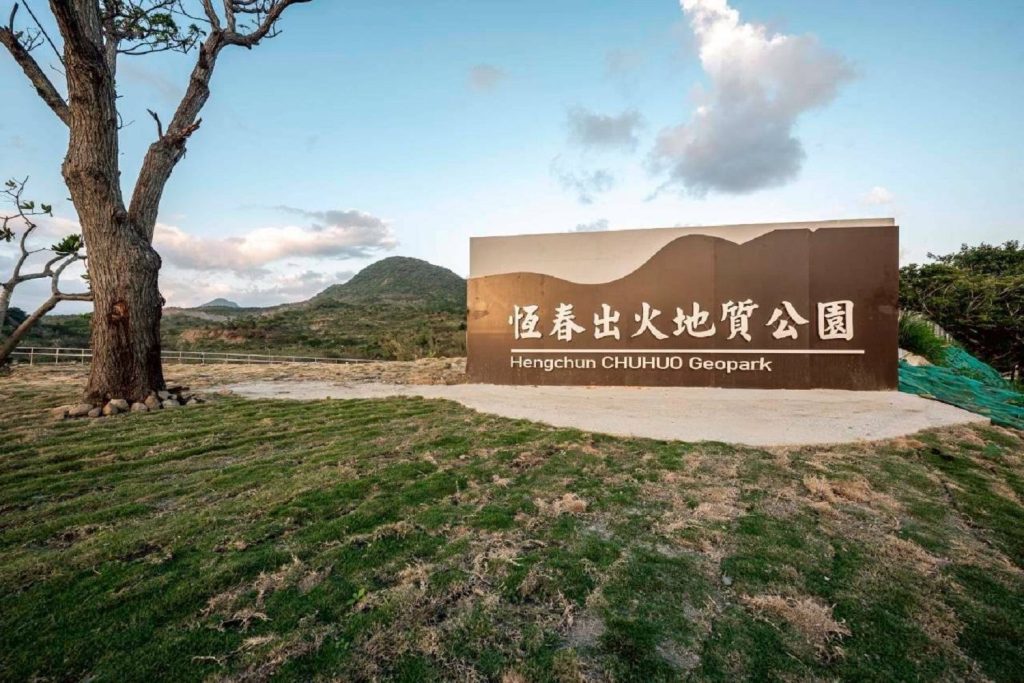
According to the county government, the new park covers approximately 2.9 hectares and is designed to protect and explain the long-observed “fire” phenomenon, in which combustible gas escapes through fissures in the earth and ignites at the surface. The site has been redesigned to combine geological preservation with public access, education, and tourism.
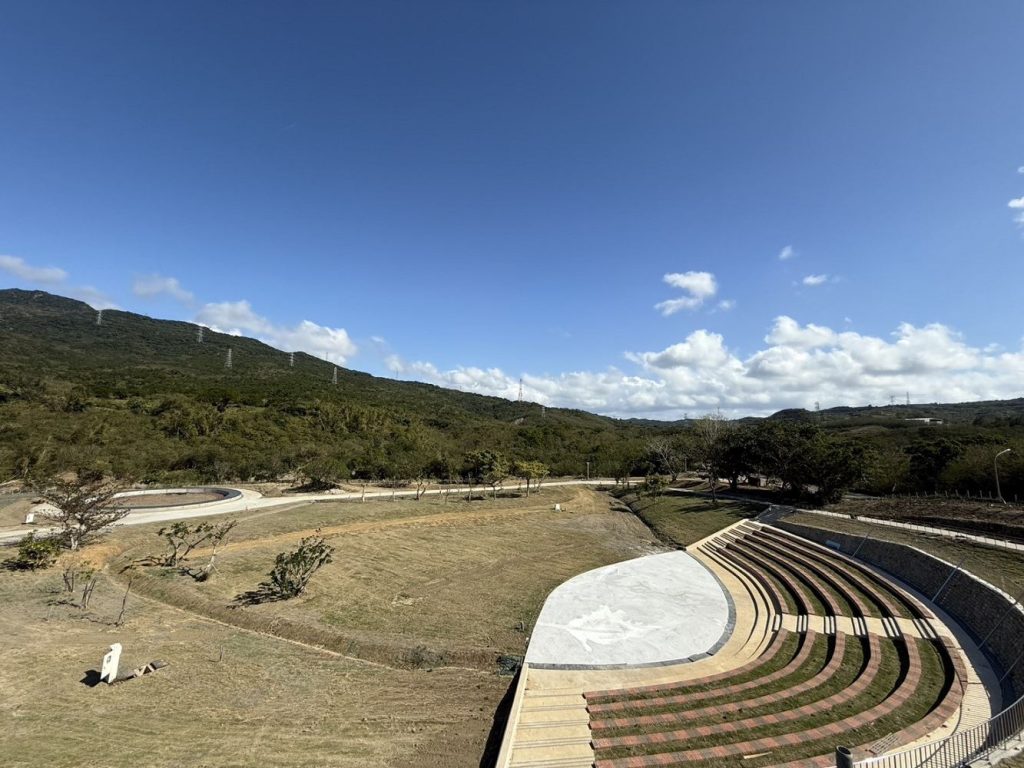
The park’s central feature is a circular water installation intended to visually frame what officials describe as a “fire-and-water” geological landscape. Surrounding areas include newly landscaped green space, an ecological forest zone, and a dedicated stargazing area intended for nighttime visitors.
An opening-day program will feature live performances by the Tjimur Dance Theatre (蒂摩爾古薪舞集), an Indigenous Paiwan troupe, as well as Taiwanese singer-songwriter Sauljaljui (戴曉君). A concert by veteran rock duo Power Station (動力火車) is also scheduled as part of the on-site celebrations.
The opening ceremony will be livestreamed on the county’s “Pingtung Go Fun” (屏東go好玩) Facebook page, though the Power Station performance will not be included in the online broadcast due to copyright restrictions.
To manage crowds, the Pingtung County Transportation and Tourism Development Office said private vehicle parking will not be permitted at the park on the day of the event. Traffic controls will be implemented on nearby roads from 3 p.m. to 10 p.m., and shuttle buses will operate at 15-minute intervals starting at 4 p.m. from the Hengchun Town parking area.
Officials said limited-edition promotional items will be available to visitors who check in at the event on social media, while supplies last.
The Hengchun Fire Geological Park is expected to become a new stop for visitors traveling through southern Pingtung and the Hengchun Peninsula, adding a geology-focused attraction to an area better known for coastal and marine tourism.