
Special for the Kaohsiung Times by Dr. TUNG Chen-Yuan,
Taiwan’s Representative to Singapore.
On January 8, Singapore’s Senior Minister Lee Hsien Loong, speaking at the Regional Outlook Forum, once again drew international attention to the Taiwan Strait. He stated candidly: “if there is trouble Cross-straits, that is trouble not just for Taiwan and China, or the US and China, but for the whole region and for the world. And so we believe that it is important that there is peace in the Taiwan Strait.”
This remark underscores a core reality long obscured by the noise of geopolitics: in a highly digitalized and deeply specialized modern world, peace and stability in the Taiwan Strait are no longer merely security concerns, but a necessary condition for sustaining the global economic lifeline.
A Ten-Trillion-Dollar Price Tag: Quantifying the Economic Weight of Peace in the Taiwan Strait
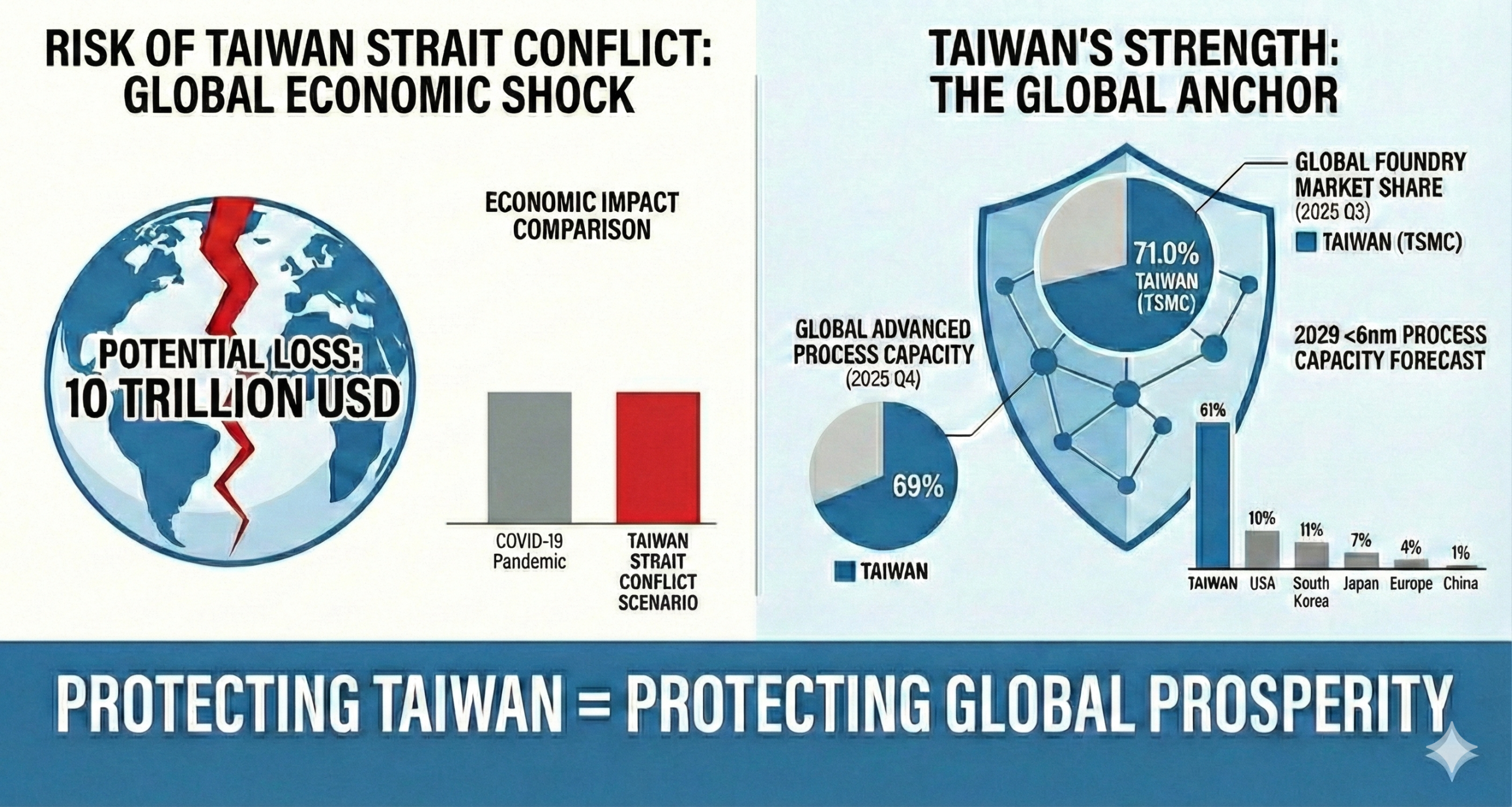
Senior Minister Lee’s concerns are not speculative rhetoric, but the result of sober and pragmatic economic calculation. Any conflict in the Taiwan Strait would trigger ripple effects far exceeding those of any single regional conflict in modern history. According to Bloomberg estimates, a major conflict in the Taiwan Strait could inflict losses of up to US$ 10 trillion on the global economy—roughly 10% of global GDP. The scale of such a shock could surpass the total economic cost of the three years of the COVID-19 pandemic.
Why would the cost be so enormous? Former U.S. Secretary of State Antony Blinken has highlighted two critical figures. First, around 50% of the world’s commercial shipping passes through the Taiwan Strait each day. Second—and even more crucial—approximately 70% of the world’s semiconductors are manufactured in Taiwan. Former U.S. Director of National Intelligence Avril Haines testified before Congress that if TSMC were forced to halt production due to conflict, global economic losses in the initial years could range from US$ 600 billion to US$ 1 trillion annually. UK Foreign Secretary David Cameron has likewise warned that a blockade of the Taiwan Strait would be a “calamitous” scenario for the global economy.
“Made in Taiwan” as a Core Pillar of the AI Era
The link between stability in the Taiwan Strait and the global economy is not an abstract security concept, but a clear and unavoidable causal chain. The global economy is rapidly advancing toward an era defined by AI and comprehensive digitalization. The core enabler of this transformation—advanced computing chips—will, for the foreseeable future, remain highly concentrated in Taiwan.
Entering 2025, as the semiconductor industry moves toward the Angstrom Era, Taiwan has not been replaced; on the contrary, it has further consolidated its position as the global hub of semiconductor manufacturing. Data show that by the third quarter of 2025, TSMC’s share of the global foundry market had climbed to a historic high of 71.0%.
The truly decisive factor lies in the “asymmetric advantage” created by advanced process technologies. According to TrendForce estimates, by the fourth quarter of 2025, TSMC will control roughly 69% of global advanced-node capacity, far exceeding Samsung’s 21% and Intel’s 10%. This means that the AI chips and high-performance processors powering companies such as NVIDIA, Apple, and AMD will, in the overwhelming majority, still need to pass through Taiwan’s cleanrooms before they can come into existence.
Long-term projections by Taiwan’s Industrial Technology Research Institute (ITRI) further reveal the structural nature of this dependence. Even as countries actively promote localized production through subsidies, Taiwan is still expected to command 61% of global sub-6-nanometer advanced manufacturing capacity by 2029. By comparison, the United States would account for about 16%, South Korea 11%, Japan 7%, Europe 4%, and China only around 1%. When more than 60% of the world’s advanced computing power is manufactured in Taiwan, Taiwan’s stability directly determines whether the global technology industry can continue to function.
Safeguarding Taiwan Is Safeguarding Global Prosperity
Senior Minister Lee’s remarks remind the international community of a clear yet often overlooked truth: peace in the Taiwan Strait is a globally shared public good. The enduring competitiveness of Taiwan’s semiconductor industry rests on a complete industrial ecosystem, decades of technological accumulation, and the diligence of its people. As a “Silicon Island,” Taiwan carries the world’s critical expectations as it enters the AI era.
Therefore, preserving peace and stability in the Taiwan Strait has long transcended the logic of geopolitical power politics. It has become a necessary condition for ensuring supply-chain resilience, sustaining technological innovation, and safeguarding economic value amounting to US$ 10 trillion worldwide.
About the Author:
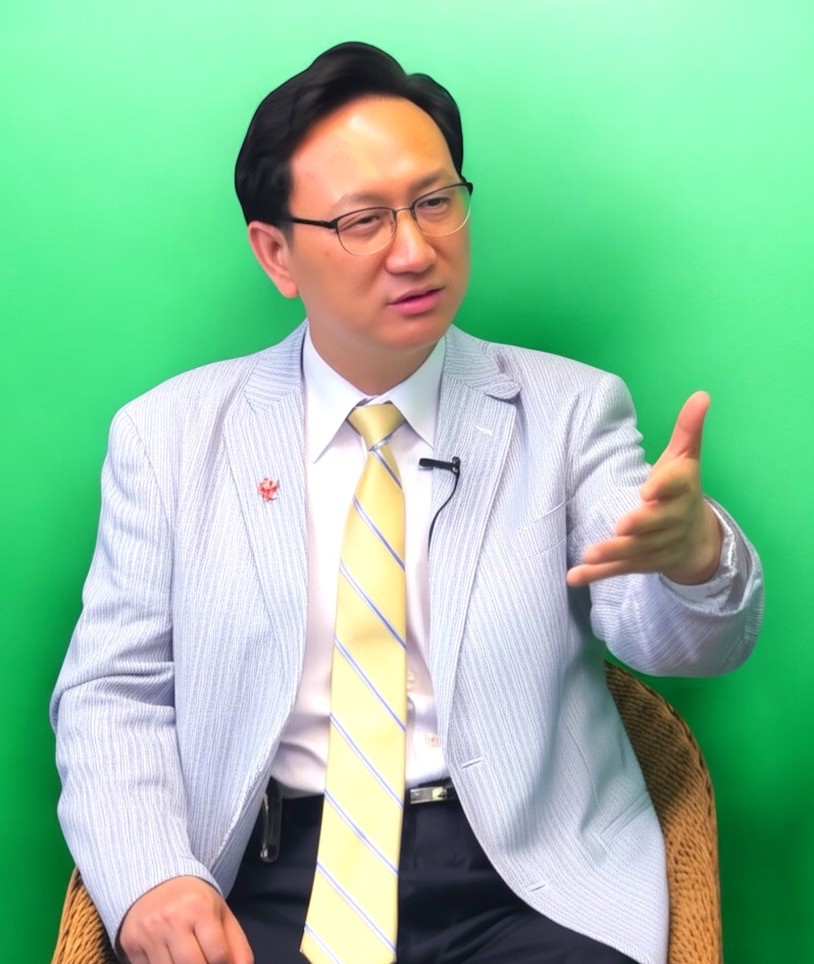
Dr. Tung Chen-Yuan is currently Taiwan’s Representative to Singapore. He was Minister of the Overseas Community Affairs Council of the Republic of China (Taiwan) from June 2020 till January 2023. He was Taiwan’s ambassador to Thailand from July 2017 until May 2020, senior advisor at the National Security Council from October 2016 until July 2017, and Spokesman of the Executive Yuan from May to September 2016. Before taking office, Dr Tung was a distinguished professor at the Graduate Institute of Development Studies, National Chengchi University (Taiwan). He received his Ph.D. degree in international affairs from the School of Advanced International Studies (SAIS), Johns Hopkins University. From September 2006 to May 2008, he was vice chairman of the Mainland Affairs Council, Executive Yuan. His areas of expertise include international political economy, China’s economic development, and prediction markets.