
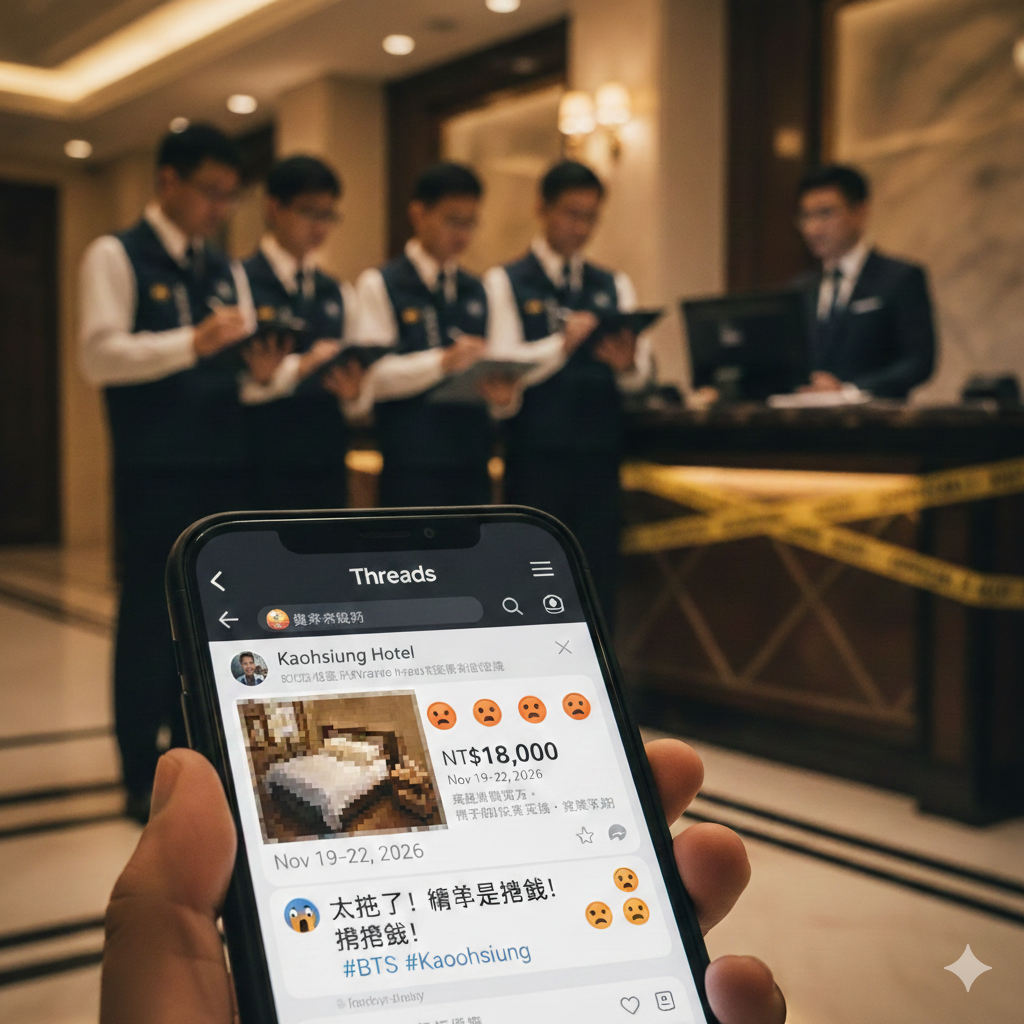
By Eryk Michael Smith/KHT Staff -AI image for illustration purposes only
KAOHSIUNG — Recent social media outrage over hotel “price gouging” during major events has drawn intense public scrutiny, but a deeper look at Taiwan’s lodging pricing rules shows that many complaints reflect a misunderstanding of how the system is legally structured, and what it actually allows. For example, THIS hotel can legally ask for a maximum of NT$9,100. THIS one can charge up to NT$3,500. However, THIS five-star hotel could ask for NT$100,000.
How The Legal Framework Works
Under Taiwanese tourism law, specifically the Development of Tourism Act (發展觀光條例) and related hotel management regulations, all hotels, inns, and licensed homestays are required to register their room prices with the local competent authority (typically the city or county tourism bureau) and cannot charge guests more than the registered price. The operative regulation states that a lodging operator’s actual charged rate must not exceed the registered price on file with the authority. (林昱朋公證人)
Who Sets the Registered Ceiling?
The hotel itself proposes the registered maximum price when submitting its pricing for record. The local authority reviews the submission for formality and compliance, but does not set or “approve” an arbitrary cap based on economic fairness. Authorities may reject filings for procedural issues, but they do not set price levels based on “market fairness.” (join.gov.tw)
This means that the registered price ceiling is essentially self-reported. The government’s role is administrative, not price regulation, and there’s no statutory requirement that the ceiling be deemed “reasonable” in market terms.
Enforcement: What Is and Isn’t a Violation
A hotel can be penalized only if it charges above its registered ceiling. Violations are handled under the Development of Tourism Act; typical consequences include fines in the tens of thousands of NT dollars, as well as potential administrative action for repeat or egregious violations. (林昱朋公證人)
Local authorities conducted spot checks around peak travel periods and at least one recent major event series, finding no evidence that hotels charged above their registered maximums, and therefore no breaches of the Tourism Development Act. (cdns.com.tw)
“In May 2025, regulators in Japan warned several hotel operators that collusion in setting room rates might violate fair trade laws. Similarly, here in Taiwan, there is a fairly well-developed set of laws and practices under the Fair Trade Act, and the Fair Trade Commission generally has a good reputation for its willingness to investigate alleged illegal collusive behavior in various sectors across Taiwan’s economy,” said Ross Feingold, an American lawyer at Taipei-based Titan Attorneys-at-Law. “However, in an era of multiple online platforms offering innumerable hotel options across a range of classes and prices and the transparency that goes along with that, the likelihood is low that illegal collusive behavior is the genesis of current traveler angst over hotel room rates in Taiwan.”
Why Public Reaction Is Strong
Some feel the system creates situations where rate increases that appear extreme to consumers are legally allowable: hotels are free to adopt aggressive dynamic pricing so long as they stay below their own registered ceilings.
Because the system relies on self-reported ceilings, there’s no legal basis for authorities to require lower ceilings or demand “reasonable pricing” unless a specific rate exceeds the registered maximum. Debate continues about whether the system should be reformed so that local governments have actual pricing approval power, rather than just administrative oversight of submissions. (join.gov.tw)
Legal vs. Ethical: The Real Conflict
Legally, hotels are in the clear as long as they stay under their registered ceiling.
Ethically, many consumers feel exploited.
Some claim the law was originally intended to protect consumers during peak shortages. The way it is now routinely used, according to some critics, blurs the original intent of the system. In short, price hikes are usually legal… but are they ethical? Unless people feel things are “fair,” the online outrage will likely continue.
Mayor Chen Chi-mai is term-limited, and in his final months. This issue will therefore become one for the next mayor to deal with. The KHT will closely monitor what candidates from both parties have to say about this matter over the next ten-month campaign season.
Why This Is a Problem for Kaohsiung’s Reputation
Kaohsiung is branding itself as “Asia’s concert capital” — a friendly tourism city, and a perfect hub for regional events. But viral screenshots of super expensive rooms tell a different story. International fans don’t read Taiwan’s tourism laws; they see headlines about “price spikes” and assume exploitation.
Reputation damage matters for repeat tourism, international media coverage, city branding, event competitiveness (for example, vs. Japan/Korea), etc. It’s that sour aftertaste that people remember for a very long time.
Is There a Better System? Almost Definitely.
Hotels must raise prices during big events, as this is basic supply and demand. But there seems to be smarter ways to do this. Here are some ideas for reforming the system:
1. Event-Based Pricing Disclosure
Transparency reduces anger. Require hotels to publicly label: “EVENT RATE,” so guests know why prices are higher.
2. Tiered Event Caps
Instead of unlimited ceilings, hotels list prices like this: Normal max: NT$15,000. Concert cap: NT$22,000. Holiday cap: NT$25,000
This allows for hotels to make needed profit, but it’s less shocking.
3. Voluntary Industry Code
Peer pressure works. The city government could coordinate:
• A “concert-friendly hotel” program
• Publicly listed fair-price partners
• “Badges” for transparent pricing
4. City authorities could also consider negotiating bulk rooms at fixed rates for international fans and promoters, stabilizing public perception even if some hotels surge.
Bottom Line
The vast majority of hotels are not breaking the law. But the system doesn’t do enough to discourage extreme price swings, leading to an erosion in public trust.
Kaohsiung faces a strategic choice: Do nothing and endure a viral backlash every time a major concert happens. Or, modernize the system and build long-term tourism credibility. Kaohsiung wants to be a global events city. Global cities with smart governance manage surge pricing – they don’t simply try to defend it.
Consumer Guide
How to Check a Hotel’s Registered Price Ceiling in Taiwan
If you want to know whether a hotel rate is actually legal, here’s the practical method:
Step 1: Use official government platforms
Search the property on the Ministry of Transportation’s Taiwanstay system or your local Tourism Bureau database. These listings show:
• Registered business license
• Room types
• Declared price range (最低價–最高價)
Step 2: Compare against your booking price
If your booked rate is below the listed maximum, it is legal.
If it is above, that is a violation and can be reported.
Step 3: Document everything
Before checking in:
• Screenshot the booking page
• Save confirmation emails
• Note date, room type, and price
Step 4: Report violations
If overcharged:
• Call the local Tourism Bureau
• File a consumer complaint (1950 hotline)
• Submit screenshots as evidence
Authorities can only act with proof that the ceiling was exceeded.