
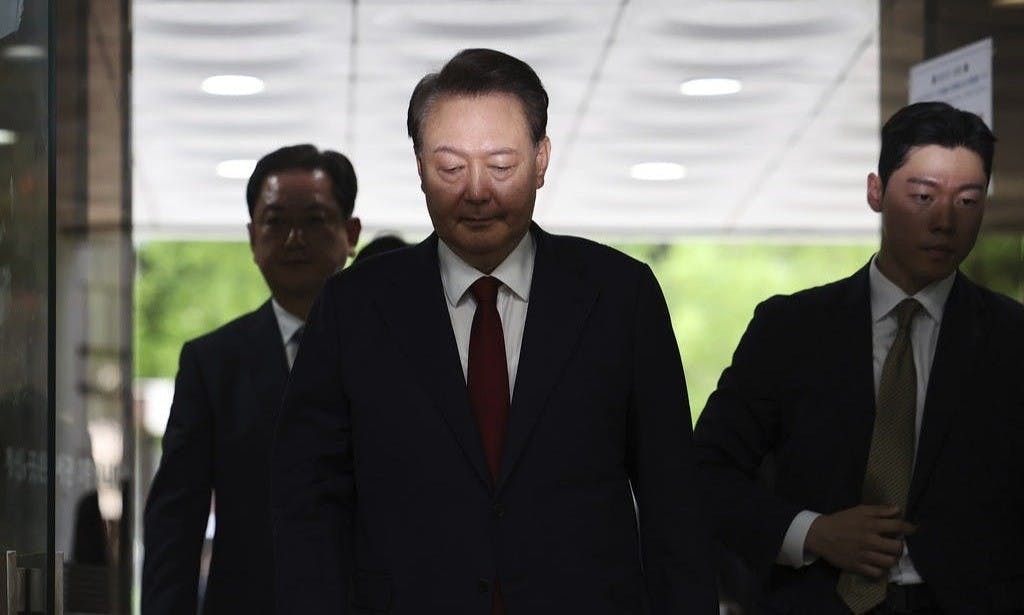
By Eryk Michael Smith/Staff
KAOHSIUNG — News of South Korea’s former president Yoon Suk Yeol (尹錫悅) facing a possible decade behind bars (in just one of the cases against him) may have slipped under the radar for many readers. The development emerged in late December, buried in the holiday news cycle, but it marks a historic moment for one of Asia’s most powerful democracies.
Prosecutors are seeking a 10-year prison sentence for Yoon on charges including abuse of power and obstruction of justice. The case centers on events following his failed attempt to impose martial law. According to investigators, after being impeached, Yoon allegedly locked himself inside the presidential residence to block authorities from serving an arrest warrant — a move prosecutors have described as unprecedented.
This specific case is expected to receive a verdict on January 16, making it the first of several criminal proceedings against Yoon to reach judgment. He denies all wrongdoing.
On January 2, 2026, South Korean courts issued a new arrest warrant for Yoon Suk Yeol, extending his detention as prosecutors continue investigating multiple criminal cases stemming from his failed martial law attempt. According to Channel News Asia, the warrant was approved after judges determined there was a risk Yoon could destroy evidence or interfere with witnesses if released. The court cited ongoing probes into his alleged abuse of power and obstruction of justice as justification for keeping him in custody.
Reports from South Korea said prosecutors indicted Yoon in November on several charges of aiding the enemy. The allegations include that he ordered drone flights over North Korea to bolster his effort to declare military rule. That arrest warrant was set to expire on January 18, but it’s now been extended by a maximum of six months.
But this is only part of a much larger legal storm. Yoon currently faces seven separate criminal cases, including a far more serious insurrection charge. That case carries potential penalties of life imprisonment or even death under South Korean law. Prosecutors allege he bypassed cabinet procedures, falsified documents related to martial law, and ordered evidence destruction. Reuters notes that the maximum penalty for insurrection in South Korea is death, but the country’s last execution was in 1997.
The insurrection trial is still underway and is expected to conclude later this year. Yoon has maintained his innocence and stuck to claims that, as president, he had the power to declare martial law.