

Close Menu
Kaohsiung Times

    New “snack” Formosa Files episode: Keelung to Ishigaki Ferry

    Trying to beat yellow lights tops light rail intersection violations

    Pingtung town marks Dragon Boat Festival by standing 1,000 watermelons

    Facebook X (Twitter) Instagram Threads
    Kaohsiung Times
    Sunday, June 21
    Facebook X (Twitter) Instagram
    • Latest
    • Kaohsiung
    • South
      • Pingtung
      • Tainan
      • Chiayi
    • Crime
    • Business
      • ESG
      • Technology
      • Energy
      • Real Estate
    • Politics
    • Lifestyle
      • Sports
      • Health
      • Entertainment
      • Travel
    • Long-form
      • Editorials
      • Formosa Files
      • Article Series
      • Books
    • Youth
    Kaohsiung Times
    • Latest
    • Kaohsiung
    • South
    • Crime
    • Business
    • Politics
    • Lifestyle
    • Long-form
    • Youth
    Home » From the News Lens: Philippines’ Jeepney: Wartime Relic or National Treasure?
    EXCLUSIVE January 11, 20262 Mins Read

    From the News Lens: Philippines’ Jeepney: Wartime Relic or National Treasure?

    Once born from surplus U.S. military vehicles, the brightly painted jeepney now faces extinction as modernization plans spark nationwide protests and cultural debate.
    Share
    Facebook Twitter LinkedIn Email Copy Link Threads

    By Wu Hsiang-yuan (吳象元)
    Editor, The News Lens

    For more than 70 years, the jeepney (吉普尼) has ruled the streets of the Philippines. Colorful, noisy, and endlessly customized, the iconic vehicles began life as surplus U.S. military jeeps left behind after World War II. Resourceful Filipinos bought and refitted them into passenger vehicles, creating what would become the country’s most popular form of public transport.

    By the 1950s, jeepneys had evolved into a cultural symbol — carrying workers, students, and families for fares as low as eight pesos. At their peak, around 600,000 jeepneys were registered nationwide. Today, that number has fallen to about 250,000.

    Their painted exteriors — often featuring religious figures, celebrities, cartoons, and political slogans — have turned city streets into moving art galleries. Some even sport Mercedes-Benz hood ornaments, a purely decorative touch reflecting brand admiration.
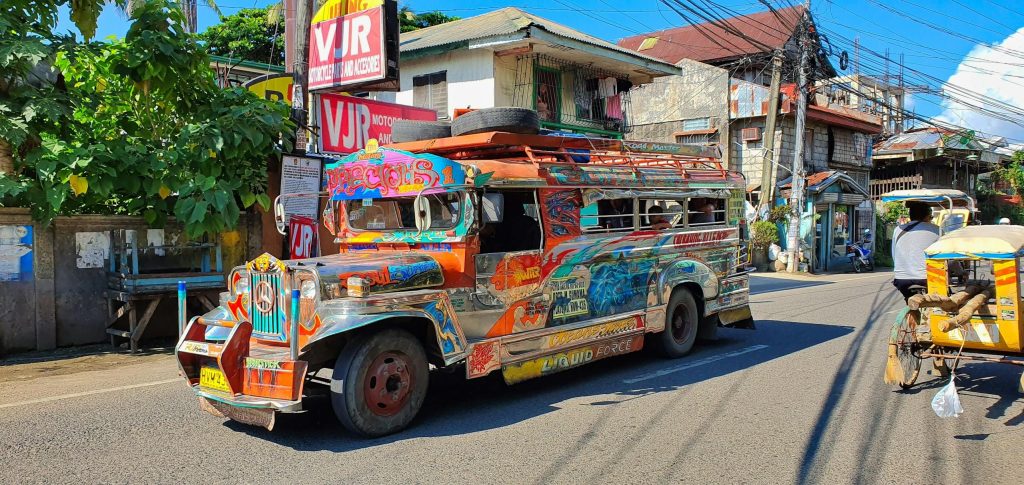
    But the jeepney’s future is uncertain. In 2017, the Philippine government launched the Public Utility Vehicle Modernization Program (PUVMP), aiming to replace aging units with safer, more environmentally friendly vehicles. President Ferdinand Marcos Jr. has continued the policy, citing pollution and safety concerns.
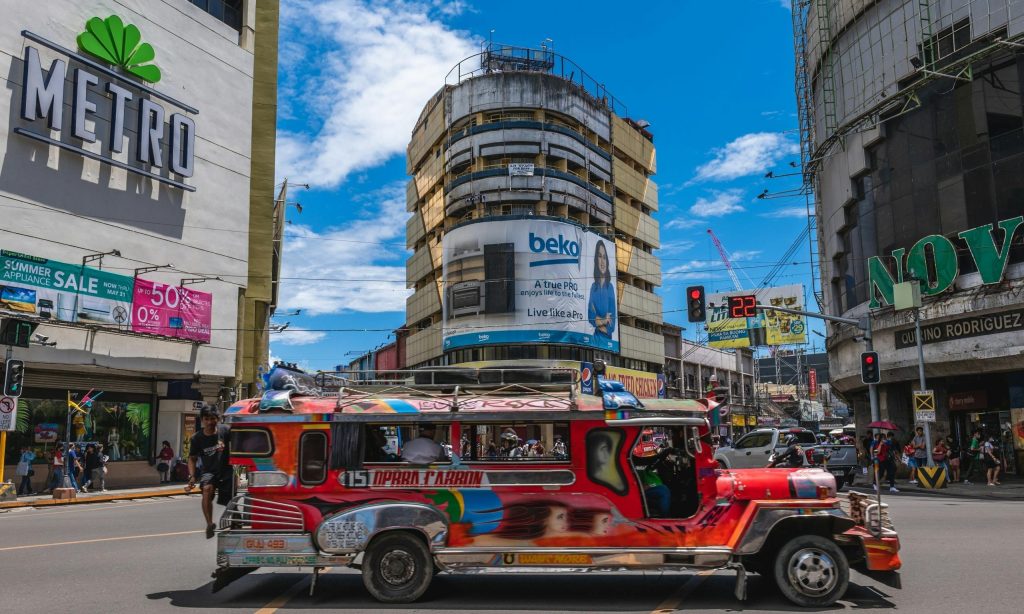
    Modernization comes at a cost. Upgrading a single vehicle can exceed 2.4 million pesos, leaving small operators struggling. Transport group Manibela recently staged a three-day nationwide strike to protest licensing delays and heavy fines, while opposing mass phase-outs.

    Officials argue modernization will create jobs. Drivers counter that livelihoods are at risk. With strikes, protests, and cultural backlash continuing, the jeepney stands at a crossroads — caught between heritage preservation and urban reform.

    Some suggest compromise: preserving traditional jeepneys on designated routes, similar to San Francisco’s historic streetcars.

    For now, the jeepney remains what it has always been — noisy, beloved, and unmistakably Filipino.

    Below: The jeepney has also inspired artists and become a national symbol of the Philippines. In 2009, Filipino singer-songwriter Yeng Constantino released the song “Jeepney Love Story,” while Filipino-American stand-up comedian Jo Koy featured the iconic vehicle in promotional images for his Netflix special “Jo Koy: In His Elements,” which focuses on Filipino culture.

    Source: The News Lens (關鍵評論網)
    This is an authorized translation. Kaohsiung Times appreciates The News Lens for allowing us to translate and publish selected works. Visit The News Lens website for original articles.

    Philippines
    Share. Facebook Twitter Threads LinkedIn Email Copy Link

    Related Posts

    Second Space opens larger second Kaohsiung branch on Qixian First Road

    May 24, 2026

    7-Eleven leads Kaohsiung convenience store market with 752 outlets

    May 15, 2026

    2025 proposal to move Kaohsiung City Hall highlights unresolved east-west development debate

    April 17, 2026
    Add A Comment

    Comments are closed.

    Second Space opens larger second Kaohsiung branch on Qixian First Road

    May 24, 2026

    7-Eleven leads Kaohsiung convenience store market with 752 outlets

    May 15, 2026

    2025 proposal to move Kaohsiung City Hall highlights unresolved east-west development debate

    April 17, 2026

    Indonesia’s Signal to China and Taiwan

    April 15, 2026

    AI threatens Philippines call center model as automation accelerates

    April 7, 2026

    New “snack” Formosa Files episode: Keelung to Ishigaki Ferry

    Trying to beat yellow lights tops light rail intersection violations

    Pingtung town marks Dragon Boat Festival by standing 1,000 watermelons

    Car gets stuck on light rail tracks in 7th known incident of year

    Dragon Boat holiday business disrupted after suspected DUI crash in Neimen

    Transport official backs proposed rail station near TSMC site

    Facebook X (Twitter) Pinterest Vimeo WhatsApp TikTok Instagram

    News

    • Local
    • Business
    • Sports
    • Politics
    • Opinions
    • Lifestyle
    • Health

    News

    • Entertainment
    • Travel
    • Formosa FIles
    • Books
    • Technology
    • Youth
    • Latest

    Company

    • Information
    • Advertising
    • Contact Info
    • Privacy Policy & GDPR
    © 2026 Kaohsiung Times. Developed by Second Space.
    • Privacy Policy
    • Terms
    • Accessibility

    Type above and press Enter to search. Press Esc to cancel.