
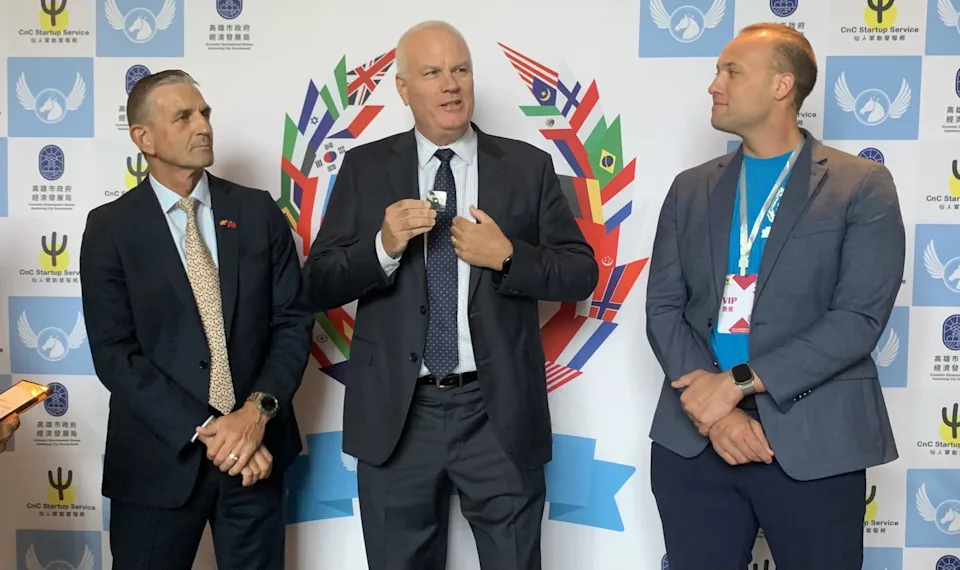
By Eryk Michael Smith/KHT Staff. Image shows Marc T. Pierce, Brian Harrison, and Justin Jackson at the Kaohsiung 2026 Startup World Cup.
KAOHSIUNG — Taiwanese startups hoping to compete overseas should spend less time leading with their technology and more time identifying customers, markets, and problems worth solving, international advisers said at the Startup World Cup Southern Taiwan final in Kaohsiung.
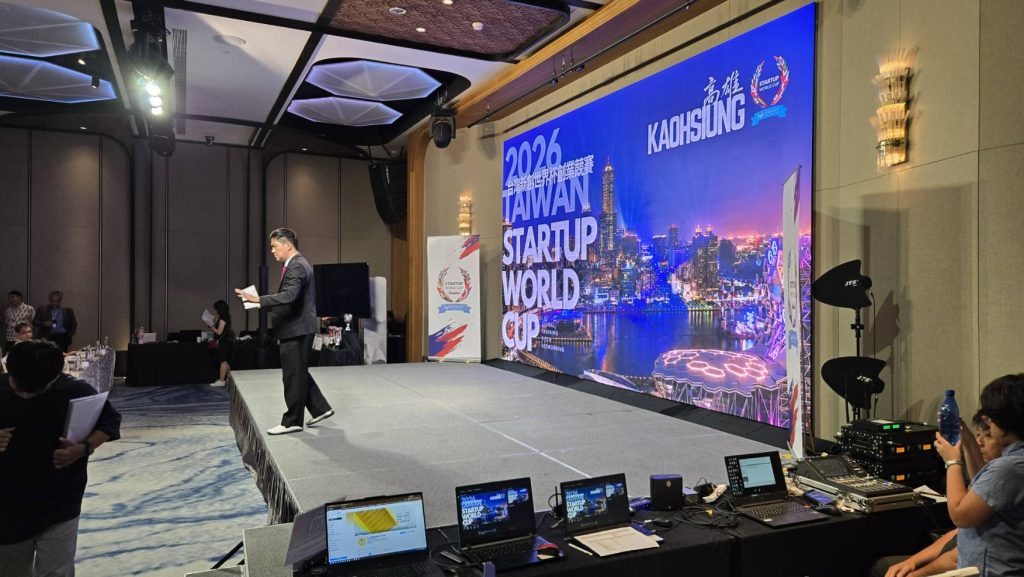
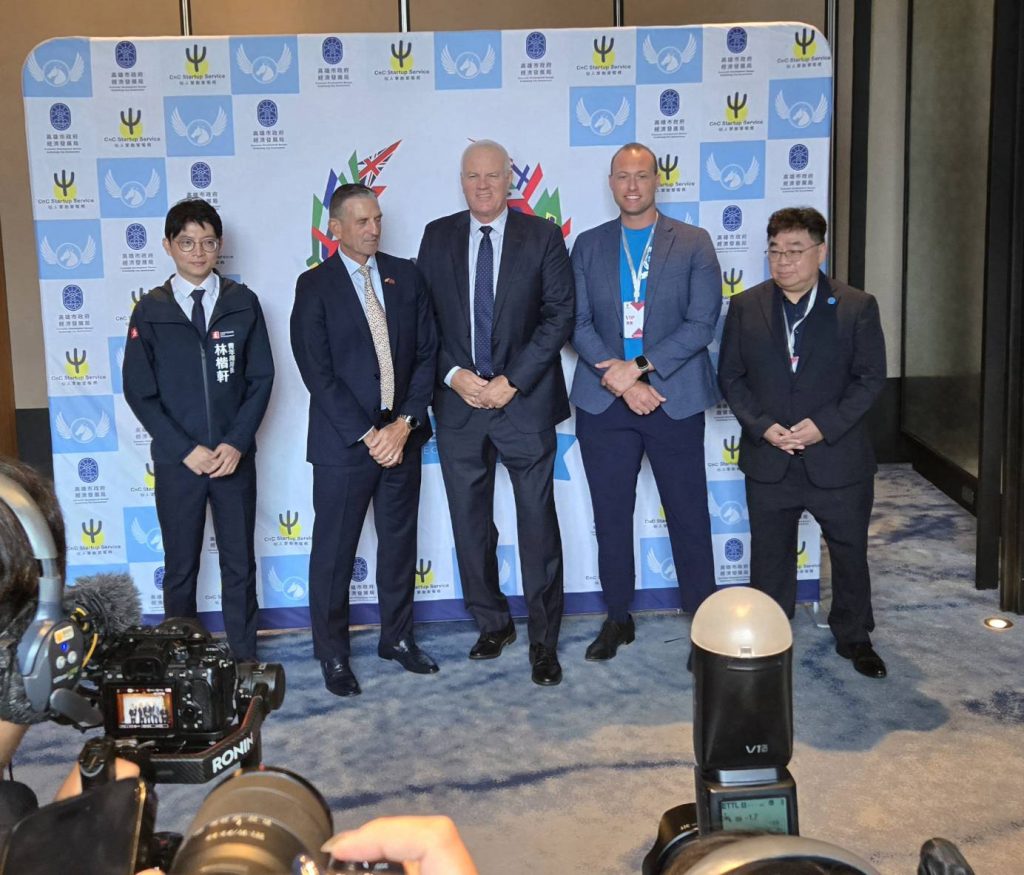
Five business and academic figures took part in a panel titled “What Makes a Global Champion?” at the InterContinental Kaohsiung on July 24.
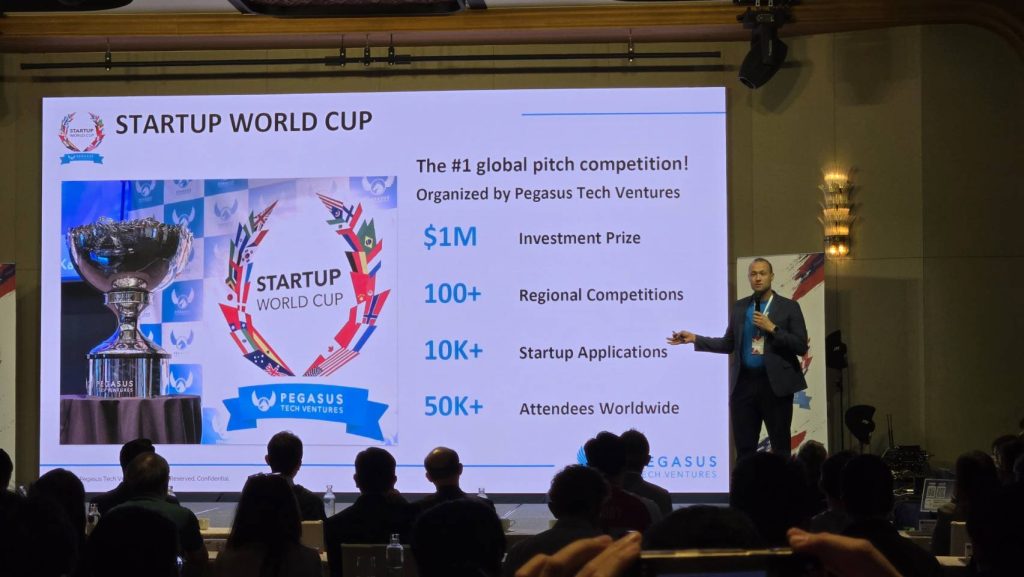
Although the discussion covered investment, education, regulation, and artificial intelligence, the panelists repeatedly returned to the same point: strong technology does not automatically create a viable international business.
“Know who your customer is, know what problem your customer has and how you’re going to solve it,” said Brian Harrison, founder of Rolling Creek Associates and former president of TSMC Arizona.
Those principles apply in almost any country, Harrison said. The difficulty begins when companies assume that practices developed in their domestic market will work equally well elsewhere.
“What works in your home country is likely not to work, or not to work as effectively, in the new country.”
Brian Harrison
Find someone who understands the market
Companies entering another country should find trusted local partners as early as possible, Harrison said. Those partners can help founders adapt their products, business practices, and sales strategies to local conditions.
Marc T. Pierce, a principal at Lee & Associates Arizona, also emphasized market research and cooperation with people who already understand the business environment.
“Don’t isolate yourself,” Pierce said. “Collaborate and get involved in the community.”
Founders should surround themselves with experienced local advisers, employees, and strategic partners, he said. The right source of capital was also important, but investors and partners should share the company’s longer-term vision.
David Huang, chief financial officer of ARK Corporation, said Taiwanese founders often concentrate on explaining their technical knowledge before establishing the commercial problem they are trying to solve.
Instead, startups should determine the size of the potential market and work backward from the problem to the solution, he said.
“Don’t think Taiwan. Think global,” Huang said.
A company without a clear solution will have difficulty attracting serious investment, regardless of the sophistication of its technology, he added.
Customers do not behave the same everywhere
Rey Chu, a principal and co-founder of Arizona-based engineering firm PADT, said founders must understand how purchasing decisions differ among countries and regions.
A product aimed at American customers, for example, requires more than an English-language pitch or overseas distributor.
“Without understanding how Americans buy, it becomes very difficult to break into their market,” Chu said.
The first step will also differ according to the product. A company selling luxury furniture will not follow the same path as a pharmaceutical, energy, or aerospace business, he said.
Founders must identify their target customers, determine how to position the product, and then examine demand outside Taiwan before choosing an overseas strategy.
Regulation can be an even greater barrier for startups working in biotechnology, energy, defense, aerospace, automotive technology, and other closely regulated industries.
“Without understanding that, you can’t even get into those markets,” Chu said.
Taiwanese founders urged to abandon caution
Che-Hsin Lin (林哲信), a distinguished professor and associate dean at National Sun Yat-sen University, said Taiwan’s younger generation has a lot in its favor — greater international awareness, stronger foreign-language abilities, and better access to technology than previous generations.
However, he argued that traditional education often encouraged students to remain quiet and follow instructions rather than take risks.
“Traditional education teaches you how to be calm, to be quiet, to listen to your parents and teachers.”
Professor Che-Hsin Lin
He said Taiwanese young people clearly can “become lions,” but must overcome having been taught to “behave like sheep”.
“Dream big; be a real lion,” he told the startup teams.
The metaphor was more colorful than most of the business advice, but it reflected a broader theme running through the panel: entering an international market requires founders to question familiar assumptions and seek advice beyond their existing professional circles.