

By Wu Hsiang-yuan (吳象元)
Editor, The News Lens

For more than 70 years, the jeepney (吉普尼) has ruled the streets of the Philippines. Colorful, noisy, and endlessly customized, the iconic vehicles began life as surplus U.S. military jeeps left behind after World War II. Resourceful Filipinos bought and refitted them into passenger vehicles, creating what would become the country’s most popular form of public transport.

By the 1950s, jeepneys had evolved into a cultural symbol — carrying workers, students, and families for fares as low as eight pesos. At their peak, around 600,000 jeepneys were registered nationwide. Today, that number has fallen to about 250,000.
Their painted exteriors — often featuring religious figures, celebrities, cartoons, and political slogans — have turned city streets into moving art galleries. Some even sport Mercedes-Benz hood ornaments, a purely decorative touch reflecting brand admiration.
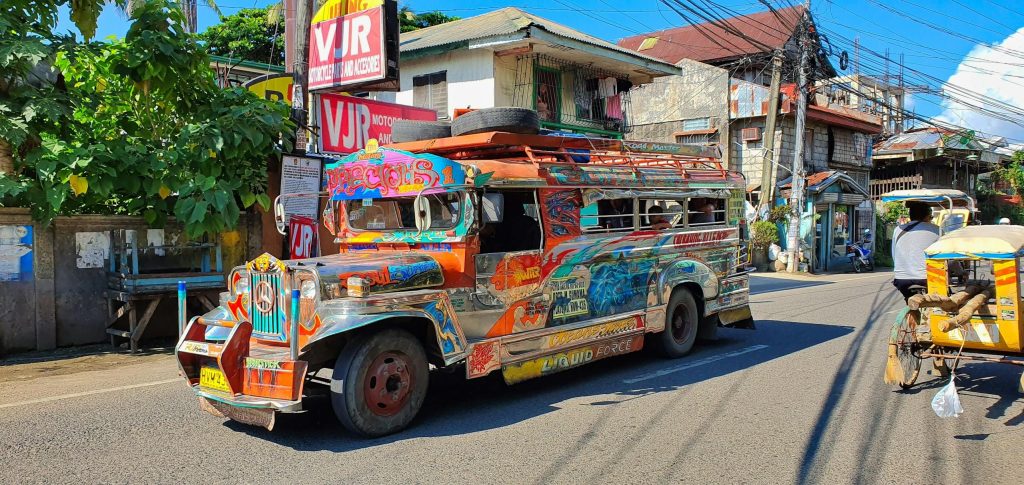
But the jeepney’s future is uncertain. In 2017, the Philippine government launched the Public Utility Vehicle Modernization Program (PUVMP), aiming to replace aging units with safer, more environmentally friendly vehicles. President Ferdinand Marcos Jr. has continued the policy, citing pollution and safety concerns.
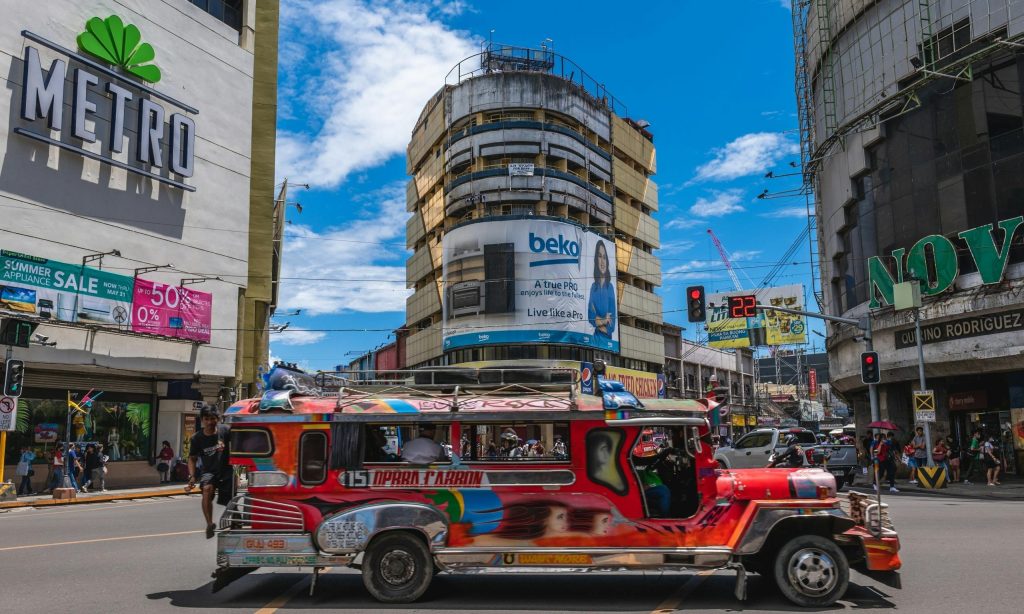
Modernization comes at a cost. Upgrading a single vehicle can exceed 2.4 million pesos, leaving small operators struggling. Transport group Manibela recently staged a three-day nationwide strike to protest licensing delays and heavy fines, while opposing mass phase-outs.
Officials argue modernization will create jobs. Drivers counter that livelihoods are at risk. With strikes, protests, and cultural backlash continuing, the jeepney stands at a crossroads — caught between heritage preservation and urban reform.
Some suggest compromise: preserving traditional jeepneys on designated routes, similar to San Francisco’s historic streetcars.
For now, the jeepney remains what it has always been — noisy, beloved, and unmistakably Filipino.
Below: The jeepney has also inspired artists and become a national symbol of the Philippines. In 2009, Filipino singer-songwriter Yeng Constantino released the song “Jeepney Love Story,” while Filipino-American stand-up comedian Jo Koy featured the iconic vehicle in promotional images for his Netflix special “Jo Koy: In His Elements,” which focuses on Filipino culture.
Source: The News Lens (關鍵評論網)
This is an authorized translation. Kaohsiung Times appreciates The News Lens for allowing us to translate and publish selected works. Visit The News Lens website for original articles.