
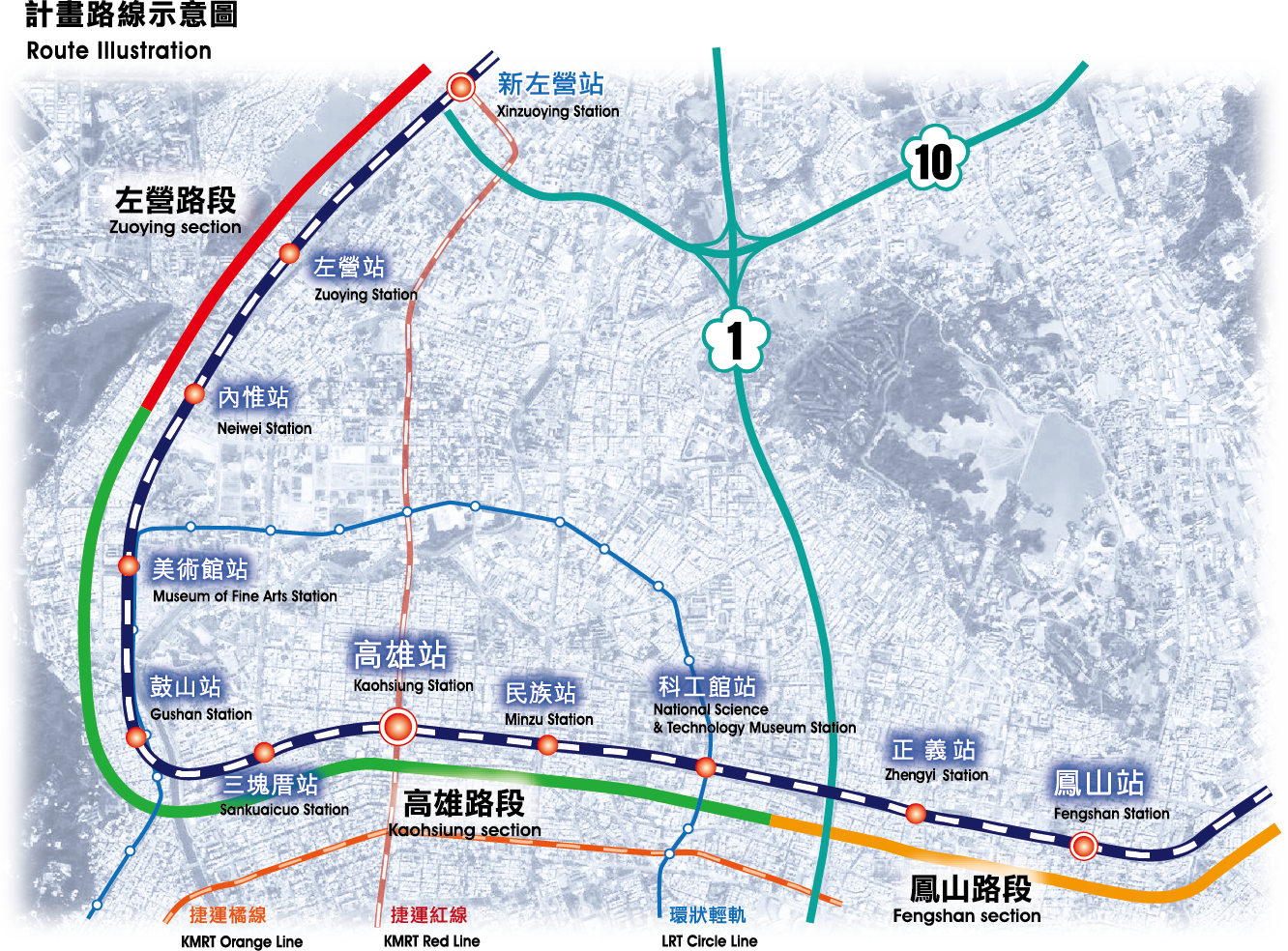
The Kaohsiung Urban Railway Underground Project, running from the new Zuoying Station to Dazhi Overpass at Fengshan zone, covers a length of approximately 15.37 kilometers, it began operations on October 14, 2018.
By RK Shih/Staff
Kaohsiung’s new green corridor, built after the city’s railway was moved underground, has become a popular spot for walking and exercise. But nearby narrow streets — including Railway Street (鐵道街), Railway 1st Street (鐵道一街), and Railway 2nd Street (鐵道二街) — only about 10 meters wide, have turned into accident hotspots due to heavy scooter traffic and a lack of traffic lights.
According to the Transportation Bureau (交通局), 73 traffic accidents have been reported so far this year, prompting growing frustration among residents who say speeding scooters make the streets dangerous, especially during rush hours. The bureau said a plan to install traffic lights at the intersection of Railway 1st Street (鐵道一街) and Lane 31, Kewu Road (克武路31巷) was reviewed in April. A neighborhood petition is now underway, and lights will be installed once local consent is secured.
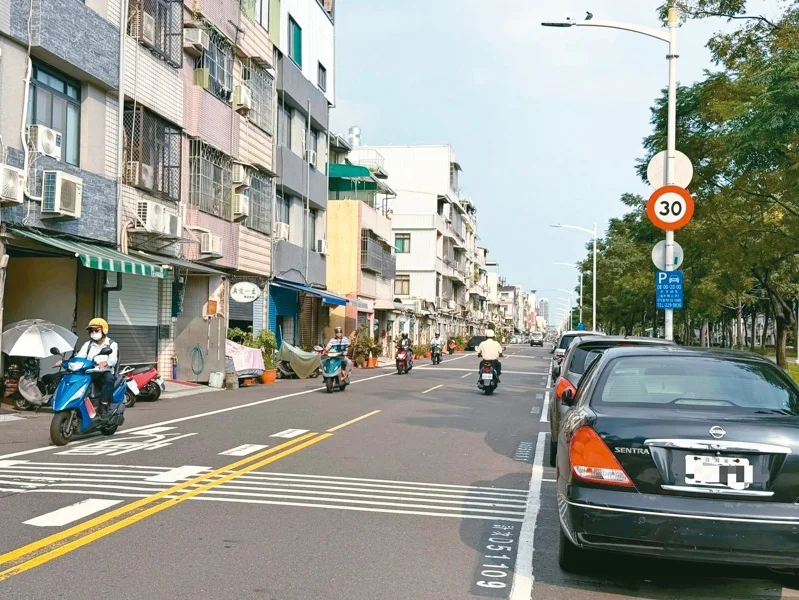 For other intersections not slated for signals, the city will add grid markings, visual speed-reduction lines, limit signs, and green pedestrian crossings, along with stricter police enforcement to improve safety. City councilor Huang Hsiang-shu (黃香菽) said that after the railway was relocated underground, Railway 1st and 2nd streets became alternate routes along Provincial Highway 1, connecting Sanmin (三民) and Fengshan (鳳山) districts. With few signals, many scooters pass through at high speed, often ignoring safety distances and endangering elderly residents in the area.
Police data shows 44 injury accidents and 29 property-damage-only collisions this year across the three streets. Speed limits are posted between 30 and 50 km/h, but reporters observed frequent violations, especially at unsignaled intersections along Jiuru 1st Road (九如一路) and Youguang Road (有光路). Residents say crossing the street to reach the greenway has become nerve-wracking. “Even just walking across the road feels dangerous,” one elderly resident said.