
By RK Shih / Staff. Image via CNA.
KAOHSIUNG — Recent visits to the United States by Taichung Mayor Lu Shiow-yen (盧秀燕) and Kaohsiung Mayor Chen Chi-mai (陳其邁) are drawing increasing attention as both figures expand their international visibility, fueling speculation about future roles on Taiwan’s national political stage.
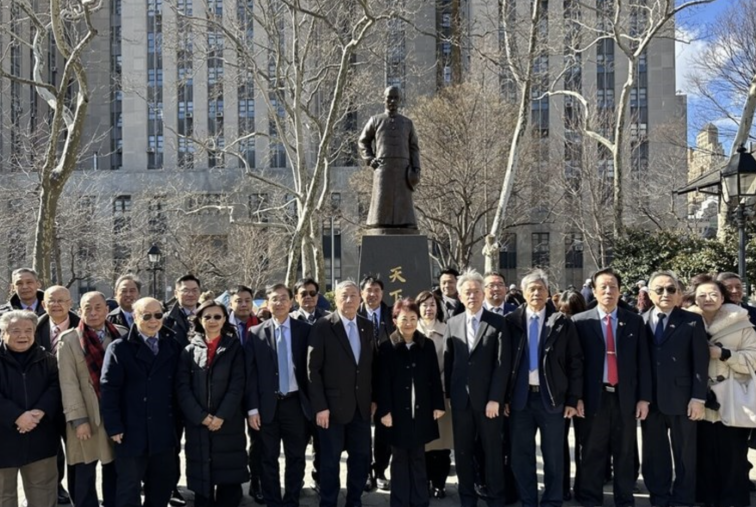
Lu arrived in New York over the weekend for her first U.S. visit as mayor, with stops planned in Boston, New York, and Washington, D.C. Her itinerary included meetings with overseas Taiwanese community leaders and a symbolic visit to a statue of Sun Yat-sen (孫中山), a gesture often associated with Republic of China identity and diaspora engagement.
The East Coast tour has been widely interpreted as positioning ahead of a potential 2028 presidential bid, with analysts pointing to both the locations and the political networks involved.
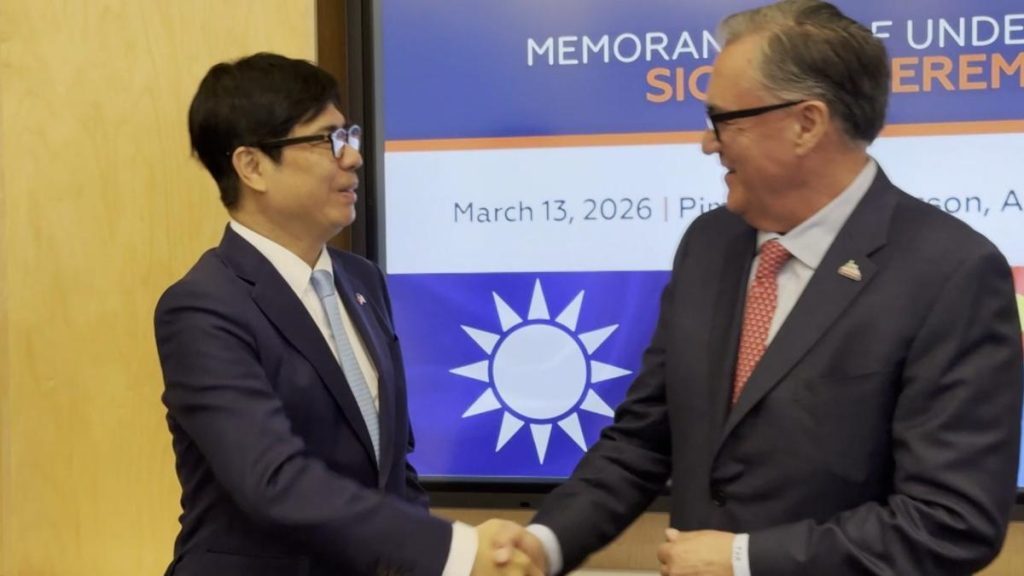
At the same time, Kaohsiung Mayor Chen Chi-mai (陳其邁) has been conducting his own U.S. outreach, focused on economic and industrial cooperation. During a visit to Arizona, he signed a memorandum of understanding aimed at strengthening semiconductor collaboration and talent exchanges, while also engaging with influential people in the technology sector.
The Kaohsiung delegation included the Kumamoto Prefecture vice governor, reflecting ongoing efforts to deepen trilateral ties among Taiwan, the United States, and Japan in the semiconductor supply chain.
While the two mayors are projecting different public narratives, one political and one industrial, the broader trajectory appears similar.
Both are increasing their international exposure. Both are building networks beyond Taiwan. And both are operating in spaces that historically serve as stepping stones to national leadership.
Chen has not publicly signaled presidential ambitions, but his growing role in cross-border industrial coordination and his visibility in U.S. policy and business circles have prompted quiet discussion among observers about his longer-term trajectory.
Lu’s positioning is more overt, but the underlying dynamic is shared. Taiwan’s next generation of national leaders may already be testing the waters abroad.