
By TUNG Chen-Yuan, PhD, Taiwan’s Representative to Singapore.
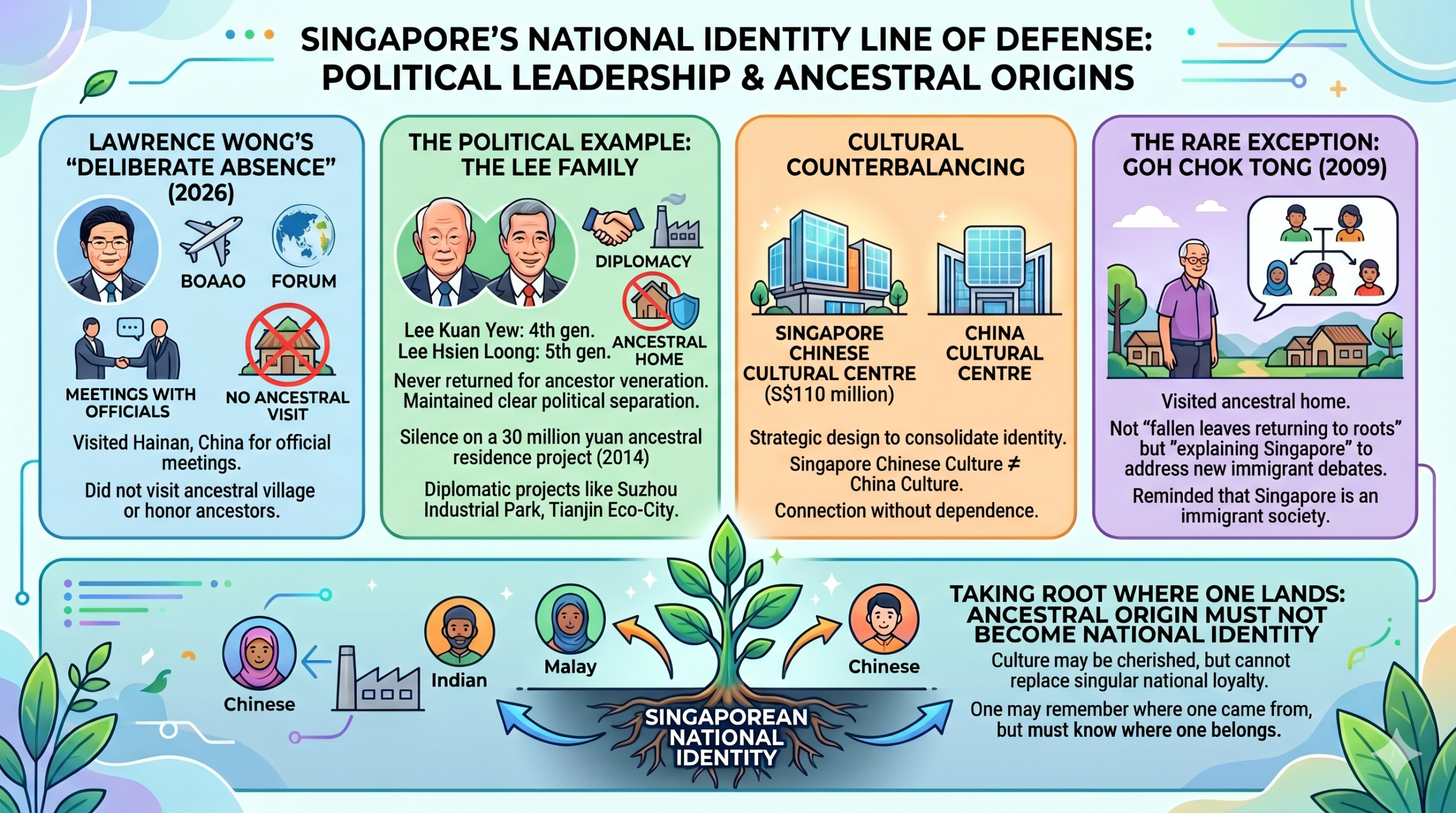
In March 2026, Singapore Prime Minister Lawrence Wong traveled to Hainan, China, to attend the Boao Forum for Asia, where he delivered a keynote speech and met with the Hainan provincial party secretary. Hainan is his ancestral homeland. Yet the trip focused entirely on official meetings and economic issues. He did not visit his ancestral village in Wenchang, nor did he arrange any form of ancestor-veneration activity.
This “deliberate absence” was no accident. Rather, it reflects a consistent policy choice by Singapore. For a country with an ethnic Chinese majority but a deeply diverse society, Singapore has always drawn a strict line between personal ties of blood and culture, and national political loyalty and policy orientation. Political leaders’ distance from their ancestral hometowns is an important symbol: internally, it strengthens national cohesion; externally, it demonstrates independence.
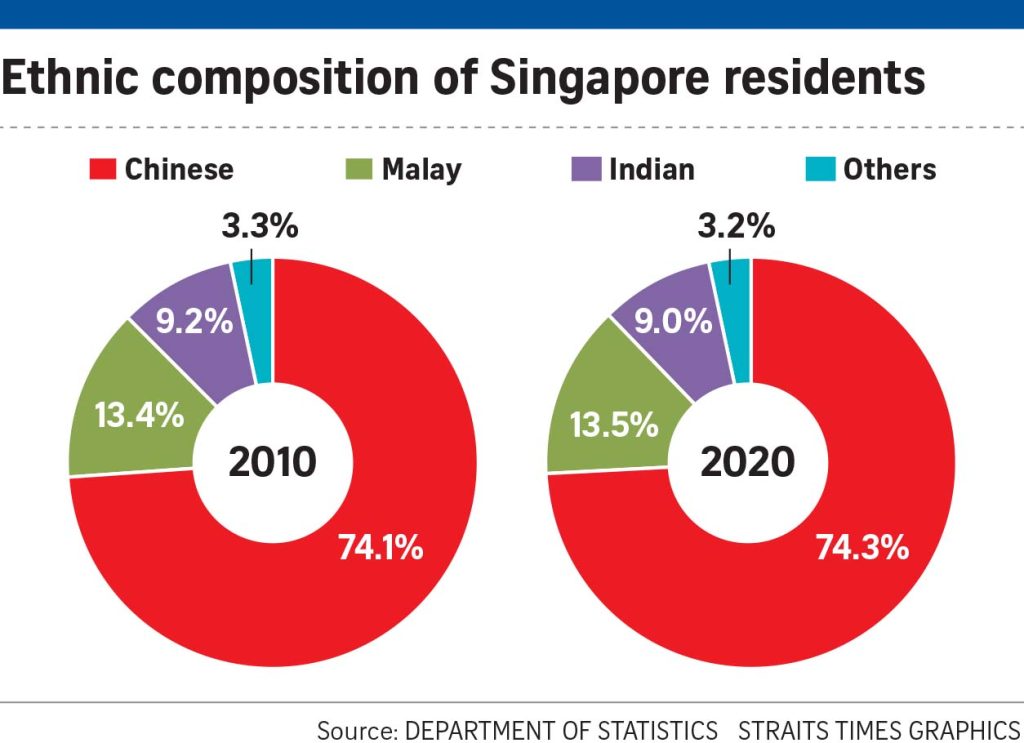
Singapore’s Logic of Survival: From “Fallen Leaves Returning to Their Roots” to “Taking Root Where One Lands”
Since independence in 1965, Singapore, as a multiracial country formed by an immigrant society, has invested enormous political capital in building national identity and racial harmony. Within Southeast Asia’s complex geopolitical environment, Singapore has gradually established a core survival logic: forging a “Singaporean” identity that transcends bloodline, ethnicity, and attachment to ancestral homelands.
To avoid being seen by great powers or neighboring countries as a Chinese appendage, Singapore’s leaders actively guided the Chinese community away from the earlier emotional attachment of “fallen leaves returning to their roots” and toward political loyalty to Singapore and an identity of “taking root where one lands.” At the 2022 National Day Rally, then Prime Minister Lee Hsien Loong stated: “Singapore’s Chinese are no longer fallen leaves returning to their roots; they have taken root where they landed.” This was not merely a cultural shift, but a reaffirmation of political positioning: the roots of Singaporeans must ultimately grow in Singapore.
If Singapore’s top political leaders were to frequently return to China to honor their ancestors, it would inevitably send the wrong signal, suggesting that emotional attachment to the ancestral homeland remains intact, or even allowing outsiders to interpret such acts as signs of latent political inclination or policy preference. This could not only raise concerns among Singapore’s Malay and Indian communities, but also erode the foundation of multiracial trust that has been accumulated over decades.
The Lee Family’s Political Example: The Prime Minister Represents the Nation, Not a Clan
On the issue of ancestral hometowns, what the founding Prime Minister Lee Kuan Yew and former Prime Minister Lee Hsien Loong established was not merely a matter of personal choice but a form of institutionalized political example. Lee Kuan Yew was a fourth-generation descendant of immigrants from Dabu County in Meizhou, Guangdong; Lee Hsien Loong is a fifth-generation ethnic Chinese Singaporean.
Lee Kuan Yew traveled abroad frequently throughout his life, and China was one of his important diplomatic interlocutors. Yet he never returned to his ancestral hometown for a visit or to honor his ancestors. This was not due to alienation from his bloodline or culture, but rather to a high sensitivity toward political symbolism. Any symbolic “return home” could have been absorbed into a larger narrative of the Chinese nation, thereby blurring Singapore’s position as a sovereign state.
In 2014, a local Chinese government spent 30 million yuan to build a “Lee Kuan Yew Ancestral Residence Scenic Area.” The Singapore government chose silence and gave it no recognition. That silence itself was a clear and restrained political signal.
Lee Hsien Loong continued this principle. During his tenure, he visited China many times and built stable mutual trust with China’s top leadership, but his itineraries remained within the framework of intergovernmental cooperation, such as the Suzhou Industrial Park and Tianjin Eco-City projects. He never returned to his ancestral hometown for a visit or to honor his ancestors. This approach conveyed a clear message: the Singapore prime minister represents the nation as a whole, not any bloodline or clan community.
Cultural Counterbalancing: Connection Without Dependence
Beyond restraint in the personal conduct of political leaders, Singapore has also shown a high degree of strategic design in its cultural policy. As China’s political and economic power has risen, its cultural outreach to and influence operations among ethnic Chinese overseas have become increasingly active. Singaporean society clearly understands that once bloodline and cultural identity are transformed into political loyalty, national decision-making autonomy may be affected.
Between 2017 and 2018, after China established a large China Cultural Centre in Singapore, Singapore promptly invested around S$ 110 million to establish the Singapore Chinese Cultural Centre in the heart of the financial district. Its strategic meaning was unmistakable: to consolidate identity internally and declare externally that Singapore’s Chinese culture is not the same as China’s culture.
Lawrence Wong’s Challenge: Restraint in an Age of Amplification
Compared with earlier generations of leaders, Lawrence Wong faces a more complex environment. As a second-generation descendant of Hainanese immigrants, his ancestral connection is more direct, and therefore more easily amplified and manipulated by external narratives.
On the eve of his assumption of office as prime minister in 2024, Hainanese clan organizations in Wenchang celebrated in a high-profile manner, calling him “the pride of Hainan.” Related content circulated widely on Chinese social media, attempting to place him within a narrative of “sons and daughters of the Chinese nation.”
Against this backdrop, Lawrence Wong’s decision not to return to his ancestral hometown to honor his ancestors during his 2026 Boao trip sent a clear policy signal: Singapore will actively advance economic cooperation, while strictly maintaining boundaries on bloodline and clan connections.
Goh Chok Tong’s Exception: Using Ancestral Origins to Explain Singapore
Singaporean political leaders have not completely avoided contact with ancestral hometowns. In 2009, former prime minister and then Senior Minister Goh Chok Tong visited his ancestral home in Yongchun, Fujian. This became an exception with clear policy significance.
The trip was not simply about tracing roots or honoring ancestors. It took place against the backdrop of a domestic debate over “new immigrants.” At a time when local society harbored exclusionary sentiments toward new immigrants from China, Goh used his visit to a modest ancestral home to convey a message: Singapore is, in essence, an immigrant society, and most people are descendants of immigrants.
By recalling the hardships of family migration and his ordinary origins, he reminded Singaporeans that many of their roots can be traced to China, India, Malaysia, or other surrounding regions. Understanding this helps build a more open attitude toward new immigrants.
At the same time, however, he clearly drew a political bottom line: even with a family genealogy stretching back 1304 years, and even while taking pride in 5,000 years of Chinese civilization, “Singapore is a sovereign country, a young country, and we must develop a Singaporean national identity—one that should incorporate diverse elements from China, India, Malaysia, and elsewhere.” In other words, this was not a journey of “returning to the ancestral homeland,” but a form of political communication aimed at “explaining Singapore.”
Ancestral Origin Must Not Become National Identity
The choice by Singaporean political leaders not to “return home to honor their ancestors” is, in essence, a strong defense of national sovereignty. Ancestral origins may be remembered, but they cannot become a political compass. Culture may be cherished, but it cannot replace national identity.
Thus, “taking root where one lands” is not merely a slogan. It is a political project forged through history, practiced over the long term, and repeatedly calibrated. Its core is not to sever the past, but to ensure that the direction of future loyalty is clear and singular: one may remember where one came from, but one must know where one belongs.
About the Author:
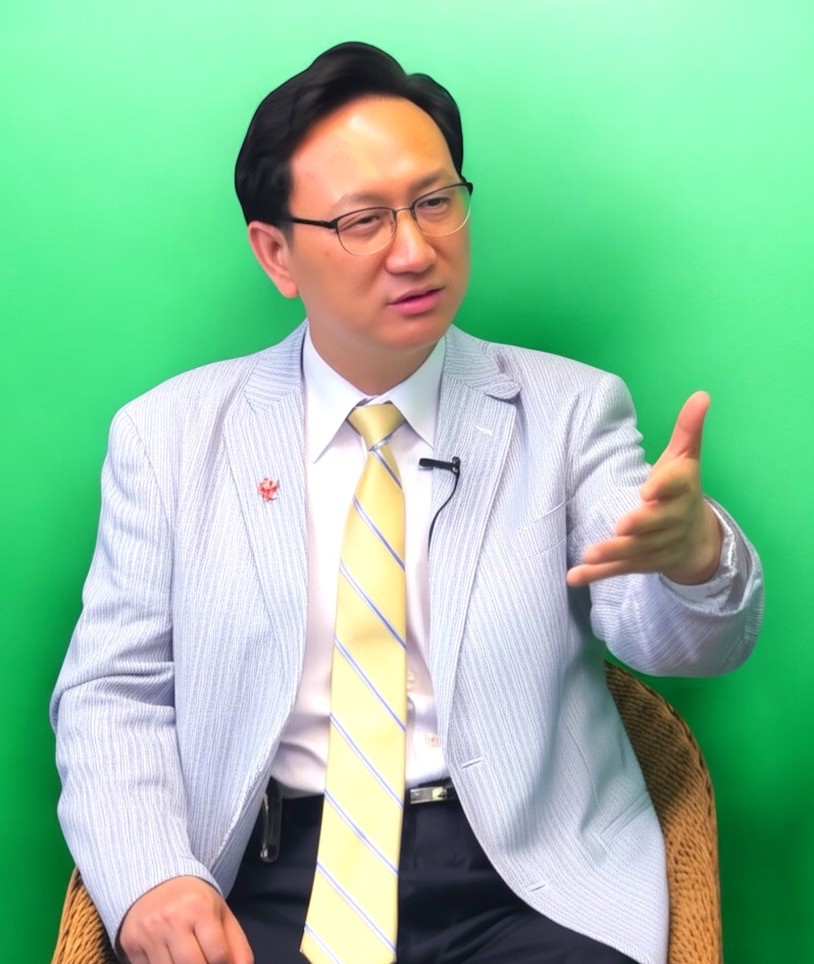
Dr. Tung Chen-Yuan is currently Taiwan’s Representative to Singapore. He was Minister of the Overseas Community Affairs Council of the Republic of China (Taiwan) from June 2020 till January 2023. He was Taiwan’s ambassador to Thailand from July 2017 until May 2020, senior advisor at the National Security Council from October 2016 until July 2017, and Spokesman of the Executive Yuan from May to September 2016. Before taking office, Dr. Tung was a distinguished professor at the Graduate Institute of Development Studies, National Chengchi University (Taiwan). He received his Ph.D. degree in international affairs from the School of Advanced International Studies (SAIS), Johns Hopkins University. From September 2006 to May 2008, he was vice chairman of the Mainland Affairs Council, Executive Yuan. His areas of expertise include international political economy, China’s economic development, and prediction markets.