

By KHT Staff.
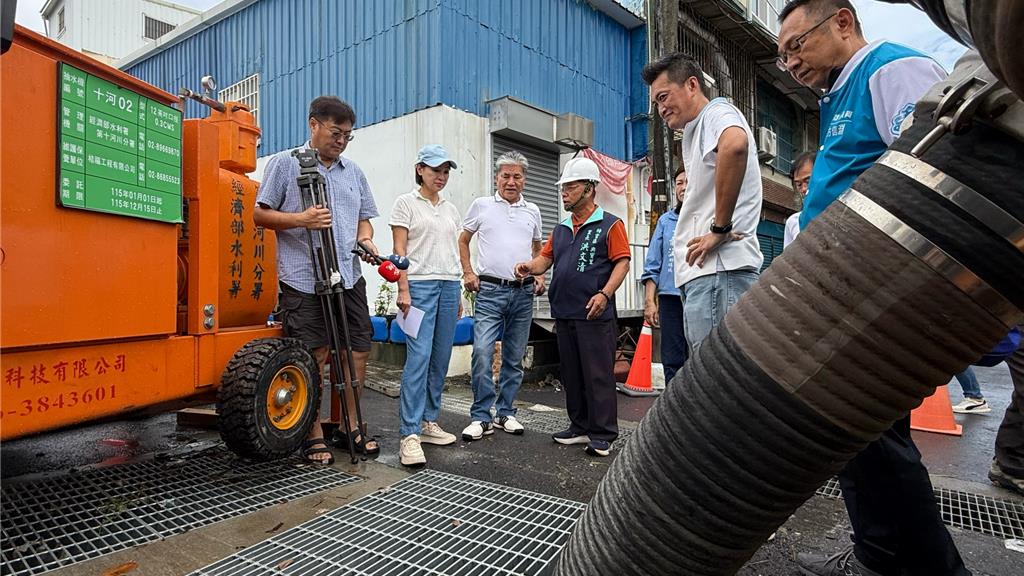
KAOHSIUNG — Kuomintang (KMT) mayoral candidate Ko Chih-en (柯志恩) and former Interior Minister Lee Hong-yuan (李鴻源) called Wednesday for a full review of flood controls along the Dianbao River (典寶溪) after heavy rain again inundated low-lying parts of Ziguan District (梓官區), according to a China Times report.
Ko invited Lee, a water-resources specialist, to inspect the river on Wednesday, Aug. 26, and meet local councilors and neighborhood chiefs. They urged authorities to identify the sources of recurring flooding and develop technically verified remedies rather than focus on political arguments over regional spending.
Lee calls for basin-wide assessment
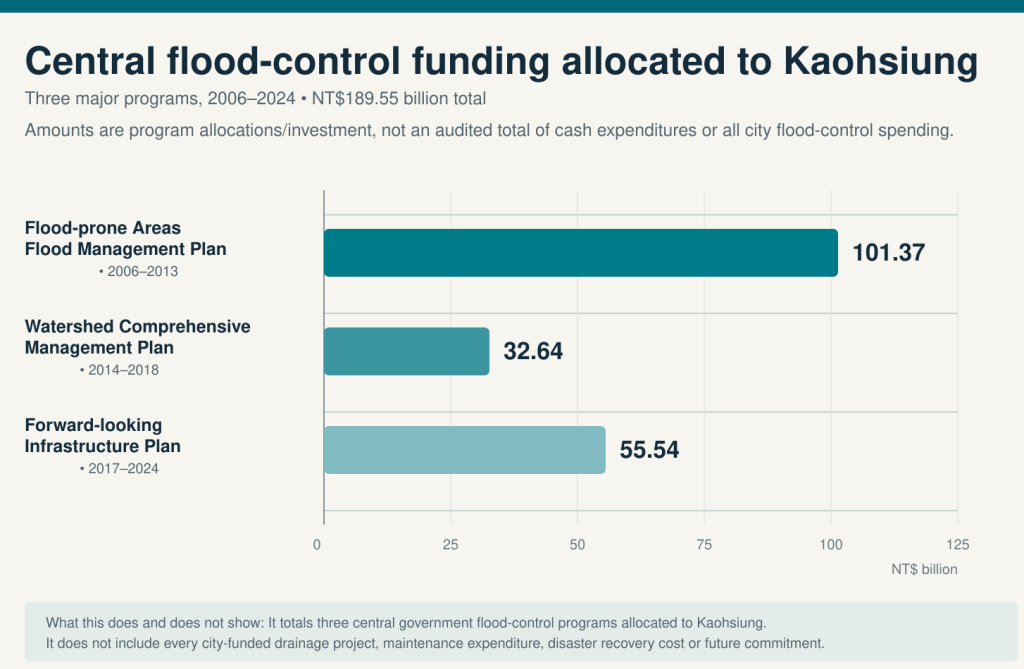
“The key is whether the money is being spent where it should be,” Lee said, according to the report.
Lee said the river’s width varies along its course and that responsibility is divided among several agencies. He called for an integrated review of upstream inflows, detention capacity, downstream tide levels and floodgate operations, with responsibilities clearly assigned between central and local authorities.
Ko also urged President Lai Ching-te (賴清德) to treat the criticism as a request for review rather than an attack. She said pumps, pumping stations and box culverts could be better maintained before storms, while hydraulic modeling should be used to test longer-term proposals.
City points to completed and planned work
In a June 27 Kaohsiung City Government statement issued before this week’s flooding, the city said work to expand the Lioucuo and Baimi detention basins and raise embankments along the Dianbao River and Daliao drainage channel had been completed.
The statement also outlined planned projects costing NT$1.06 billion for additional detention capacity, bridge reconstruction and drainage diversion, as well as NT$1.29 billion for pumping stations and a coordinated control system serving three detention basins.
The Kaohsiung Environmental Protection Bureau describes the Dianbao as a 32-kilometer regional drainage waterway with a watershed of about 107 square kilometers. It flows through several northern Kaohsiung districts before reaching the Taiwan Strait.