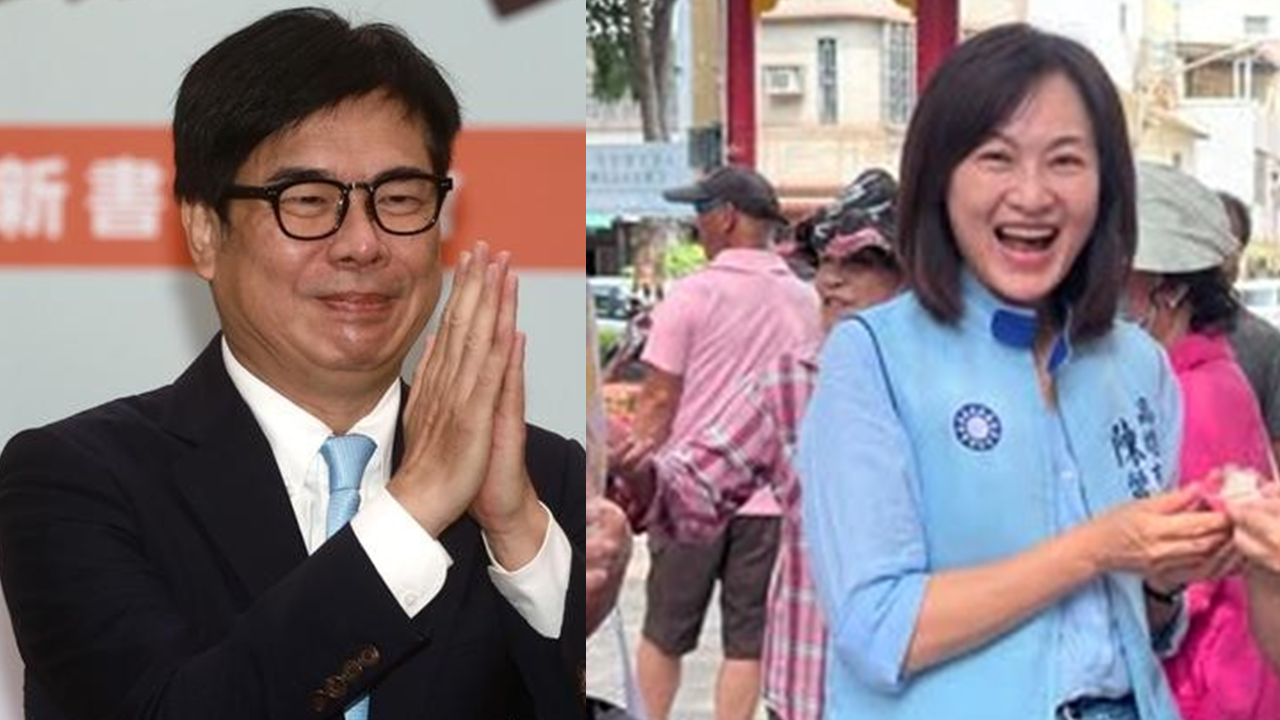
By KHT Staff. Image left: Mayor Chen Chi-mai. Right: Kaohsiung City Councilor Chen Li-na (陳麗娜).
KAOHSIUNG — A Kuomintang city councilor says Kaohsiung’s overall debt increased by NT$22.96 billion during Mayor Chen Chi-mai’s (陳其邁) tenure, while the city government says debt subject to statutory borrowing limits fell by NT$35.2 billion.
The dispute centers on whether self-liquidating debt, which is intended to be repaid from revenue generated by public projects, should be combined with conventional public debt when assessing the city’s finances.
Councilor calculates higher overall burden
Kaohsiung City Councilor Chen Li-na (陳麗娜) raised the issue during a council questioning session on Monday, Sept. 14. According to TVBS News, Chen said self-liquidating public debt had increased by about NT$52.5 billion since the mayor took office.
After accounting for repayments in other debt categories, Chen calculated a net increase of NT$22.96 billion, equivalent to about NT$8,500 per resident. She said total liabilities exceeded NT$300 billion, or more than NT$110,000 per resident, when the additional categories were included.
TVBS, citing the city’s latest fiscal statistics, reported that Kaohsiung had NT$224.3 billion in outstanding long-term debt of more than one year at the end of April. That was equivalent to about NT$83,000 per resident, the highest level among Taiwan’s six special municipalities under that measure.
City cites reduction in capped public debt
The Kaohsiung City Government rejected Chen’s calculation, saying self-liquidating borrowing and debt subject to statutory limits have different repayment structures and should not be treated as the same category.
City spokesperson Fu Wei-lin (符瑋玲) said capped public debt had declined by NT$35.2 billion since Chen Chi-mai took office, reducing the corresponding per-capita burden by NT$10,300.
Finance Bureau Director-General Lee Chiung-hui (李瓊慧) said self-liquidating borrowing is used to finance projects such as metro construction before revenue becomes available. The city expects such obligations to be repaid through sources including fares, joint property development, tax-increment revenue and payments linked to additional development rights.
The city said self-liquidating debt had risen across all six special municipalities during the mayor’s tenure. It put the increases at NT$92 billion in Taoyuan, NT$80.3 billion in New Taipei and NT$55.2 billion in Kaohsiung.
Audit review identifies repayment concerns
The city’s explanation does not eliminate questions about whether every project will produce its forecast revenue. The National Audit Office’s review of Kaohsiung’s 2025 final accounts found that conventional outstanding public debt was declining while self-liquidating debt held by non-business special funds was rising.
The audit review also said revenue for some projects had fallen short of expectations, some repayment resources had not been reassessed and submitted for review promptly, and certain older obligations continued to be refinanced with new borrowing.
The competing per-capita figures therefore describe different sets of liabilities. Chen Li-na’s estimate includes self-liquidating obligations, while the city’s claimed reduction focuses on public debt governed by statutory borrowing limits.