
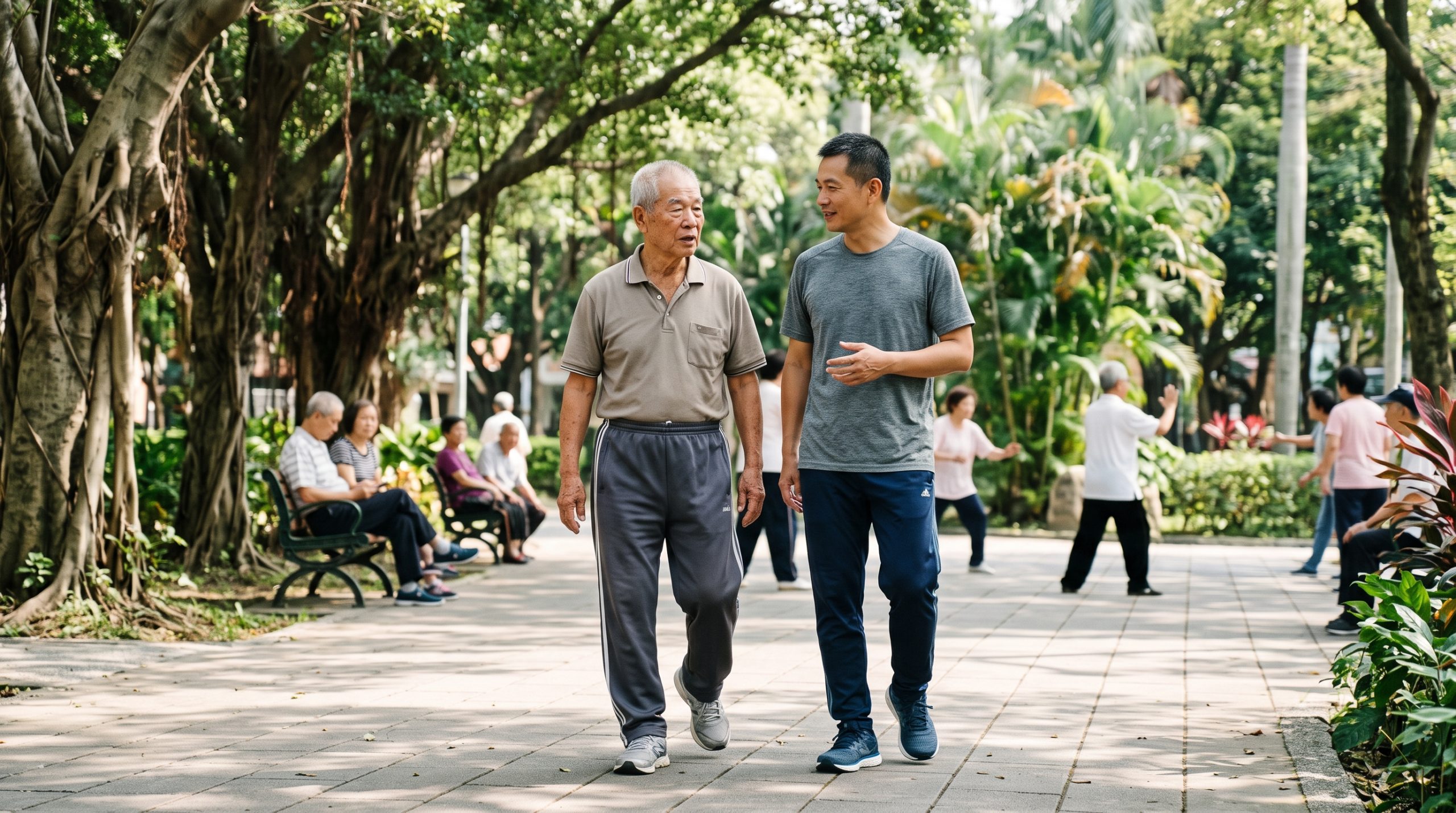
By KHT Staff. AI illustration image.
TAIPEI — Having centenarian parents reduces offspring’s risk of cardiovascular disease and overall mortality. Still, doctors emphasize that lifestyle choices and preventive care play a far greater role than genetics in determining life expectancy.
According to a TVBS report, medical experts have noted that children of parents who reach age 100 often have longer lifespans and lower rates of cardiovascular illness. However, shared family environments, dietary patterns, and living habits account for much of this advantage. Such factors work alongside inherited genetics.
Su Sheng-chi (蘇聖棋), director of metabolism at Jiannren Hospital (健仁醫院) in Kaohsiung, cited an observational tracking study involving more than 4,000 individuals. The findings showed that having a centenarian in the family significantly reduced offspring mortality risk, cardiovascular incidents, and hypertension rates. While genetics influence lifespan and disease onset, environmental and acquired factors remain critical, Su stated.
A study published in the Journal of the American Medical Association (JAMA) showed that individuals with at least one parent reaching age 100 had an approximately 40 percent lower mortality risk compared to those whose parents did not reach age 85, according to Li Yuan-chao (李元肇), an orthopedic physician at Changhua Show Chwan Memorial Hospital (彰化秀傳醫院). Risks for hypertension and cardiovascular diseases were reduced by about 30 percent. Li noted that while longevity may offer familial advantages, genes do not entirely dictate lifespan.
Physicians warned against viewing genetics as a guarantee. Chiang Hui-shan (姜惠珊), a family medicine physician at Ton-Yen General Hospital (東元綜合醫院), stated that while family members of centenarians experience lower rates of chronic disease and later onset ages, the presence of specific longevity genes remains variable and cannot guarantee long life.
Liu Chieh-hsiu (劉介修), an attending physician in geriatric medicine at National Cheng Kung University Hospital (成大醫院), advised individuals to build physical and functional reserves starting in middle age. Liu urged middle-aged adults to maintain regular exercise, manage chronic conditions, build hobbies, and sustain social connections, rather than waiting until retirement to address healthy aging.