
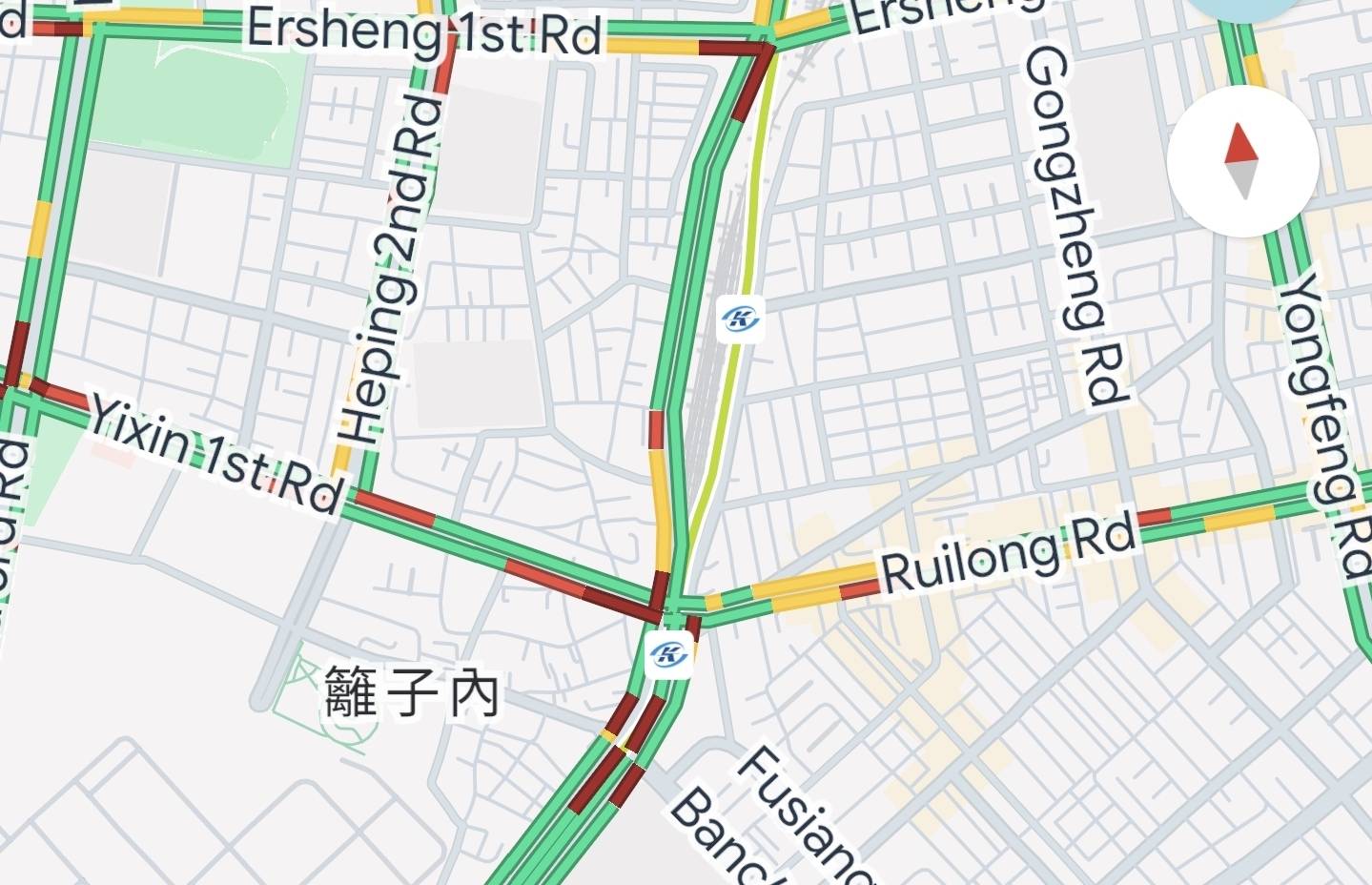
By KHT Staff. Image via Google Maps.
KAOHSIUNG — Kuomintang mayoral candidate Ko Chih-en chose a Kaohsiung street to express her commitment to the city. Her opponents, however, quickly noticed where it leads: a road sharing the name of her rival, Lai Jui-lung.
Ko’s advertisement features Yisin Road, 一心路 — Yīxīn Lù. The first two characters mean wholehearted or single-minded devotion.
“People ask why I always like coming to Yisin Road. It’s because I really care,” Ko says, playing on 有心 — yǒu xīn, an expression conveying sincerity, care, or commitment.
But Yisin 1st Road connects eastward with Rueilong Road, 瑞隆路 — Ruìlóng Lù. Its first two characters are identical to the given name of Democratic Progressive Party candidate Lai Jui-lung, 賴瑞隆 — Lài Ruìlóng.
That opened the way for a different campaign message: 一心投瑞隆 — yī xīn tóu Ruìlóng, or “wholeheartedly vote for Jui-lung.”
The joke works on several levels. “Yixin” supplies the idea of wholehearted devotion, while 投 — tóu — is used both for casting a vote and, in expressions such as 投奔 — tóubèn, going toward or seeking someone out. The road connection supplies the geographical punchline.
Radio Taiwan International reported the reaction on Nov. 10. Ko defended her message of wholehearted service and countered that a reported sinkhole on Rueilong Road deserved the local legislator’s attention.
Local civic group 高雄好過日 — Gāoxióng Hǎo Guòrì used the joke as the starting point for a Facebook post about the area’s street names.
Rueilong Road — of course — has nothing to do with the DPP candidate’s name, and dates back decades.
The Cianjhen District Office says Rueilong Neighborhood was established on July 1, 1973, after commercial growth along the road helped increase the population.
The broader history helps explain why so many nearby streets, neighborhoods, and schools begin with 瑞 — ruì, a character associated with auspiciousness or good fortune.
The Facebook post traces the pattern to older settlements around Gangshanzai, 崗山仔 — Gǎngshānzǎi, and Lizihnei, 籬仔內 — Lízǎinèi. These are Hanyu Pinyin readings of names rooted in the area’s Taiwanese-language history.
Lizihnei refers to a settlement inside a bamboo enclosure. The group describes thorny bamboo planted as a defensive barrier and connects that history to later neighborhood names containing 竹 — zhú, meaning bamboo, and 內 — nèi, meaning inside.
It suggests that the auspicious character “ruì” was added during postwar neighborhood naming. But it wouldn’t be accurate to say these are documented naming decisions.
Industrial development and housing construction subsequently transformed the area. The district office’s history of Rueifeng Neighborhood 瑞豐里 (a different location from Rueifeng Night Market, 瑞豐夜市 — Ruìfēng Yèshì, which is in Zuoying District), describes former farmland around Gangshanzai becoming increasingly populated as industry and commerce grew. Rueifeng became a separate neighborhood in 1970.
The Facebook account describes developers building 販厝 — fàn cuò, houses constructed for sale, referring here to rows of adjoining multistory homes. As the population increased, neighborhoods were subdivided, with many retaining “ruì” in their names.
The group extends its political joke farther east, describing a route eventually reaching Kaisyuan Road, 凱旋路 — Kǎixuán Lù. The word 凱旋 — kǎixuán — means to return victorious.
Its closing line is therefore 一心投瑞隆,瑞隆最終凱旋 — yī xīn tóu Ruìlóng, Ruìlóng zuìzhōng kǎixuán: “Vote wholeheartedly for Jui-lung, and Jui-lung ultimately triumphs.”
The partisan punchlines built from local geography are amusing, but history fans may find more to love in the much older stories of how these roads and areas got their names.