
By 吳象元 Wu Hsiang-yuan, editor at The News Lens.

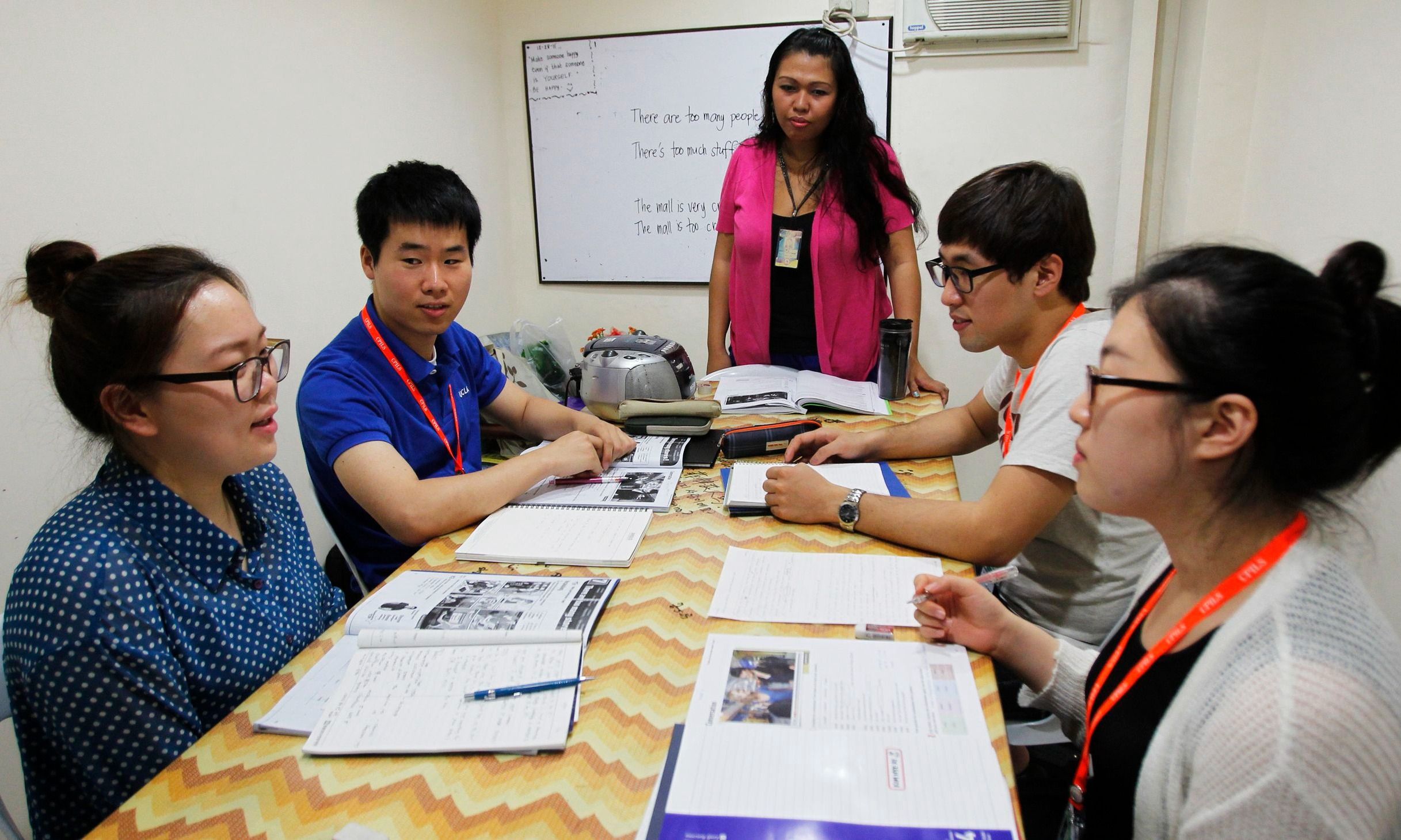
In recent months, studying English in the Philippines has once again become a noticeable trend. Taiwanese internet personalities such as A-Han and “Pretty Grandma” Chung Yu-yen have shared their experiences taking English classes in the Philippines on social media, while in December last year, YouTuber Chih Chi 77 released sponsored content introducing English study programs there. More recently, the hosts of Hang TV – Vietnam Loves Taiwan, Qiu Heng and John, announced plans for their entire family to travel to the Philippines for English lessons.
Since the early 2000s, the Philippines has been regarded as a major hub for ESL (English as a Second Language) education, attracting learners from Taiwan, China, Japan, South Korea, Thailand, Indonesia, and Russia. Although the industry stalled during the COVID-19 pandemic, the market has gradually rebounded in recent years. Beyond language study, tourism has also been a major draw. How did the Philippines become a regional center for English learning, and what does the industry look like today?

English foundations laid during the American colonial period
Any discussion of English education in the Philippines begins with the American colonial era from 1898 to 1946. In 1901, English was introduced as the language of instruction in public schools, laying the foundation for widespread English proficiency. Even after independence in 1946, English remained the country’s second official language, alongside Filipino (Tagalog).
In 1974, the Philippine government launched the Bilingual Education Program (BEP), designed to ensure students became proficient in both Filipino and English. Under this system, English was used to teach subjects such as mathematics, science, and literature, while Filipino was used for social studies, Philippine history, and Philippine literature. From elementary school through university, instruction gradually shifted toward English, particularly in fields such as engineering, medicine, and law.
From outsourcing to English education
Between 2000 and 2010, the Philippines’ strong English-language capabilities helped fuel rapid growth in business process outsourcing (BPO). At its peak, the country hosted around 2,200 outsourcing companies providing services such as customer support and data processing.
As global corporations increasingly relied on the Philippines for BPO services, English proficiency became internationally recognized as a national strength. This, in turn, encouraged young Filipinos to further refine their English skills, particularly American-style spoken English. Many of these professionals later became ESL instructors, forming a key talent pool for language schools.
In 2010, the Philippine government formally incorporated “education tourism” into its national tourism strategy, actively promoting ESL programs to overseas learners. With strong government backing and private-sector marketing, the industry expanded rapidly.
The Korean wave behind the ESL boom
The rise of the Philippines’ ESL industry is closely linked to large numbers of Korean students. Beginning in the late 1990s, Korean learners started traveling to the Philippines to study English. In Baguio City, for example, there was only one Korean restaurant and a single Korean-owned beauty salon in the late 1990s. By 2006, the city had 12 English academies catering specifically to Korean students.
By 2007, approximately 4,000 Korean children were enrolled in local elementary schools, and many Korean nurses also studied English there in preparation for work in the United States or the United Kingdom. Drawn by affordable costs, cultural familiarity, and one-on-one instruction, tens of thousands of Korean students enrolled in ESL programs in cities such as Cebu, Baguio, and Clark. Students from Japan, Taiwan, Vietnam, and Thailand soon followed.

By 2012, the number of Koreans studying English in the Philippines had grown to around 24,000, and in recent years the figure has exceeded 100,000. Some Korean families even relocated entirely so their children could attend public schools and learn English. This wave firmly established the Philippines as a center for immersive English learning.
Why Cebu stands out
Among the Philippines’ many ESL destinations, Cebu is often the top choice. Beyond being an international tourist destination, Cebu offers strong medical facilities, transportation infrastructure, and a dense concentration of English-language schools, teacher training centers, and higher education institutions. Living costs are also lower than in Metro Manila, making it more suitable for long-term, intensive study.
Cebu is particularly known for its “Spartan-style” ESL schools, which feature on-campus housing, one-on-one instruction, strict English-only policies, evening study sessions, and frequent testing. This highly structured environment appeals to learners seeking fast and measurable improvement. Outside class hours, students can still enjoy beaches and island scenery.
Learner experiences and future challenges
Ms. Wu, who works in the financial sector, told The News Lens that she decided to study English in Cebu in 2015 after hearing colleagues share their experiences. She cited affordable costs and a love of island climates as key reasons. She completed a 12-week program at a Korean-run school, focusing on speaking and business English, and found the results effective.
While she praised the friendliness of local people and the confidence she gained in speaking English, she noted that teacher quality could vary and that staffing shortages sometimes occurred. As for concerns about acquiring a “Filipino accent,” she joked that changing a Taiwanese accent is not easy either.
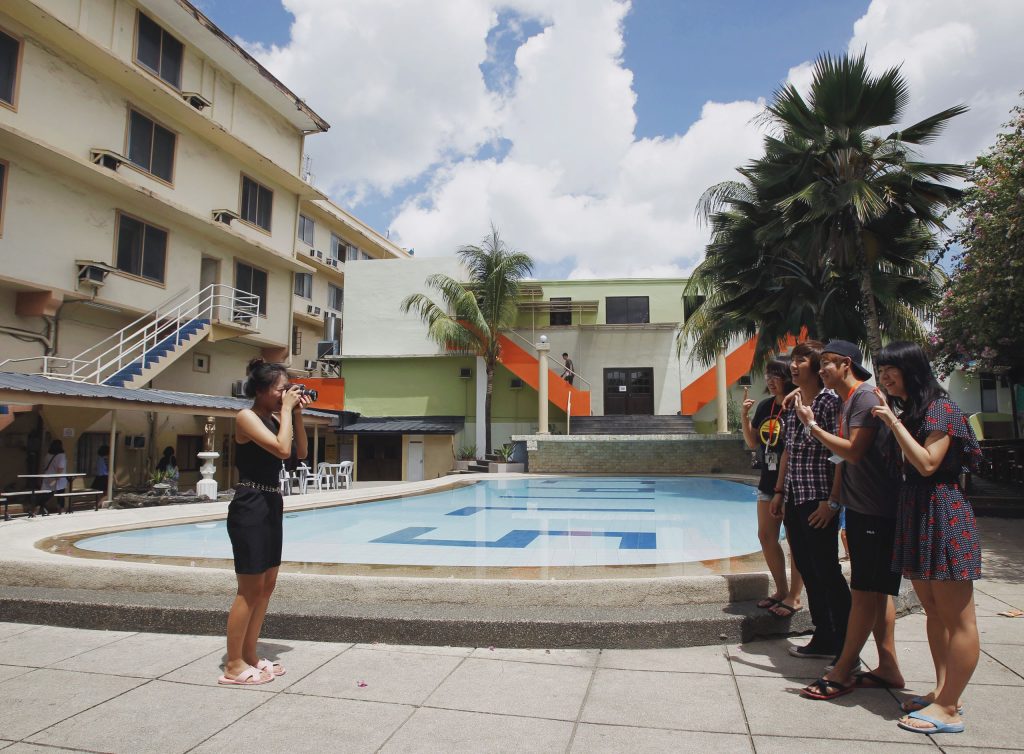
During her three months in Cebu, Ms. Wu also traveled to nearby islands, went snorkeling with whale sharks, and some of her classmates even earned diving certifications. She later revisited her teachers before the pandemic and hopes to return with her husband and children for family-oriented programs.
In 2025, the Philippines ranked second among 123 non–English-speaking countries in an English proficiency index. However, as neighboring Asian countries invest heavily in English education and artificial intelligence reshapes language learning, the Philippine ESL industry faces new competition. Even so, from social media influencers to retirees and entire families, the Philippines continues to hold a strong position in the regional English-learning market.
Kaohsiung Times appreciates The News Lens for allowing us to translate and publish selected works. Visit The News Lens website for original articles.