

By Shen Nai-hsun (沈迺訓), freelance writer. AI illustration image.
Originally published in China Times on Oct. 7, 2026. Translated and reprinted with permission.
Yesterday, an informal conversation among veteran media figures unexpectedly sparked discussion about the true state of Kaohsiung’s mayoral race. The substance of that conversation cannot be verified. But anyone who watches it in full will see that, rather than offering an isolated assessment of Kaohsiung, the speakers were expressing pessimism about the pan-blue camp’s mayoral and county magistrate races across the country.
In truth, Ko Chih-en (柯志恩) has never had much reason for optimism in Kaohsiung. Even if the race has come to feel like a toss-up, various factors make it difficult for her to break the stalemate. That is probably the most accurate picture of the contest.
It is no small achievement that Ko has remained competitive this long. But one reason must also be acknowledged: Her opponent, Lai Jui-lung (賴瑞隆), is widely regarded as the weakest Kaohsiung mayoral candidate the Democratic Progressive Party has ever fielded. That has allowed the race to remain deadlocked.
Were it not for Lai’s lack of appeal as a candidate, the DPP’s strong electoral base in Kaohsiung would have allowed virtually any nominee to begin planning for life after the election by now. There would be no strategic need to pick fights with an opponent. Yet Lai and his campaign have continued, even recently, to make Ko herself the focus of repeated attacks. This demonstrates that the outcome between Lai and Ko remains unsettled. After all, “battle reports may lie, but the battle lines do not.”
What has sustained Lai’s campaign is not Lai himself. It is the DPP’s concentration of resources behind him: from President Lai Ching-te (賴清德) and senior figures in the Presidential Office, government and party, down to incumbent Mayor Chen Chi-mai (陳其邁), who is already lined up to head north and become premier. This collective effort has barely enabled Lai Jui-lung to hold his ground by relying on the DPP’s established support in Kaohsiung.
Without “Big Lai,” Lai Ching-te, personally directing the electoral production of “Saving Private Jui-lung,” “Little Lai” could not have kept his campaign afloat until the recent arrival of the “Yang current” to bolster it. Nor would there have been any room for campaign gimmicks such as the “Lung tornado” or the “many faces of Lung,” which are plainly designed to burnish the candidate’s image.
External circumstances are also working against Ko’s efforts to break the Kaohsiung stalemate. As the “Yang current” associated with Puma Shen (沈伯洋) has gathered strength, the pan-blue camp has been on the defensive ever since the controversy surrounding Taipei Mayor Chiang Wan-an’s (蔣萬安) son and a student exchange program.
The broader political atmosphere in Taipei has weakened pan-blue momentum nationwide. It resembles a sudden, unexplained stock market plunge: Even strong-performing stocks can turn from gains to losses and fall sharply alongside the rest of the market. If Chiang, the pan-blue camp’s heavyweight stock, cannot lead the party back into positive territory, how can strong performers such as Ko and other local candidates easily generate a rally of their own?
Ko’s only option now is to move from reacting to events to taking the initiative. She must actively lead the pan-blue camp’s Kaohsiung city council candidates, and perhaps its candidates throughout southern Taiwan, in a sustained offensive on municipal issues. Alternatively, she must find ways to focus public attention on questions about her opponent’s personal integrity and moral character.
Only then can she break out of a situation that northern political and media figures have mistakenly interpreted as a campaign that has hit its daily loss limit and can no longer move. And only by first generating a recovery of her own can Ko persuade the undecided middle ground, accounting for as much as 30 percent of voters, to see promise in her prospects and add their votes to her column.
Only Ko herself can lead Kaohsiung voters out of the uncertainty surrounding the polls. How forcefully she takes the initiative will determine the direction of the campaign over the next month or so. She must also have the confidence and determination to help the pan-blue camp find its way through the fog of the year-end elections. That is how she can build stronger political prospects for the future.
About the Author:
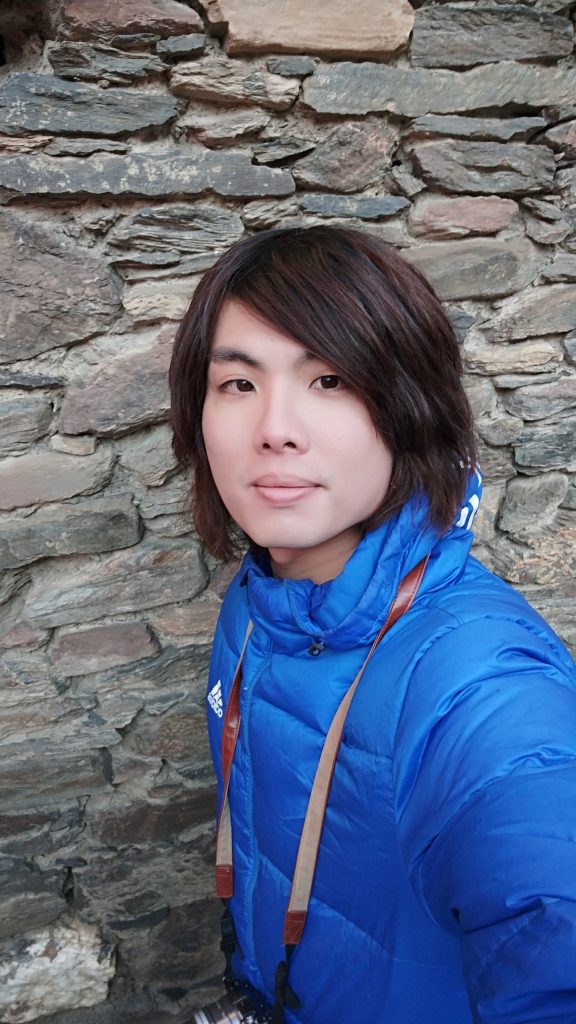
Shen Nai-hsun (沈迺訓) is a Kaohsiung-born freelance writer and political commentator.
The views expressed are the author’s and do not necessarily reflect those of the Kaohsiung Times.