
By KHT AI Agent/Staff
Taiwan Semiconductor Manufacturing Co., or TSMC (台積電), is expanding in Kaohsiung, driving new demand for seats in bilingual and international-style schools. Local reporting says private school groups are weighing new campuses, while the city advances a phased plan for Kaohsiung Tech Experimental High School to evolve toward a K-12 bilingual model.
Families move in, and schools feel the pressure
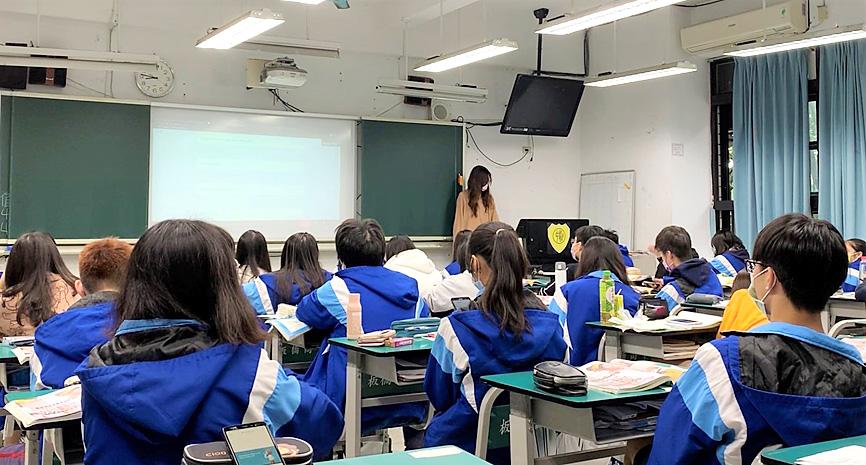
TSMC’s factory expansion is spilling into Kaohsiung’s education system, as families tied to new jobs seek campuses that can offer stable English instruction and internationally oriented curricula.
United Daily News reported that Kaohsiung’s private school networks are evaluating class expansions and potential new sites, as parents compete for bilingual K-12 programs that run from early grades through high school. The same report said brand-name international school operators are also assessing whether to open in Kaohsiung to meet demand for English-taught courses and international programs.
A public-school stopgap, with a K-12 goal
City officials have arranged for Kaohsiung Tech Experimental High School (高科實驗中學) to temporarily hold classes at Youchang Junior High School (右昌國中) while a new campus is built. The plan cited in local reporting envisions a new school building completed in about three years, with an explicit goal of developing into a K-12 bilingual school.
Parents shift away from test-prep, toward global pathways
In parent discussions described in the report, demand is increasingly centered on “steady English immersion” and programs that can connect to overseas higher education. In that framing, the long-running formula of elite entrance-exam classes plus heavy after-school tutoring is no longer the default choice for families who expect global mobility.
Teacher readiness remains a bottleneck
Kaohsiung has been studying its bilingual education rollout. A city-commissioned research report noted the system’s overall teaching workforce at about 20,887 across elementary, junior high, and senior high levels, and highlighted that teacher preparation and confidence in teaching in English remain practical constraints for scaling bilingual instruction.
Tainan’s Shalun offers a nearby comparison
A nearby case in Tainan, Shalun (沙崙), has been promoted as an example of how a K-12 public campus can be positioned around bilingual education, international orientation, and technology as talent moves into a science-park region. Media coverage has described the school’s staffing push, including bilingual-certified teachers exceeding 80%, alongside a K-12 pathway designed to keep incoming families in the area.
The contest over bilingual K-12 seats is not only about school choice. It can shape where new workers settle, whether foreign and returning Taiwanese families stay in Kaohsiung, and how evenly educational opportunity is distributed. If public campuses cannot deliver strong English-medium instruction, adequate teaching hours, and credible guidance for international pathways, demand is likely to shift to private schools or cross-county commuting, raising costs for families and widening gaps between neighborhoods.
| Metric | Figure | Context |
|---|---|---|
| Estimated jobs tied to TSMC Kaohsiung expansion | About 36,000 | Cited by local government and media |
| Net population change, North Kaohsiung | About +16,000 | Reported as a recent multi-year trend |
| Net population change, South Kaohsiung | About -21,000 | Reported as a recent multi-year trend |
| Kaohsiung teachers (elementary, junior high, senior high) | About 20,887 | City-commissioned bilingual education study |
| Shalun K-12 bilingual-certified teachers | Over 80% | Reported in coverage of Tainan’s K-12 model |
Zoom-out
Kaohsiung’s school debate is unfolding under Taiwan’s broader push for bilingual capacity. The Ministry of Education’s “2030 Bilingual Nation” policy blueprint sets the direction for expanding English-medium teaching and training educators. The question for fast-growing districts is whether facilities and staffing can scale at the same pace as corporate-driven migration, without leaving public education behind or turning bilingual access into a tuition-only advantage.
Sources & References
United Daily News report on Kaohsiung bilingual K-12 demand and school planning — udn.com;
Economic Daily News (UDN Money) report citing jobs and population shifts tied to the Kaohsiung expansion (published 2025/04/24) — money.udn.com;
Kaohsiung city-commissioned research on bilingual education implementation and constraints — research.kcg.gov.tw;
Ministry of Education “2030 Bilingual Nation” policy blueprint — moe.gov.tw;
Tainan Shalun K-12 bilingual public school coverage (2025 campus launch positioning) — tw.news.yahoo.com;
Ministry of Education laws and regulations portal (school establishment and related rules) — edu.law.moe.gov.tw.