
By PH Pai (白佩華)
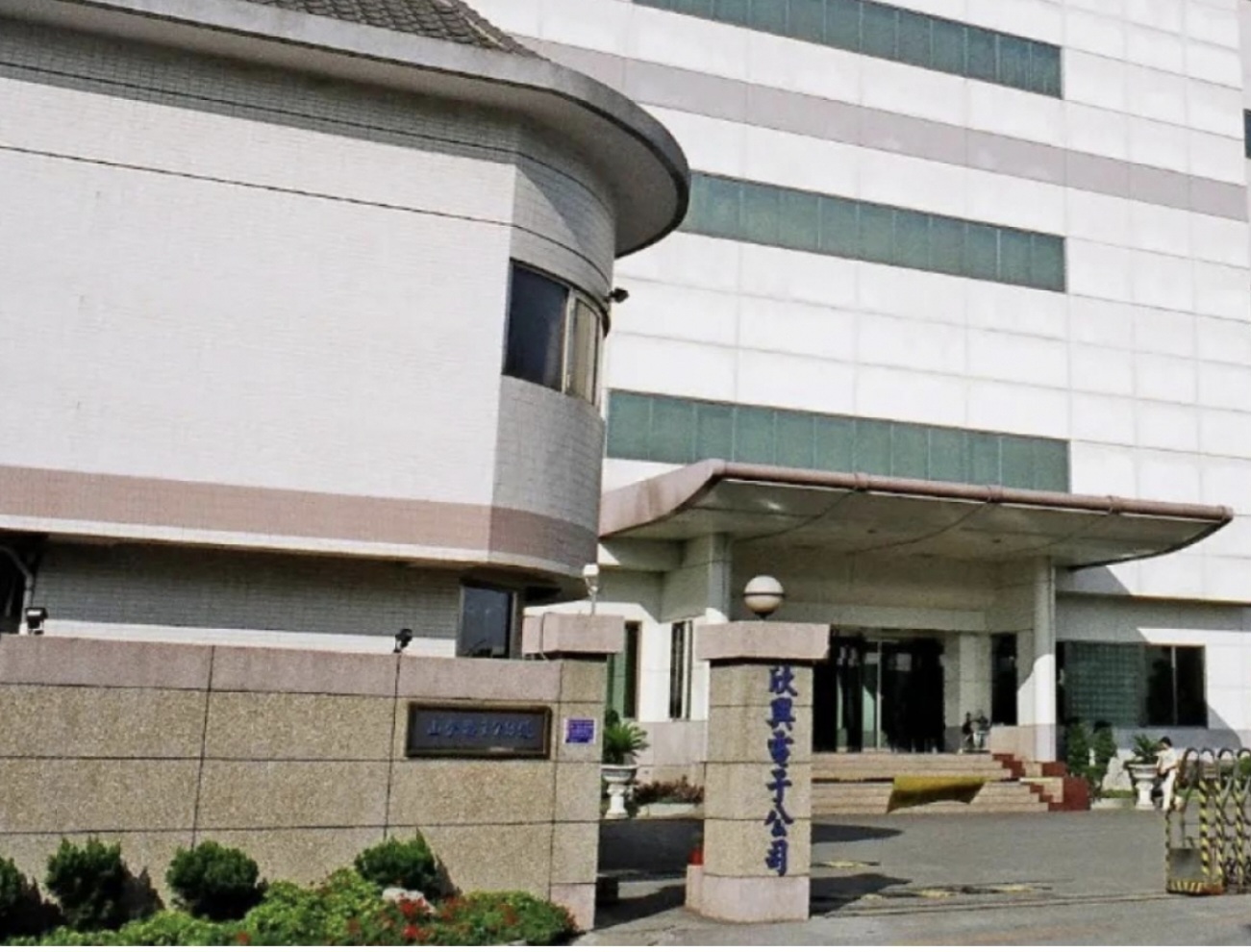
Senior Risk and Resilience Consultant Unimicron Technology Corp. (欣興電子) has recently been searched by prosecutors over a dispute concerning product-origin labels.
Prosecutors suspect that some printed circuit boards manufactured in China were shipped to Taiwan and relabeled as “Made in Taiwan,” possibly involving document forgery and false product labeling. Unimicron has said it will cooperate with the investigation and that its operations and finances have not been materially affected.
This case should not be understood simply as a question of whether the products were made in China. The key issue is whether the products underwent substantial transformation in Taiwan sufficient to change their country of origin, and whether the company has complete evidence to support its external declarations and labels.
Whether the case constitutes a violation of the law must still be decided by prosecutors and the courts on the basis of the evidence. The key question is not how many processing steps took place, but where substantial transformation was completed.
Substantial transformation is an important principle used to determine a product’s country of origin. When a product’s raw materials, components, and manufacturing processes are spread across several countries, it is necessary to determine in which country the key process took place that changed the product’s nature, function, or use. That country determines the product’s origin.
Taiwan and the United States both use the concept of substantial transformation, but their methods differ.
Taiwan: The main considerations are whether there has been a change in the first six digits of the tariff classification, whether an important manufacturing process has been completed, or whether the value added in Taiwan exceeds 35%.
United States: The main consideration is whether processing has produced a new product with a different name, character or use. Authorities also consider where the key process, technical input and core function were formed.
Simple packaging, testing, relabeling or assembly are generally not enough to constitute substantial transformation. Therefore, even if a product meets Taiwan’s requirements for a “Made in Taiwan” determination, that does not mean U.S. Customs will necessarily accept it. Exporters must reassess the matter under the rules of the destination country.
A company may determine that a product meets Taiwan’s requirements for a Taiwanese-origin label, yet U.S. Customs may still make its own determination under U.S. regulations and the facts of the individual case.
A correct origin determination must pass three tests: whether the exporting country allows the origin label, whether the importing country accepts it, and whether customer contracts impose stricter requirements.
Seven layers of risk facing Unimicron
1. Criminal and compliance risk
Prosecutors have determined that there is serious suspicion that the general manager, deputy general manager and three other senior executives committed offenses involving private-document forgery and false product labeling. They were released on bail ranging from NT$300,000 to NT$15 million.
The investigation has not yet concluded. However, were the disputed products exported to other countries? If overseas markets are involved, the case could simultaneously trigger local customs, anti-circumvention and tariff investigations, creating a chain of cross-jurisdictional risks.
2. Overseas tariffs and retrospective risk
If foreign customs authorities reclassify the products as Chinese-origin, the company could face additional duties, fines, cargo holds, returns or expanded inspections. Investigations may also look back over several years of export transactions rather than deal with only a single shipment.
The real financial impact may emerge with a time lag. Factories may continue operating normally in the short term, while later back duties, legal expenses, product tracing and customer claims gradually appear.
3. International customer and order risk
For a company such as Unimicron, which is important to the PCB, IC-substrate and AI supply chains, the most serious loss may not be a judicial fine. It may be international customers reassessing the company’s supplier qualifications.
Customers may:
– Initiate special supplier audits;
– Require batch-by-batch evidence of raw materials and manufacturing processes;
– Suspend shipments of disputed products or from disputed production lines;
– Transfer part of their orders to other suppliers;
– Delay supplier certification for next-generation products; or
– Re-examine previous origin declarations.
Once customers begin to question the reliability of a company’s documents, the effects may spread from individual products to the entire supply relationship.
4. Operational and supply-chain disruption risk
The company has said operations are normal. But a production line operating normally is only one part of operational continuity.
If customs authorities hold cargo, customers suspend acceptance of goods or products must undergo reinspection, the company may still face higher inventories, delivery delays, changes in transport arrangements and imbalances in capacity allocation.
Normal operations should not be judged only by whether a factory has stopped production. It is also necessary to assess whether goods can clear customs smoothly, whether customers continue to accept deliveries and whether payment can be collected normally.
5. Financial and disclosure risk
Apart from the effect on its share price, the company has said that, based on currently known information, the matter has had no material effect on its finances or business. It must nevertheless continue to assess:
– Whether overseas back duties or administrative penalties may arise;
– Whether legal expenses or loss provisions are required;
– Whether customers may seek compensation or cancel orders;
– Whether inventory must be adjusted or remanufactured;
– Whether new material information must be disclosed; and
– Whether contingent matters must be disclosed in financial statements.
6. Management and corporate-governance risk
The people questioned in this case were not limited to frontline employees or customs brokers. The board of directors and audit committee must ask:
– Who has the authority to approve a product’s country of origin?
– Did legal, customs, finance and internal-audit departments participate?
– On what evidence did the company determine that substantial transformation had occurred?
– Were those judgments independently reviewed?
– Were management incentives too closely linked to revenue, delivery schedules or gross margins?
– Did the board ever receive reports on cross-border trade compliance?
The governance focus of this case is not only who did what. It is also about the company’s authorization and control systems: who decides the nationality of its products?
7. Reputational and industry spillover risk
A controversy involving one company may lead overseas customs authorities and customers to increase their scrutiny of similar Taiwanese products. Other companies that comply with the rules may then face more documentation, longer customs-clearance times and higher compliance costs.
This could affect the overall credibility of “Made in Taiwan” labels and Taiwan’s supply chains.
Risk-management recommendations for Taiwanese electronics companies and other industries
The risk is not confined to a single industry. Any company using cross-border materials, processing goods in several countries and exporting to the United States may face the same issue.
Many Taiwanese companies have expanded into Southeast Asia, but their upstream materials, molds, semi-finished goods and key components still depend heavily on China.
If an overseas factory only handles final assembly, testing or packaging, the product does not automatically acquire that country’s origin simply because it leaves from its port.
Taiwanese businesses should not avoid the issue because it is troublesome, or assume that familiar practices are sufficient.
1. Conduct product-level origin reviews
Companies should not make origin decisions only at the company or factory level. Reviews should extend to each product, part number, and tariff classification, recording the source of raw materials, processing in each country, value added, where the core function takes shape, and the intended export market.
2. Classify products by the share of Chinese inputs and processing complexity
Products with a high proportion of Chinese semi-finished goods that undergo only simple processing in Taiwan or Southeast Asia should be treated as high risk. Products that complete part of their key processes locally should be treated as medium risk.
Products whose main materials and complete manufacturing processes are finished locally carry relatively lower risk.
A high proportion of Chinese inputs does not itself mean a product is illegal. However, companies must be able to provide a stronger basis and more complete evidence for their origin determination.
3. Establish joint approval across departments
A product’s origin cannot be determined solely by sales teams, factories or customs brokers. Manufacturing teams should document the production process; procurement should confirm sources; finance should calculate value; legal and customs teams should confirm the rules in both the exporting and destination markets; and internal audit should test consistency. High-risk products should require approval from senior management.
4. Build an evidence chain in which four flows are consistent
Companies must ensure consistency among the flow of goods, money, information, and manufacturing processes. They should retain bills of materials, incoming-material records, work orders, enterprise resource planning records, manufacturing execution system records, equipment-operation records, labor hours, electricity use, costs, invoices, transport records and origin documents.
Customs authorities do not merely check whether documents exist. They also assess whether equipment, staffing, production capacity and export volumes are reasonable.
5. Obtain advance determinations for high-risk products
For products involving Chinese semi-finished goods, high tariffs or complex cross-border manufacturing processes, companies should obtain professional opinions in both the exporting country and destination market. Where necessary, they should apply for advance customs rulings.
Whenever suppliers, manufacturing processes, cost proportions, tariff classifications or export markets change, the assessment must be repeated.
6. Conduct scenario analysis and stress testing
At a minimum, companies should model the effects of having a core product reclassified as Chinese-origin, a major market increase in inspections, or a key customer suspending orders for three to six months. They should assess the implications for back duties, inventory, cash flow, delivery schedules, customer concentration, alternative production lines and second sources of supply.
True corporate resilience is not simply about whether a factory can continue production after a crisis. It is about whether a company can rapidly define the scope of the problem, present credible evidence, maintain customs clearance and customer relationships, and turn the incident into an improvement in its systems.
In the future, one of the most important forms of competitiveness will be a credible supply chain that can withstand questions from customs authorities, customers, investors and boards of directors.
About the Author:

Pei-Hwa Pai (白佩華)
PH Pai is a risk and corporate-resilience consultant, currently chief strategy officer of a corporate group and a lecturer on corporate sustainability and AI governance. She focuses on corporate risk, sustainability transformation, Taiwanese business expansion and climate governance. She is also a sustainability-program host and columnist.
References – “Central News Agency, “Unimicron executives released on bail in alleged origin-laundering case””
(https://www.cna.com.tw/news/asoc/202608290028.aspx)- “Central News Agency, “Unimicron searched over alleged product-origin labeling dispute””
(https://www.cna.com.tw/news/afe/202608280251.aspx)- “Taiwan Customs Administration, Rules of Origin”
(https://web.customs.gov.tw/singlehtml/715)- “Keelung Customs, “Are You Really MIT? How to determine substantial transformation of origin””
(https://web.customs.gov.tw/keelung/videoDetail/184?uuid=cus3_182832_184)- “Keelung Customs, “Do not pass off simply processed goods as Taiwanese-made exports””
(https://web.customs.gov.tw/keelung/singlehtml/179?cntId=877377ca302b4863993b884ae26f978a)- “U.S. Customs and Border Protection, “Marking of Country of Origin on U.S. Imports””
(https://www.cbp.gov/trade/rulings/informed-compliance-publications/marking-country-origin-us-imports)- “U.S. Customs and Border Protection, “CBP Uncovers More Than $400 Million in Duty Evasion””
(https://www.cbp.gov/newsroom/national-media-release/cbp-uncovers-more-400-million-duty-evasion-bad-actors-who-undercut)