
By KHT Staff
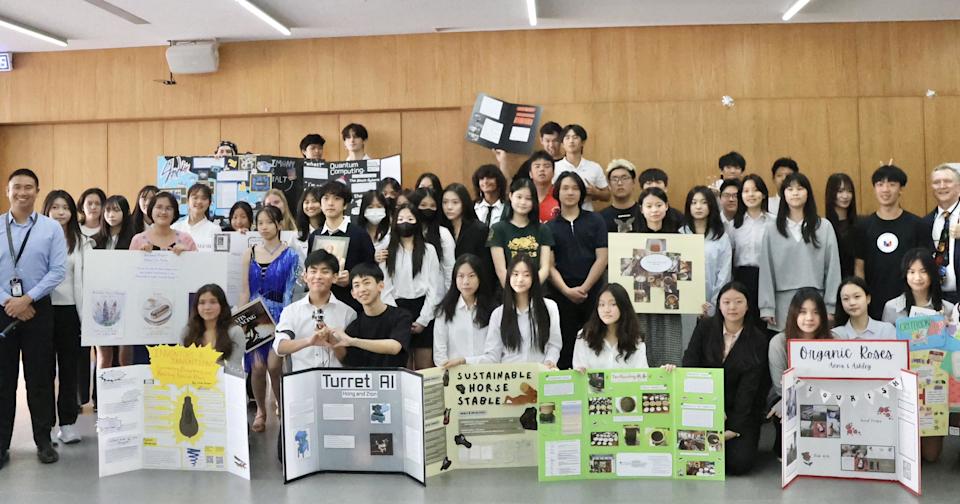
KAOSHIUNG — Kaohsiung American School (KAS, 高雄美國學校) this week held its IB “Personal Project Exhibition” (IB 個人專案展覽), featuring nearly 75 grade 10 students who spent a year developing projects aligned with the United Nations Sustainable Development Goals (SDGs, 聯合國永續發展目標), according to information released through Kaohsiung’s Education Bureau (高雄市政府教育局).
Projects ranged from environmental sustainability to assistive design and emerging technology. In one sustainability-focused effort, student Lillian Lin (林俐安) launched a student-led environmental club and turned her research into teaching materials suitable for elementary school classrooms. She also promoted hands-on gardening and recycling initiatives on campus, and sought partnerships with nearby schools to expand environmental education when on-campus space was limited.
Other projects addressed daily-life accessibility. Student Li Ning-shi (李寧希), who previously lived in the United States and has friends with disabilities, developed magnetic-button clothing concepts intended to make dressing easier while remaining visually appealing and affordable. Another student, Liu Shiuan-hui (劉軒卉), produced a book titled “Between the Ordinary and the Extraordinary” (《平凡與不平凡之間》), examining how hobbies and everyday comforts can provide emotional relief, based on observations and research that began during the COVID-19 pandemic.
In the technology track, student Owen Li (李歐文) conducted a study of quantum computing using IBM’s Qiskit simulation tools, comparing quantum algorithms and assessing potential implications for the future of computing. Additional projects included redesigning branding and bilingual content strategies with a local organic rose farm to support market expansion and reinforce sustainability messaging.
KAS said the personal project model emphasizes a “transfer of responsibility” approach, with teachers acting as mentors while students independently plan, research, execute, and present outcomes. School official Ray Lei (雷正齊) was quoted as saying the structure encourages students to pursue issues they care about beyond test-driven learning, with some parents reporting a shift from asking “Will this be on a test?” to “Can this actually solve something?” but whether their work can make a real impact.
Note: Students’ names in Pinyin are unknown; approximate Taiwan-style Pinyin was used.