
A 30-Year Cultural Legacy Opens at the National Comics Museum, Reconnecting Readers with the Golden Age of Taiwanese Comics
By KHT Staff
TAICHUNG — In May 1989, amid Taiwan’s social awakening and global uncertainty, something remarkable happened in a publishing house office: a filmmaker, an editor, and a visionary publisher decided to launch an audacious experiment. They would create Sunday Comics Weekly, a magazine that would prove Taiwan could produce world-class sequential art and compete on the international stage. Thirty-seven years later, the National Comics Museum is celebrating that gamble with one of the year’s most anticipated cultural exhibitions.
“This wasn’t just about making a magazine,” explains Huang Jianhe, curator of the landmark exhibition and a senior editor who won the Golden Comics Award for Special Contribution. Huang was there in 1989, watching as founder Hao Mingyi, filmmaker Yang Dechang, and a crew of young, hungry editors and artists bet everything on the idea that Taiwan could build its own comics industry. “We were asking: Can we do this? Not just technically, but culturally—can we prove that Taiwan has something unique to offer the world?”
Thirty years later, the answer is etched across three massive exhibition halls at the National Comics Museum’s east campus.
The Magic Moment: Taiwan in 1989
To understand Sunday Comics, you have to understand 1989. The Berlin Wall was falling. China was in upheaval. Taiwan was riding a wave of economic confidence and democratic possibility, yet the global cultural conversation was still dominated by American comics and Japanese manga. The idea that a small island nation could produce comics that would captivate readers—and collectors—worldwide seemed audacious, even foolish, to many observers.
“But that’s exactly what made it work,” says Cai Yingming 蔡英明, acting director of the National Comics Museum. “These creators weren’t trying to copy Japan or America. They were asking: What is uniquely Taiwanese? What story do we have to tell? And that’s what resonates across cultures.”
The result was a magazine unlike anything else in Asia at the time: a publication that treated sequential art as a serious creative medium, that invested in long-form storytelling, that believed readers would follow serialized narratives across months and years. It was a blueprint for a modern comics industry, built from scratch, in Taiwan.
The Legends Who Made It Happen
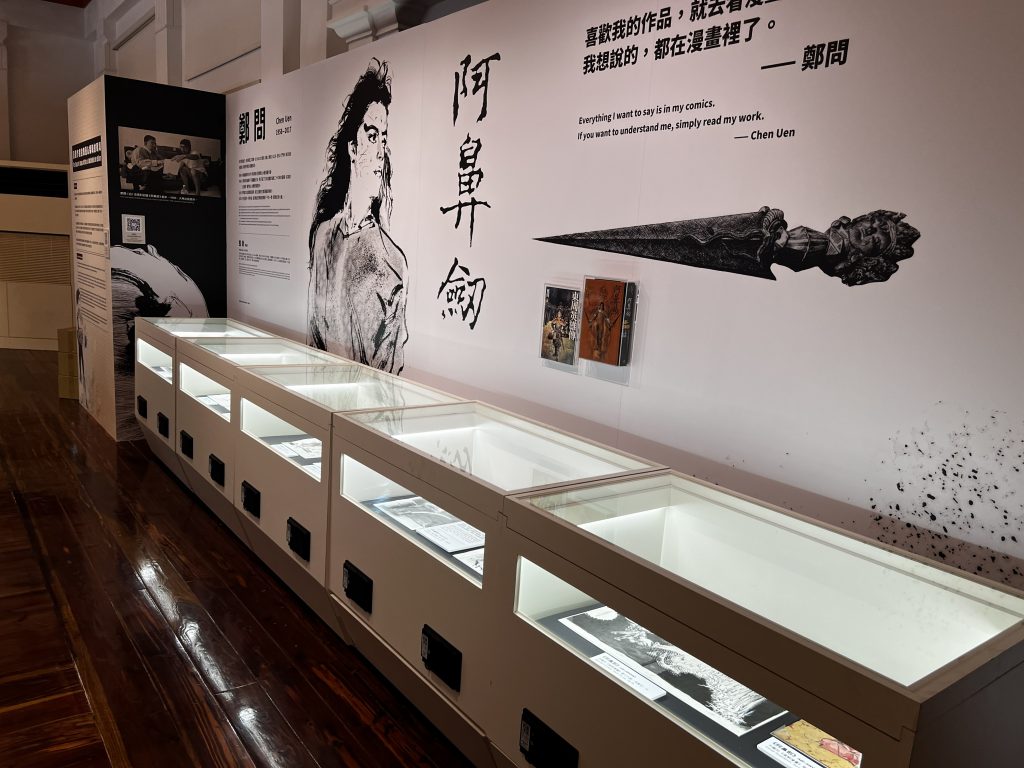
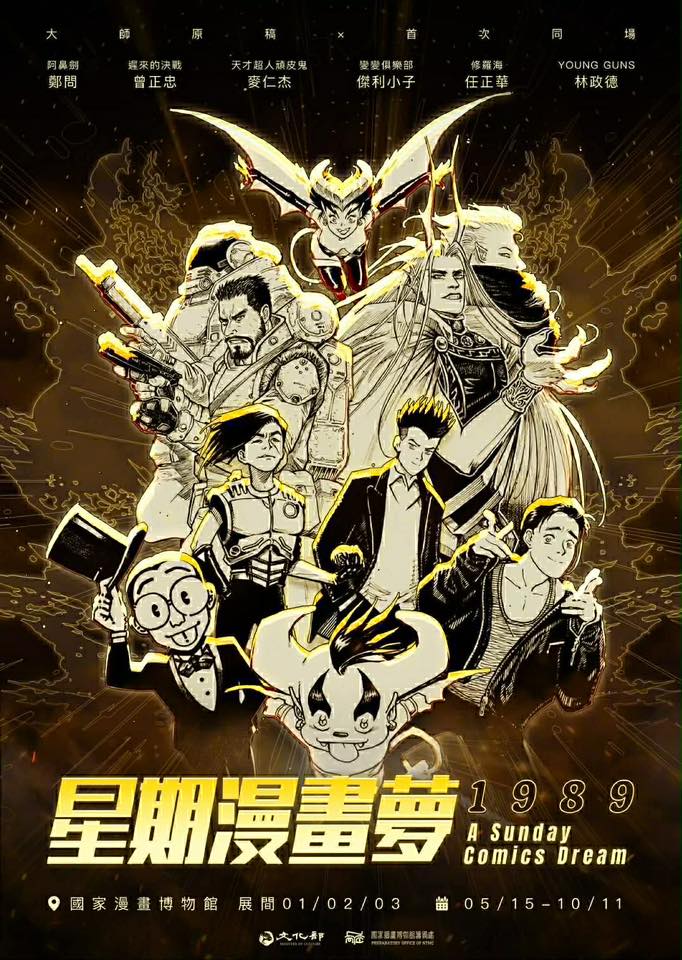
Walk through the exhibition’s first hall, and you’re surrounded by original manuscripts: page after page of hand-drawn art in all its meticulous detail. You see the brushwork of Zheng Wen (Abi Jian), the visual storytelling of Ceng Zhengzhong, the dynamic panels of Mai Renjie, and the sharp comedic timing of Jelly Bud. These aren’t just famous names in Taiwan—many are revered internationally as some of the most innovative artists in contemporary comics.
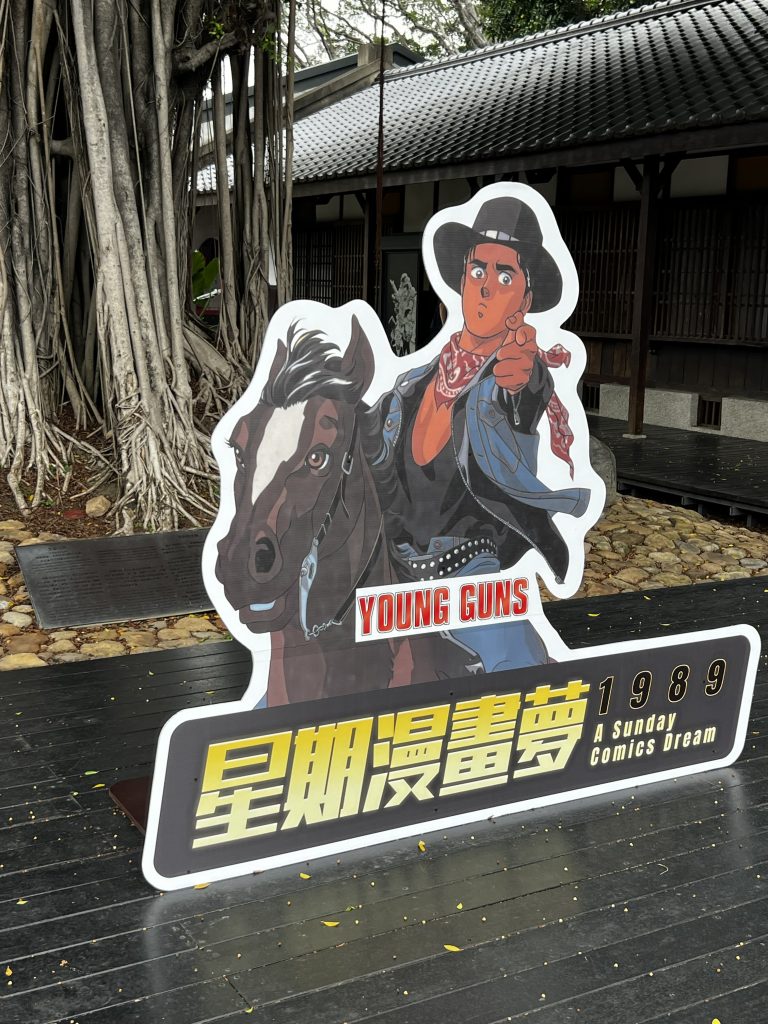
But perhaps most striking is the work of Kaohsiung-based artist Lin Cheng-de, whose YOUNG GUNS became a phenomenon across Taiwan, generating devoted fan cultures and establishing Lin as one of the most commercially successful comics creators in the region. The series’ presence in the exhibition—its bold character designs, its genre-bending narrative—represents exactly what those founders in 1989 had envisioned: Taiwanese art that could move hearts across the world.
“We wanted to bring together the absolute best,” Huang reflects. “Not the safest artists, not the most commercially proven—the most talented, the most daring, the ones who had something to say.“
A Living Archive
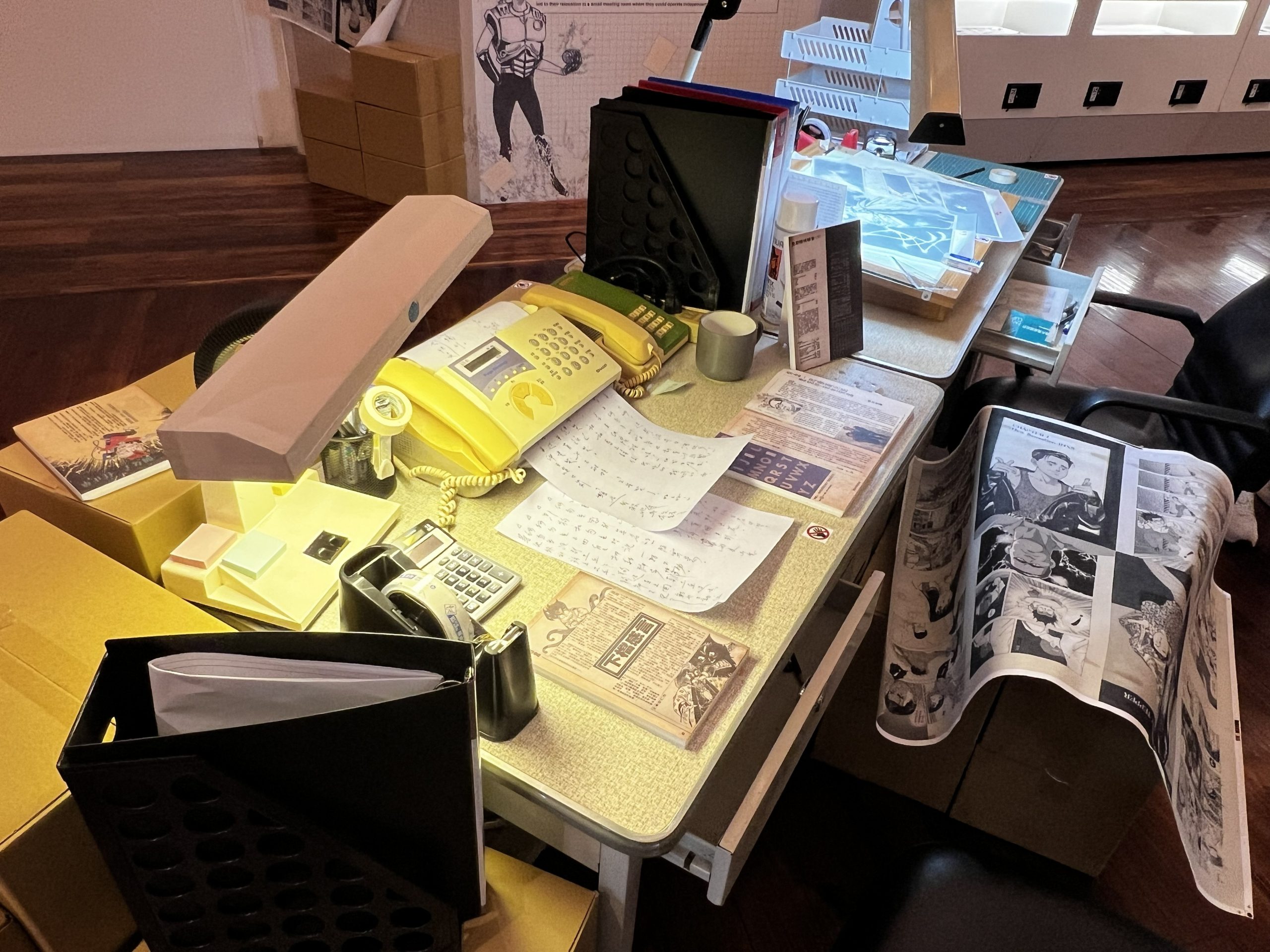
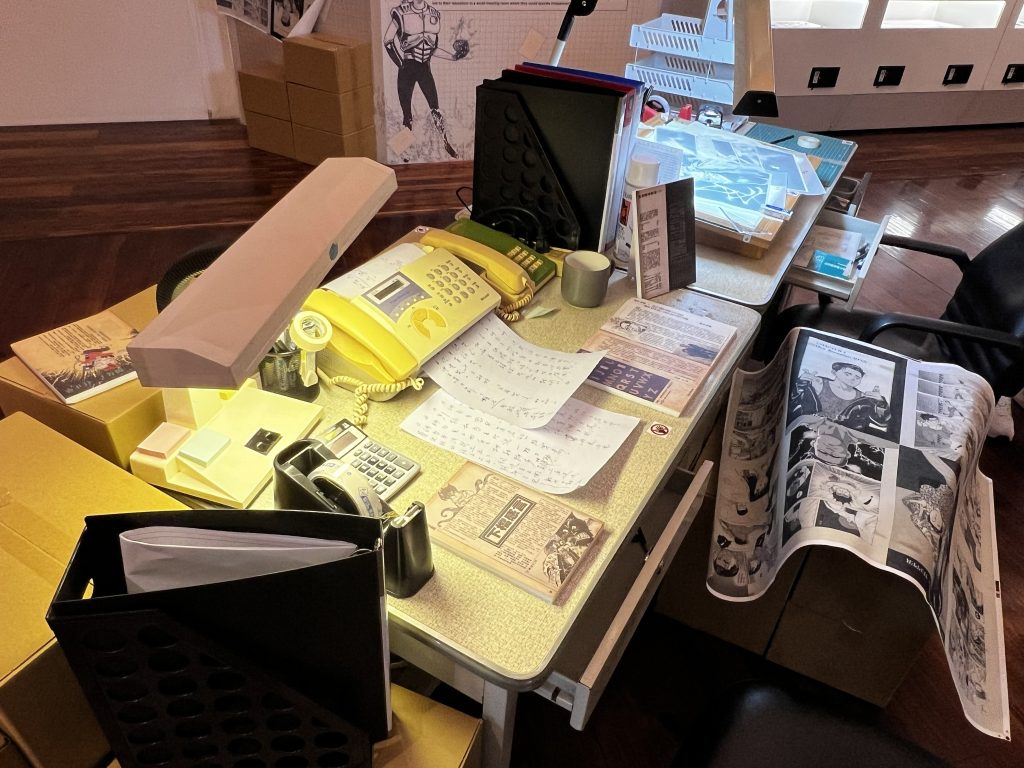
The exhibition goes beyond rare manuscripts and collectors’ items. Museum curators have recreated entire environments: a 1990s comic rental shop, complete with stacks of magazines and the worn aesthetic of a neighborhood institution; an editorial office where visitors can almost hear the creative arguments and midnight deadlines; a classroom with period desks and the manga that defined a generation’s reading habits.
There’s also a comprehensive international timeline documenting Taiwan comics’ emergence on the global stage—records of translation deals, international exhibitions, and fan conventions where creators met their worldwide audience for the first time. It’s a meticulous chronicle of how a local experiment became a global phenomenon.
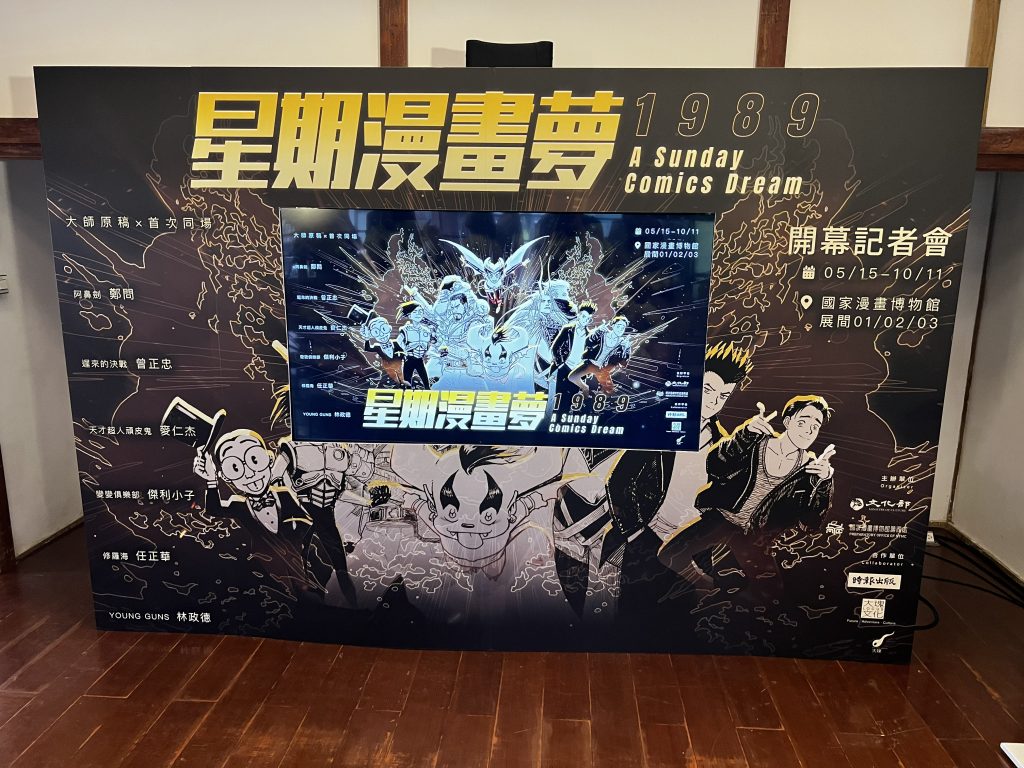
And in a symbolic gesture of continuity, core artist Mai Renjie designed the exhibition’s striking main visual: classic characters from the era, reimagined through a contemporary brush. It’s a statement: the spirit of 1989 didn’t die. It evolved.
Why This Matters Now
In an era when digital art, AI generation, and international streaming have transformed how stories reach audiences, the exhibition asks an urgent question: What do we learn from the creators who built industries by hand?
“These are cultural assets,” Cai emphasizes. “They’re not just nostalgia. They’re blueprints. Every artist working in Taiwan today—whether in comics, animation, games, or visual media—stands on the shoulders of these pioneers. This exhibition helps them see that legacy clearly.”
For readers in Kaohsiung, the exhibition carries added resonance. Lin Cheng-de’s YOUNG GUNS was a Kaohsiung product that conquered Taiwan’s imagination. The local creator was part of a moment when regional creative talent could compete at the highest national and international levels. The exhibition celebrates not just Taiwan’s comics history, but Kaohsiung’s place in it.
“This is the story of what’s possible when you believe in your own culture enough to invest in it,” Huang says. “When you refuse to be just a consumer of art, and decide to be a creator instead. That’s the real dream.”
Exhibition Details
“A Sunday Comics Dream: 1989, A Sunday Comics Dream”
Dates: May 15 – October 11, 2026
Location: National Comics Museum (East Park), Exhibition Halls 01–03, Taichung
Programming: The museum will host artist talks, panel discussions, and community events throughout the exhibition run. Check the museum website for a full schedule.
Information:
- Website: www.ntmc.gov.tw
- Facebook: @NationalComicMuseum
- Instagram: @preparatory_office_of_ntmc
Kaohsiung Times was present at the exhibition’s press launch on May 13, 2026, and spoke with curators, artists, and museum officials about the significance of Taiwan’s comics legacy.