
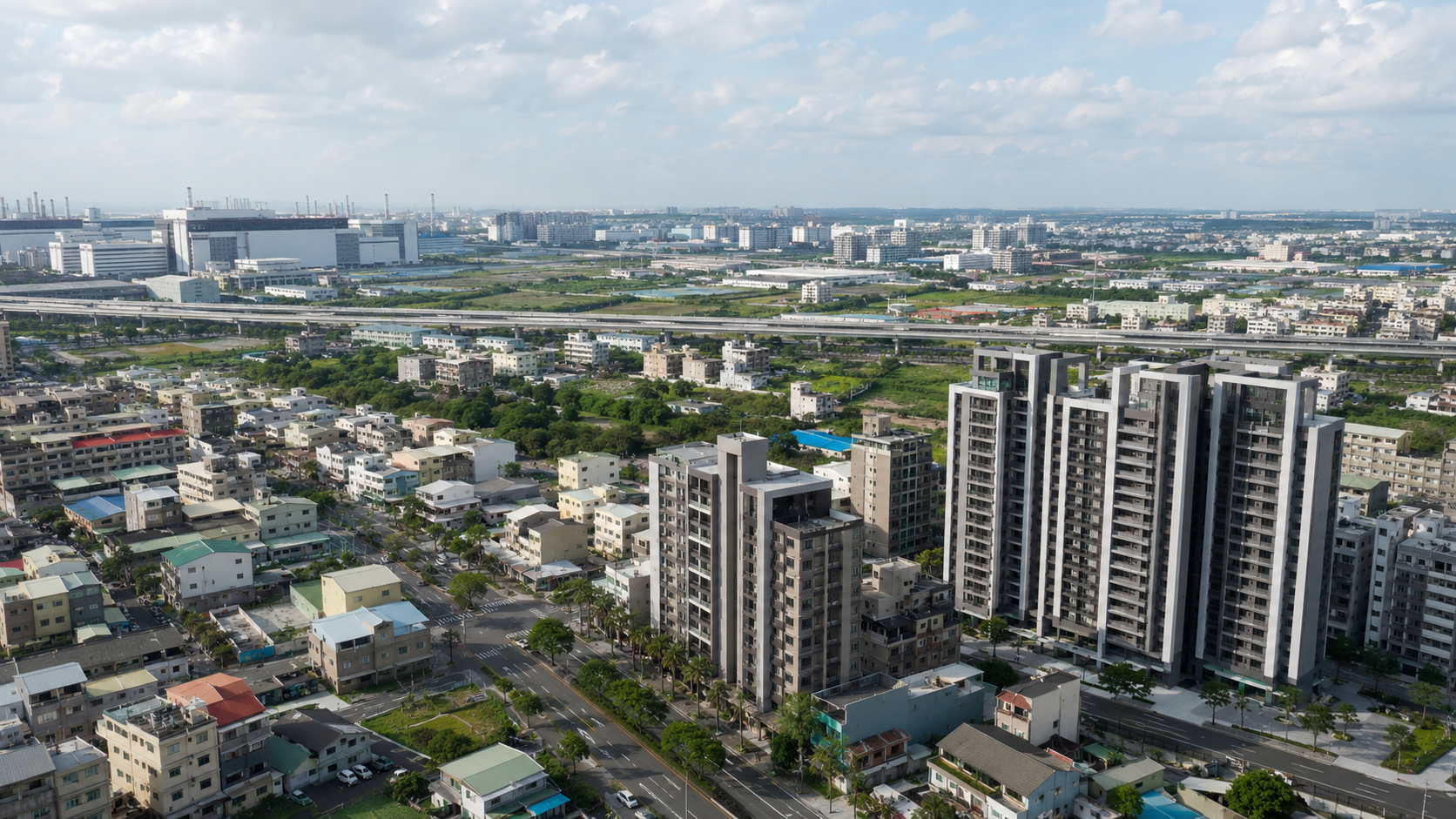
By KHT Staff. AI illustration image.
KAOHSIUNG — More households are being registered in Kaohsiung’s outer districts as new housing and industrial projects continue to change where people live, Economic Daily News reported.
The city’s average household density reached 411 households per square kilometer in the first quarter of 2026, according to Kaohsiung’s housing statistics platform.
Household density measures the number of registered households in an area. It is not the same as population density, but rather shows where housing demand and residential concentration are increasing.
Sinsing District (新興區) remained the city’s densest area, with 12,727 households per square kilometer. Lingya District (苓雅區) and Cianjin District (前金區) followed.
However, the fastest growth was outside the traditional city center.
Ciaotou District (橋頭區) recorded the city’s fastest household-density growth, reaching 747 households per square kilometer, up about 11.2% over the past three years.
Cianjin also rose by more than 10%, while Nanzih District (楠梓區), Renwu District (仁武區), and Dashe District (大社區) were also among the top growth areas.
One realty trend analyst told the media that the shift reflects new housing development, rezoning, and industrial expansion, meaning areas linked to the “TSMC concept,” including Ciaotou, Nanzih, and Renwu, are seeing faster household-density growth than many central districts.
High housing prices downtown are also pushing some demand outward.
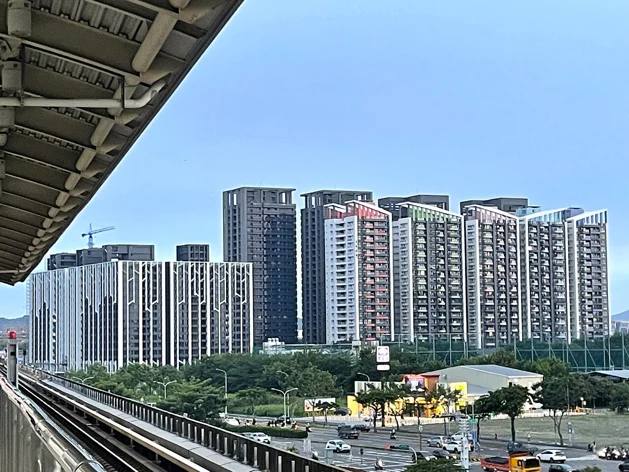
However, denser districts are not always seeing higher prices. Some data shows housing prices in Nanzih, Renwu, and Dashe have fallen over the past three years, while Ciaotou and Cianjin rose 11.8% and 8.8%, respectively.
The data suggests Kaohsiung’s industrial growth is drawing more households north and outward, but the housing market is becoming uneven as supply, affordability, and expectations shift.