
By KHT Staff. Images via Pingtung County Govt.
PINGTUNG — A deity palanquin preserved for more than a century has left its customary surroundings in Donggang and entered a museum for the first time.
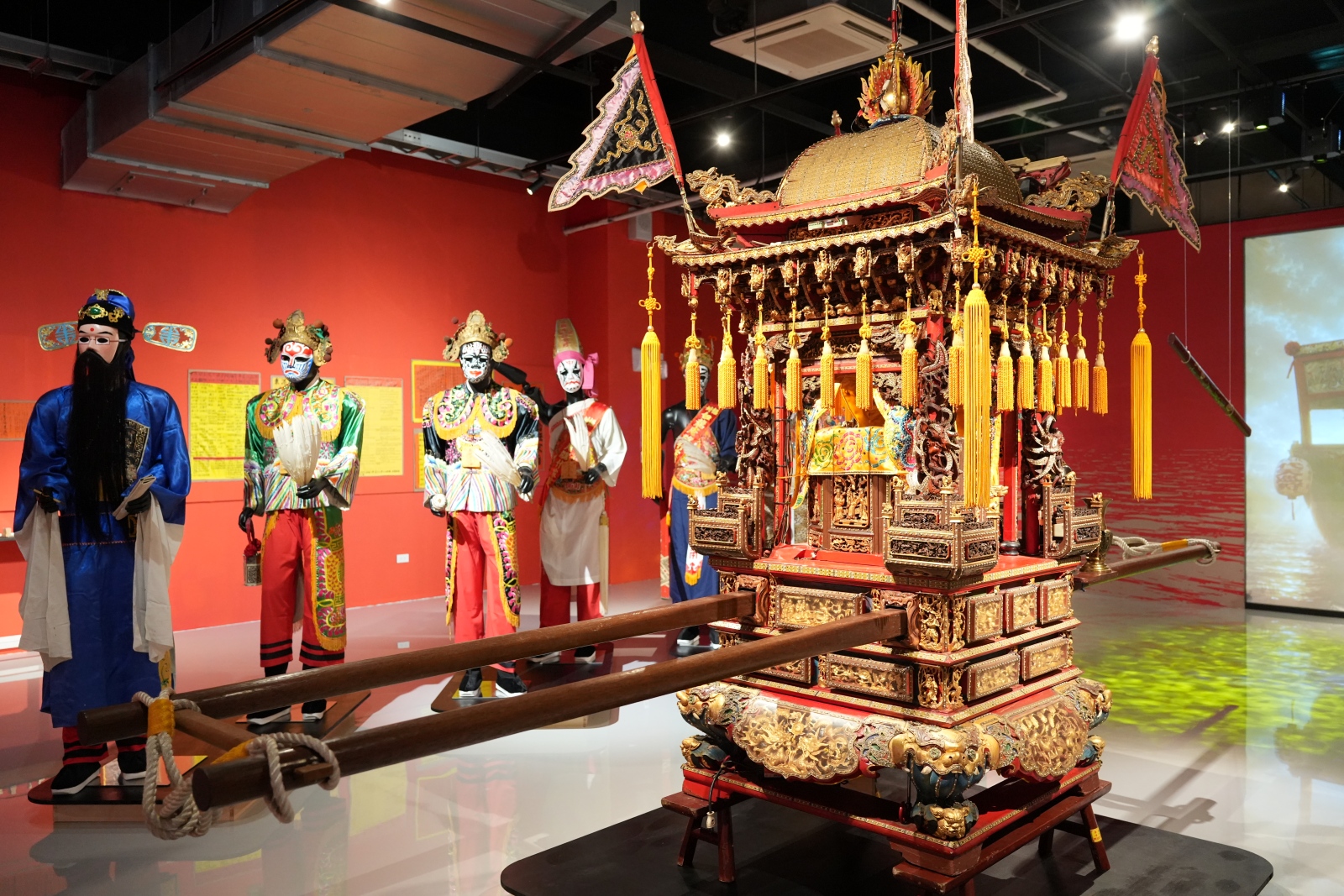
A deity palanquin, sometimes described as a sedan chair, is more accurately a portable shrine. The ornate, roofed structure is mounted on long wooden poles and carried on the shoulders of bearers during religious processions, usually with a statue or sacred representation of a deity inside.
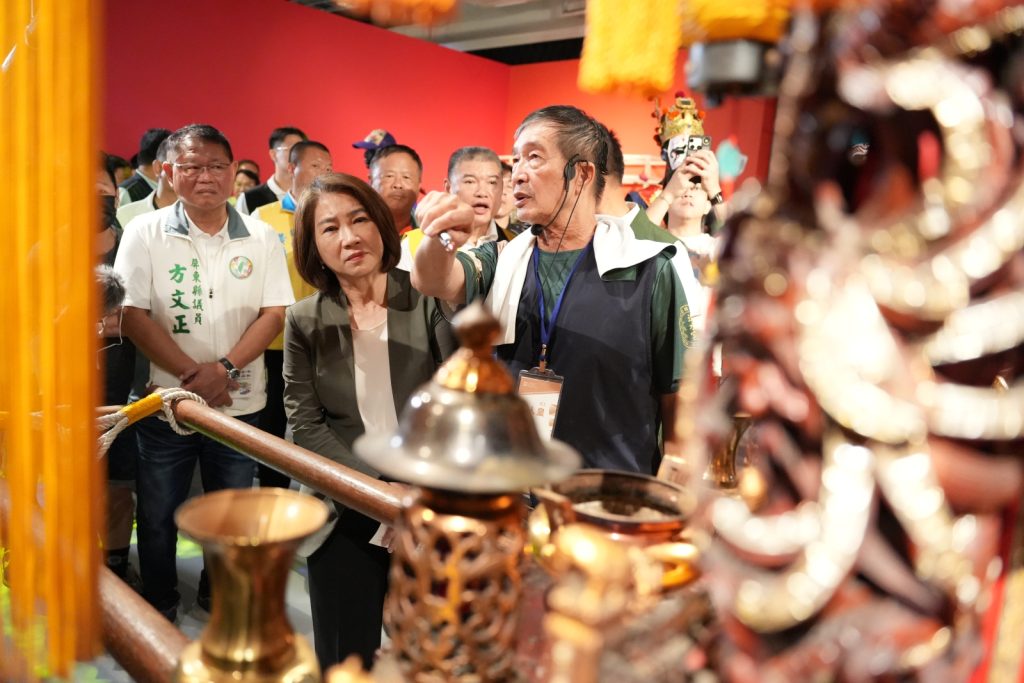
The palanquin is the centerpiece of Tianbao (天寶, “Heavenly Treasures”), a new exhibition at the Pingtung King Boat Cultural Museum examining the religious traditions of Tingchung Street (頂中街).
The exhibition, which opened Sunday, is the fourth in a seven-part series devoted to Donggang’s historic “seven quarters.”
The quarters are traditional neighborhood organizations that developed largely along Yanping Road during the Japanese colonial period. Each has its own temples, ceremonial groups and assigned responsibilities during the Donggang King Boat Festival.
Alongside the palanquin, Tianbao displays uniforms worn by its bearers, flags, lanterns, handwritten records, old photographs and other objects preserved by Tingchung Street residents.
The exhibition was designed as a “treasure pavilion,” although its organizers said the word “treasure” does not refer only to objects that are old or valuable.
Many of the exhibits are ordinary ceremonial items that appeared repeatedly in neighborhood processions and religious gatherings. Their significance comes from the generations of residents who used, maintained, and eventually passed them down.
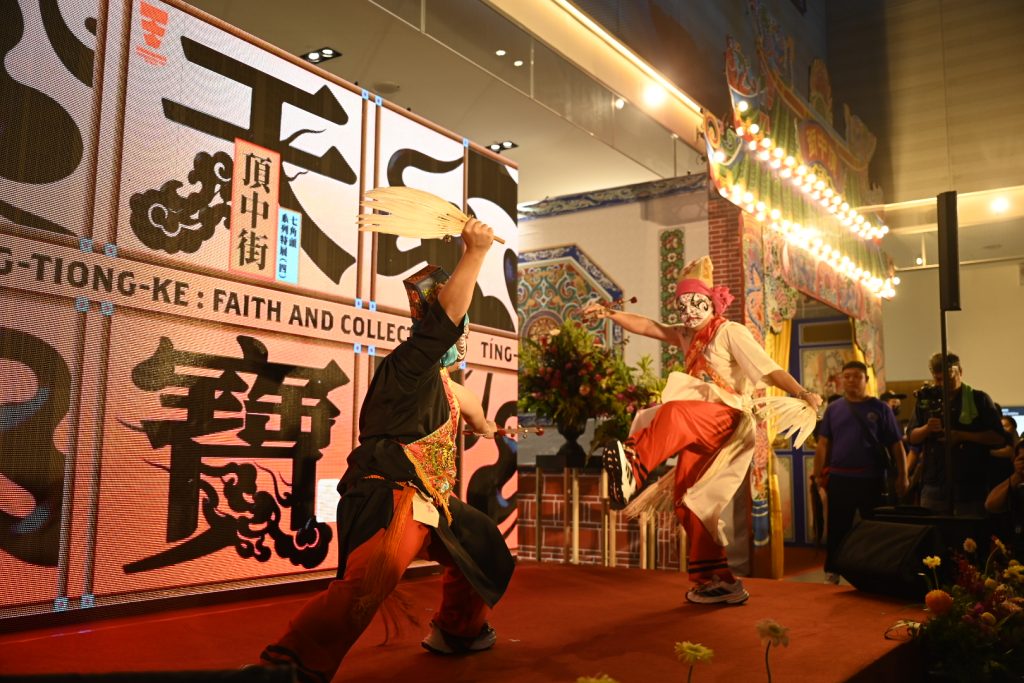
The name Tianbao is drawn from the classical expression wuhua tianbao (物華天寶), referring to the finest products of the natural world as treasures bestowed by heaven. It also alludes to the Wangye deities’ role as representatives who “patrol on behalf of Heaven.”
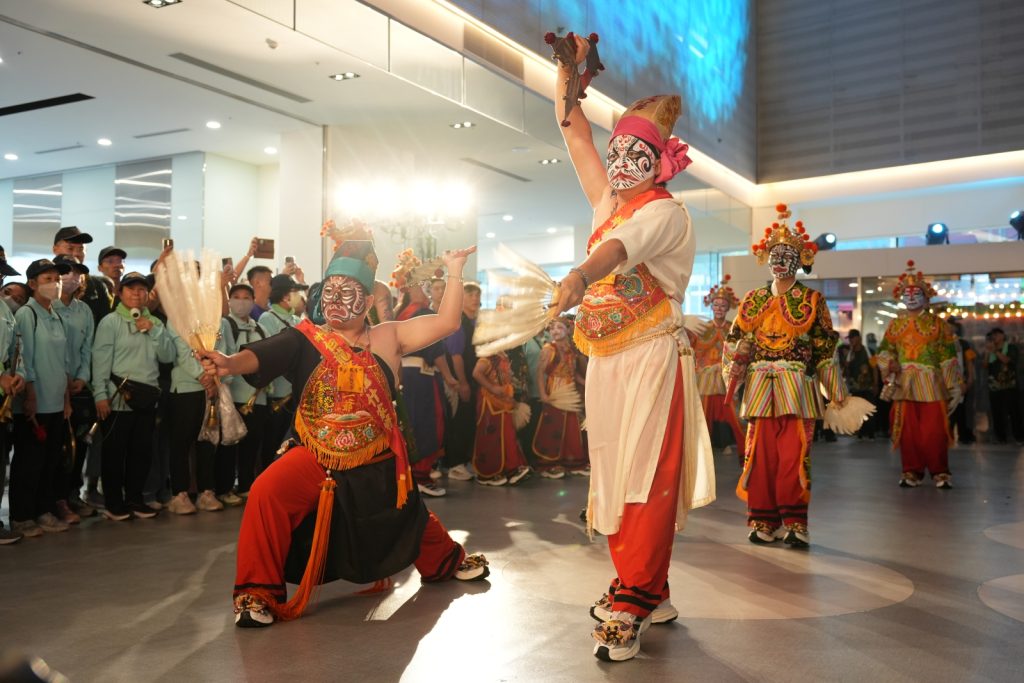
Sunday’s opening brought the exhibition’s subject matter temporarily back to life. Deities from Tingchung Street’s Jinshui Temple and Donggang’s Gongshan Hall were ceremonially installed at the museum, while Gongshan Hall’s Shijiajiang guardian troupe performed outside.
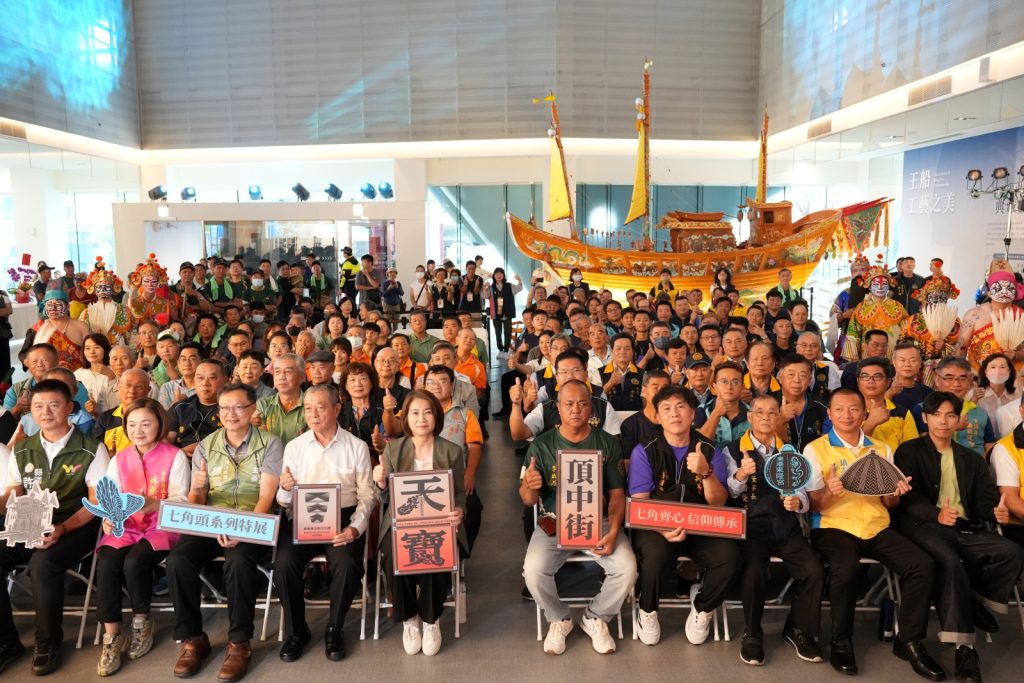
A traditional ceremonial arch, procession music and deity-welcoming rites were also used to recreate some of the atmosphere of the King Boat Festival.
The Donggang festival is held once every three years and has been designated an important national folk tradition. Its preservation depends not only on temples and ritual specialists but also on the participation of the seven quarters, whose residents divide the work of organizing processions, carrying palanquins and completing other ceremonial duties.
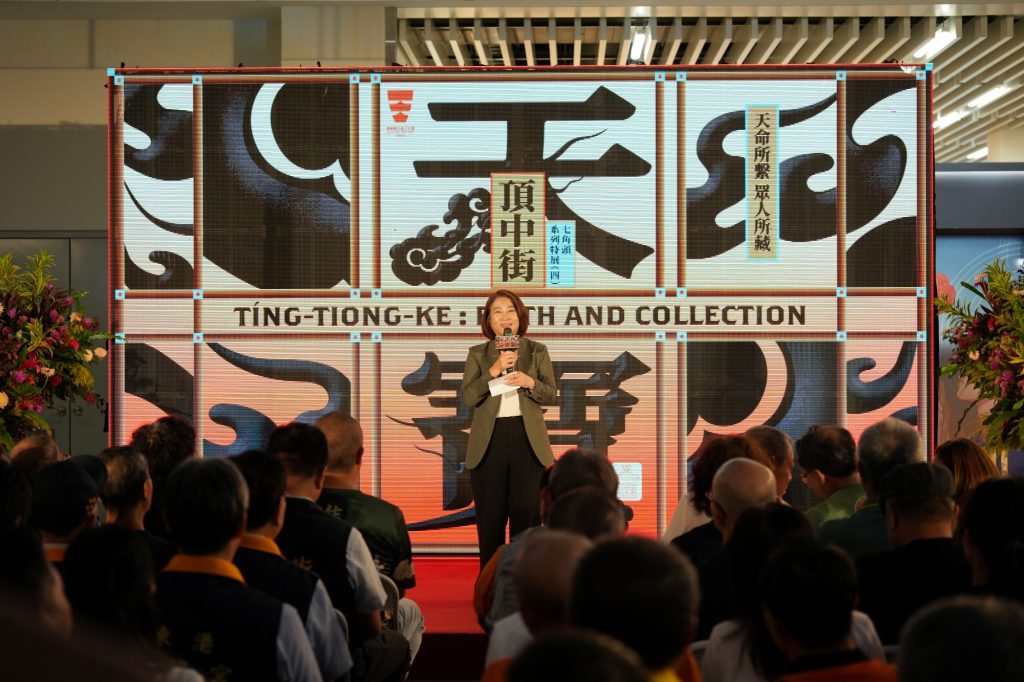
The five-story museum opened in 2024 to document that wider cultural system, including Wangye worship, wooden King Boat construction and the seven-day festival itself.
Its seven-quarter exhibition series began with Tingthau Quarter (頂頭角), Luntzaiding Quarter (崙仔頂角) and Hsithau Quarter (下頭角). Future installments will cover Anhai Street (安海街), Putzu Quarter (埔仔角) and Hsia Chung Street (下中街).
Each exhibition is expected to run for approximately three months.
The current series also serves as a lead-up to the next Donggang King Boat Festival in 2027. By then, the century-old palanquin will no longer be simply an object behind glass: it will again be part of a living ritual carried forward by the neighborhood that preserved it.
Source: Pingtung County Government