
By RK Shih/Staff
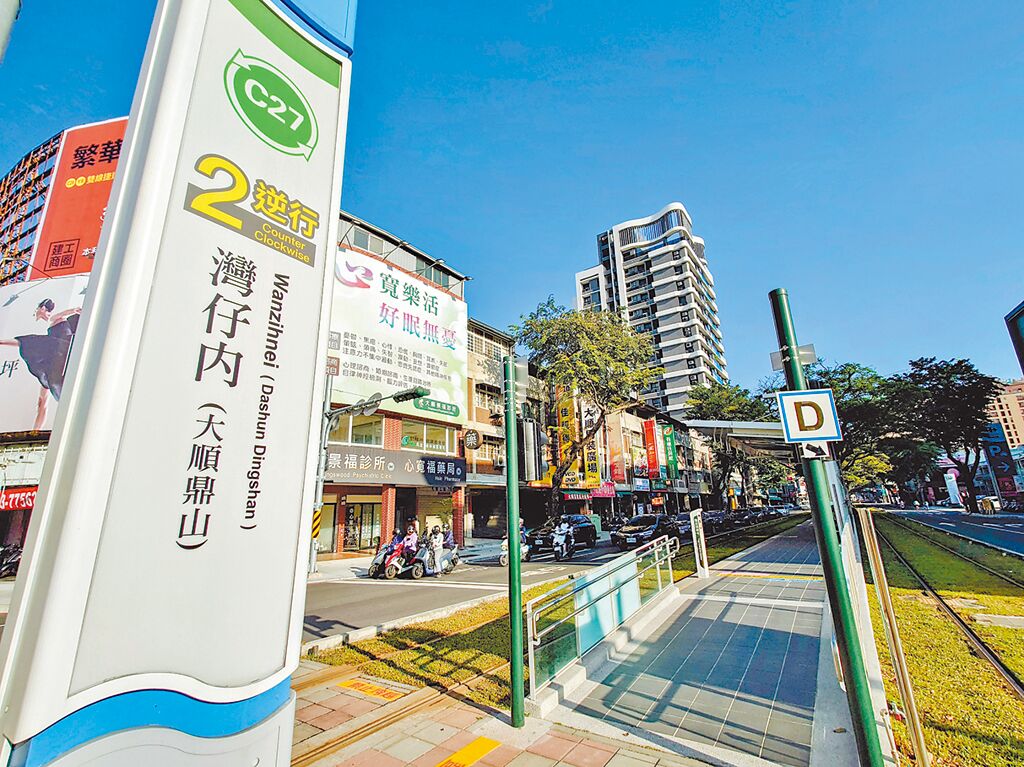
KAOHSIUNG — Kaohsiung Rapid Transit Corp. (高雄捷運公司) has pledged to correct Taiwanese-language station announcements after residents flagged pronunciation errors at several MRT and light rail stations, including Fengshan Station (鳳山站) and Dingshan Station on the Circular Light Rail (大順鼎山站).
The China Times reported the issue emerged after Kaohsiung Metro recently updated Taiwanese-language audio announcements across parts of the MRT and light rail systems. While some changes were welcomed by Taiwanese speakers, others drew criticism for diverging from established local pronunciation.
One widely supported revision was the announcement at Kaohsiung Main Station, where the Taiwanese term was changed from “tshia-tsam” (車站) to “tshia-thau” (車頭), a form many speakers consider more natural. Kaohsiung Rapid Transit confirmed the updates were made after consultation with Taiwanese-language instructors recommended by the Control Yuan (監察院), and that the recordings were produced by a professional studio.
However, several revisions were later identified as incorrect. At Fengshan Station, the character “shan” (山) was pronounced as “san,” despite the Ministry of Education’s Taiwanese dictionary listing the correct pronunciation as “suann.” Conversely, at Dingshan Station, the character should be pronounced “san,” but was recorded as “suann.” Errors were also reported on bus routes, including the mispronunciation of the character “jia” (家) at Sanmin Vocational High School (三民家商).
Kaohsiung Rapid Transit acknowledged receiving multiple reports of suspected pronunciation errors since the rollout. The company said that because Taiwanese has many regional variations, some revisions may differ from local usage, and pledged to invite language experts to conduct another review. The city’s bus joint management office said it would also consult university linguistics faculty to reexamine station announcements.
Kaohsiung City Councilor Chang Po-yang (張博洋) said language naturally evolves over time, but emphasized that place names are closely tied to local history. He suggested that transit authorities consult local elders when determining pronunciations for older place names, to ensure public services reflect community usage and cultural respect.