
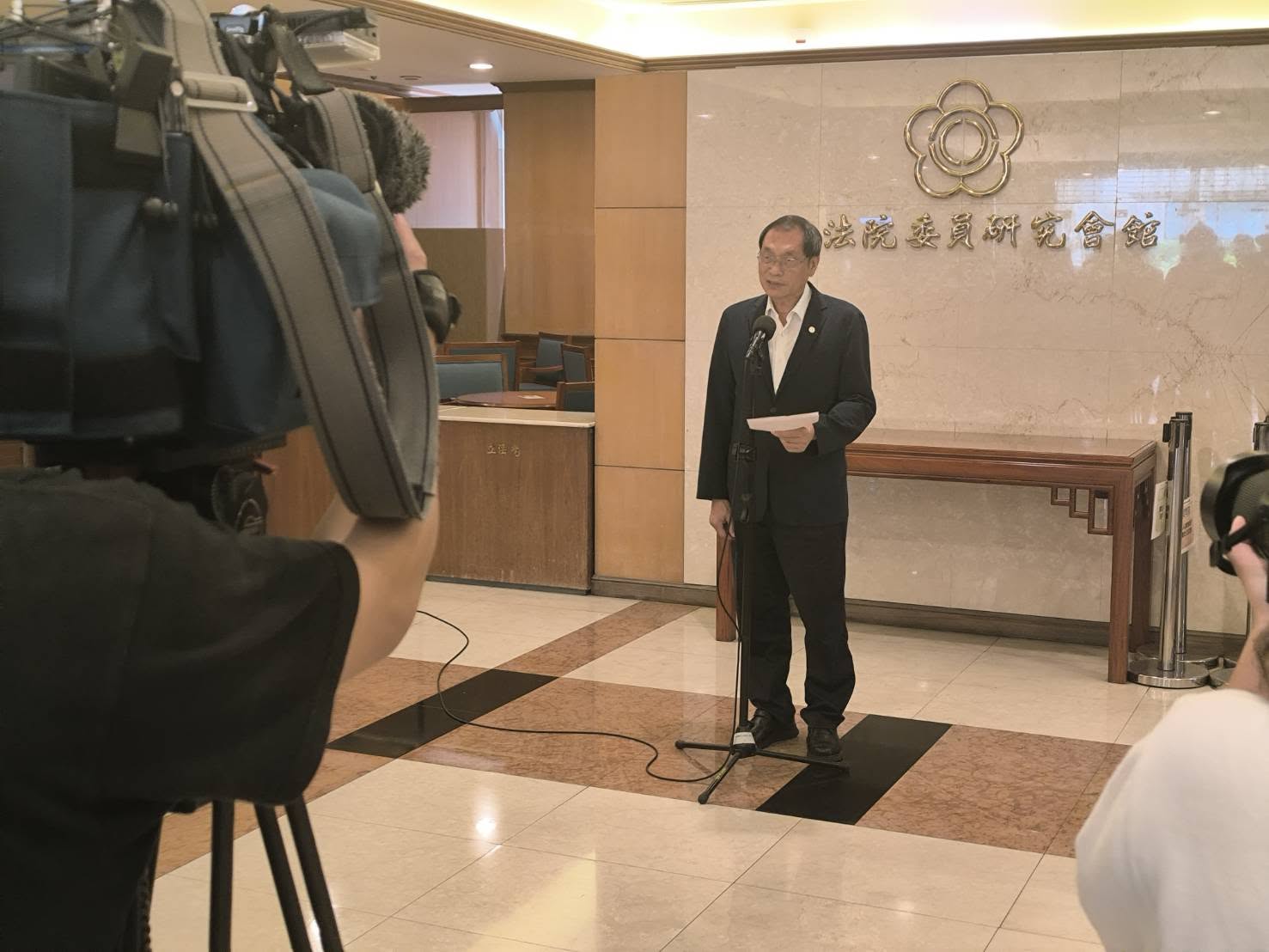
By KHT Staff. Image via 蘇清泉 FB page.
PINGTUNG — Prosecutors have indicted Antai Tian-Sheng Memorial Hospital (安泰醫院) founder Su Ching-chuan (蘇清泉), the KMT’s nominee for Pingtung County magistrate, and three others over a 2024 fire that killed nine people at the hospital in Donggang Township (東港).
The indictment reverses an earlier deferred prosecution decision in the case, and prosecutors issued a lengthy press release to explain the reasons for the indictment.
The fire broke out on Oct. 3, 2024, killing nine people and injuring several others through smoke inhalation.
Su is an at-large legislator for the Chinese Nationalist Party (Kuomintang, KMT) and will challenge incumbent Pingtung County Magistrate Chou Chun-mi (周春米) of the Democratic Progressive Party (DPP) in the Nov. 28 election.
Pingtung prosecutors had previously granted deferred prosecution to Su, hospital general affairs chief Su Wei-sung (蘇威菘), an electrical equipment worker surnamed Cheng (鄭), and a building safety inspector surnamed Kuo (郭). The four had acknowledged building violations and paid compensation to victims’ families, according to the report.
However, the High Prosecutors Office Kaohsiung Branch later overturned the decision, saying the handling of a major public safety case was improper, and ordered Pingtung prosecutors to reopen the investigation.
Political analyst and lawyer Ross Feingold said the timing of the indictment was unusual because it came months before a competitive county election.
“Cynics might see a political motive in the decision to terminate the deferred prosecution agreement and instead indict Su,” Feingold said, noting that Chou defeated Su by only 2.5 percentage points in the 2022 magistrate race.
Su said he respects the investigation and has cooperated with the Ministry of Health and Welfare (衛生福利部), Pingtung County Government (屏東縣政府), and local health authorities to improve hospital safety. He said he would face the judicial process “bravely and humbly.”
The case also shows that in Taiwan, deferred prosecution decisions by district prosecutors can still be overturned by higher prosecutorial authorities, a feature that differs from how similar agreements are usually handled in the United States, for example.