
By Staff
Image via China Times.
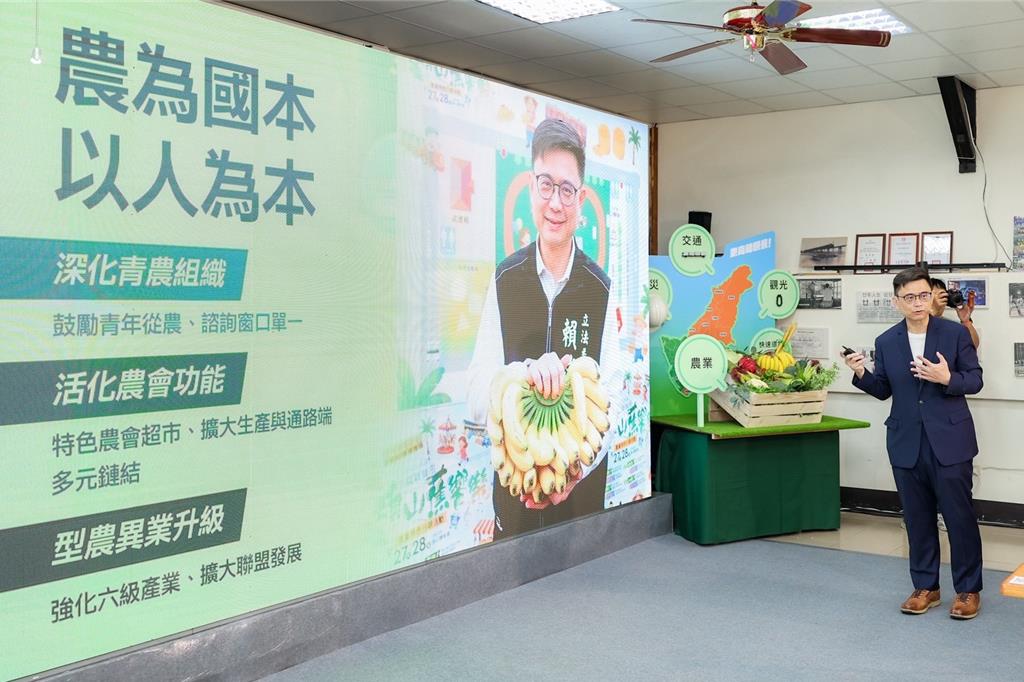
KAOHSIUNG — Democratic Progressive Party (DPP) lawmaker Lai Jui-lung (賴瑞隆) — one of four contenders seeking the DPP nomination in what is shaping up to be a highly competitive Kaohsiung mayoral primary — put forward new policy proposals on Wednesday, outlining a development vision focused on eastern Kaohsiung and the Kaoping River basin.
The winner of the DPP primary selection process will be announced in January 2026.
Lai said he would seek to revive the “Kaoping River civilization,” and presented policy ideas spanning disaster prevention, industry, transportation, health care, quality of life, and sustainability. He said the goal of a possible Lai administration would be to promote smart governance, highlight local characteristics, and narrow the urban–rural divide to make eastern Kaohsiung a more livable and sustainable region.
Lai said districts including Fengshan District (鳳山區), Dashe District (大社區), Renwu District (仁武區), Niaosong District (鳥松區), and Dashu District (大樹區) would be prioritized for smart governance and technology-driven development.
On transportation, Lai said future planning would center on the Kaohsiung MRT Yellow Line while advancing major infrastructure projects, including extensions of the Kaohsiung MRT Red Line (高雄捷運紅線) to Linyuan District (林園區), National Freeway No. 7 (國道七號), the Kaoping Second Expressway (高屏第二快速道路), and an extension of Provincial Highway 27A (台27甲線) connecting to National Freeway No. 10 at Ligang (國道十號里港) in Pingtung County.
He also said feasibility studies would continue for proposed MRT lines linking Qishan and Meinong, as well as Dashu, and for a potential Qishan expressway. Lai said the projects are intended to form a regional corridor serving commuting needs, industrial logistics, tourism, medical access, emergency response, and disaster prevention.
Lai also pledged to strengthen medical services for the elderly and the city’s disadvantaged populations. He said hospitals, including E-Da Hospital (義大醫院), Cishan Hospital (旗山醫院), Kaohsiung Veterans General Hospital (高雄榮民總醫院), and the military’s 802 Military Hospital (國軍802醫院) would be better integrated with local clinics and mobile medical services. He said telemedicine, community health management, and transportation support would be expanded to improve access to care in outlying areas.