
By Eryk Michael Smith/KHT Staff.
KAOHSIUNG/TAIPEI — Taiwanese startups entering foreign markets frequently underestimate the difficulty of securing funding, meeting local regulations and establishing a reputation among potential customers, according to the head of Taiwan’s Small and Medium Enterprise and Startup Administration.
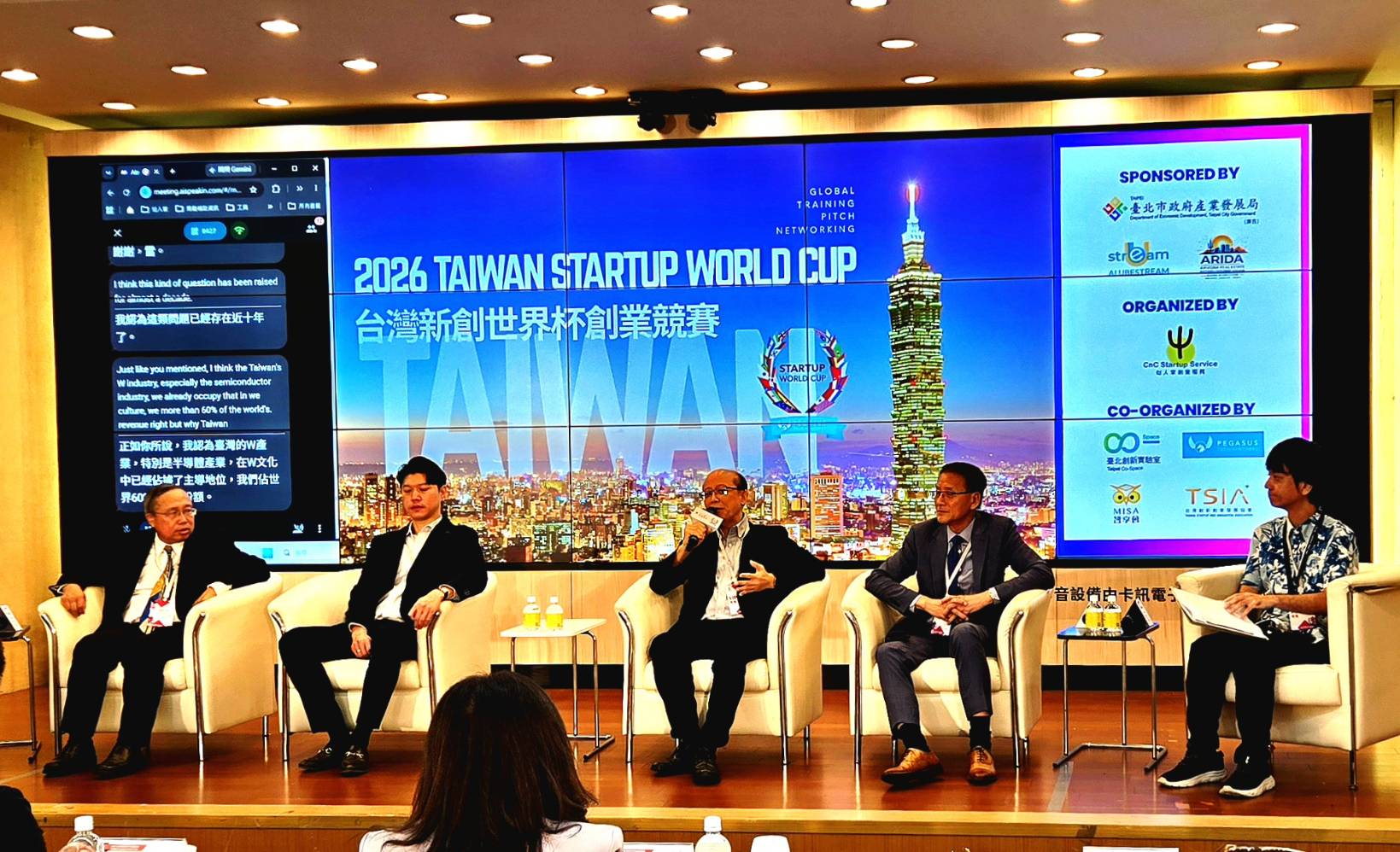
Lee Guann-jyh (李冠志), or GJ Lee, director-general of the Small and Medium Enterprise and Startup Administration, a Ministry of Economic Affairs agency, told the Kaohsiung Times at the Startup World Cup finals in Taipei on August 27 that entering an overseas market can represent “a totally new world” for a young Taiwanese company.
Funding remains a major challenge, but Lee said regulatory requirements can be equally difficult, particularly for startups working in biotechnology, cybersecurity, defense technology and other tightly regulated fields.
Regulatory differences between countries can further complicate expansion.
“We need to help startups become more familiar with and fully understand all the regulatory requirements in the target market,” Lee said.
Government considers legal changes
Asked whether Taiwan’s own regulations create unnecessary difficulties for startups, Lee pointed to financial rules and intellectual property policy.
Many young companies are developing new approaches to payments and cash flow, placing them in areas where existing financial regulations may not adequately address emerging business models.
Lee said the government is considering adding provisions specifically designed to strengthen Taiwan’s startup ecosystem. The proposals follow calls from startup representatives for regulatory sandboxes, tax reforms and better support for entrepreneurs recovering from failed ventures.
The planned legislation is expected to cover areas including financing, tax incentives, research subsidies, talent development and equipment upgrades. It has not yet completed the legislative process.
Lee said the government also wants to expand regulatory sandboxes, allowing companies to test innovative products or services in a controlled environment before all existing regulations are applied.
Building opportunities in southern Taiwan
Lee said achieving a better regional balance is also a government priority, particularly for companies outside northern Taiwan.
The government operates the Startup Terrace Kaohsiung, formally known as the Asia New Bay Area Startup Terrace (亞灣新創園), which works with universities, industry groups, professors, entrepreneurs and the Kaohsiung City Government.
Lee spoke ahead of the 2026 Meet Greater South exhibition, which opened Friday at the Kaohsiung Exhibition Center. The event focuses on artificial intelligence, smart manufacturing, health technology, sustainability and other potential applications for southern Taiwan’s industries.
The government is providing exhibition space and promotional support to companies based at the Kaohsiung startup hub, with the aim of connecting them with corporate customers, investors and distribution partners.
Lee also highlighted developing links between Kaohsiung and Arizona, where Taiwan Semiconductor Manufacturing Co. has made major investments.
TSMC’s expansion in Arizona could create opportunities for the smaller companies and startups that form part of Taiwan’s semiconductor supply chain, Lee said.
Rather than entering foreign markets alone, Taiwanese startups can benefit by working together in industry clusters and participating in supply-chain partnerships, he added.
Taiwan’s importance to the global semiconductor industry, Lee said, is not well-established.
Taiwan’s objective, he said, should be to use that position to build what he called a “democratic supply chain” with international partners.
Sources: Small and Medium Enterprise and Startup Administration, Public Television Service, Kaohsiung-Arizona startup cooperation.