
By KHT Staff
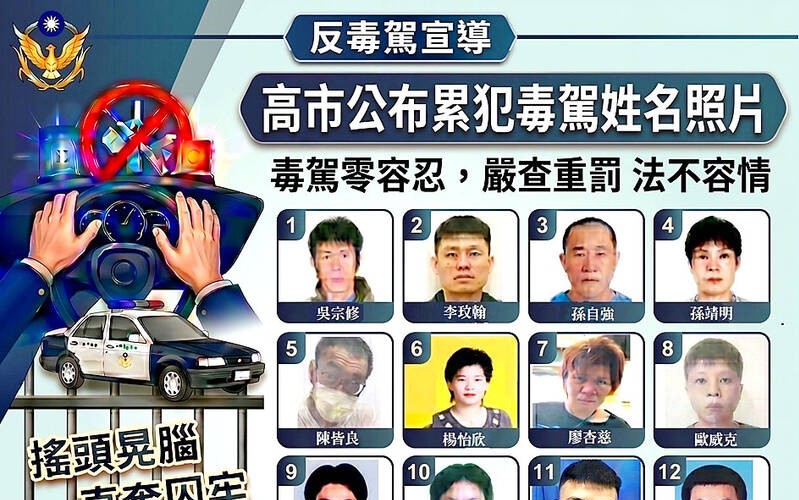
KAOHSIUNG — Police have publicly released the names and photos of 13 repeat drug-impaired driving offenders as the city looks to curb a sharp rise in drug-driving cases.
The Kaohsiung City Police Department Traffic Division (高雄市政府警察局交通警察大隊) posted the information on social media, saying drug-impaired driving creates serious risks for other road users and that public disclosure is intended to strengthen deterrence.
Police said Kaohsiung recorded 739 drug-impaired driving cases from January through May, an increase of 299 cases from the same period last year.

The Traffic Division said it will conduct over 300 targeted enforcement operations against drug-impaired driving this year. The operations include roadside inspections, patrols, and expanded stop-and-check measures.
The move comes amid growing concern over impaired driving nationwide. According to police data cited by the Taipei Times, drug-driving cases referred for prosecution across Taiwan rose from 43 in 2021 and 46 in 2022 to 315 in 2023, then surged to 2,619 in 2024 and 8,659 last year. From January through April this year, 4,725 drug-driving cases were recorded nationwide, nearly three times the number from the same period last year.
Other local governments, including Taipei, Miaoli County, and Pingtung County, have also released information on repeat drunk- or drug-driving offenders.
The tougher approach follows revised procedures for handling suspected drug-impaired driving, which took effect last month. Under the updated rules, drivers showing signs such as erratic driving, confusion, incoherent speech, or muscle tremors may be given rapid saliva tests. Drivers who test positive can be arrested at the scene.
Penalties for drug-impaired driving include fines of up to NT$120,000 for cars and NT$90,000 for motorcycles, immediate vehicle impoundment, and license suspension. Repeat offenders face heavier penalties, including longer license suspensions.
Authorities have also added drug-impaired driving offenders to preventive detention provisions, allowing repeat offenders to be detained to prevent further incidents.