
By KHT Staff. Photos courtesy of the Water Resources Agency.
KAOHSIUNG — (KHT) — Rainfall in southern Taiwan this year has fallen below levels recorded during the 2021 drought, widely described as a once-in-a-century event, increasing pressure on regional water supplies as river flow declines.
The Gaoping River (高屏溪), the region’s primary water source, has dropped to just 8.2 cubic meters per second, with daily available supply reduced to about 800,000 metric tons. To offset the shortfall, authorities have begun drawing on sub-surface water and groundwater reserves.
The Liberty Times reports that a key part of that strategy is the Liling sub-surface water project (里嶺伏流水工程) on the Laonong River (荖濃溪), now in its final construction phase. The system is expected to begin operations in July, adding up to 100,000 metric tons of water per day.
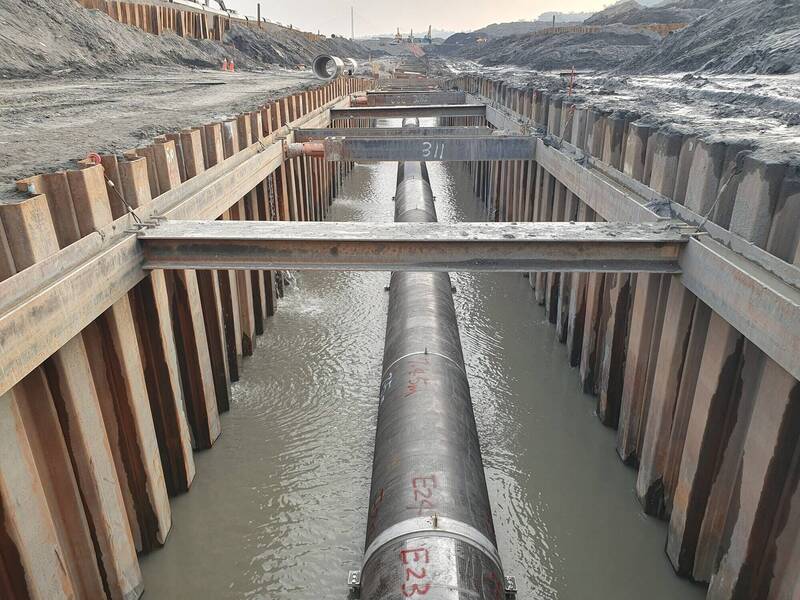
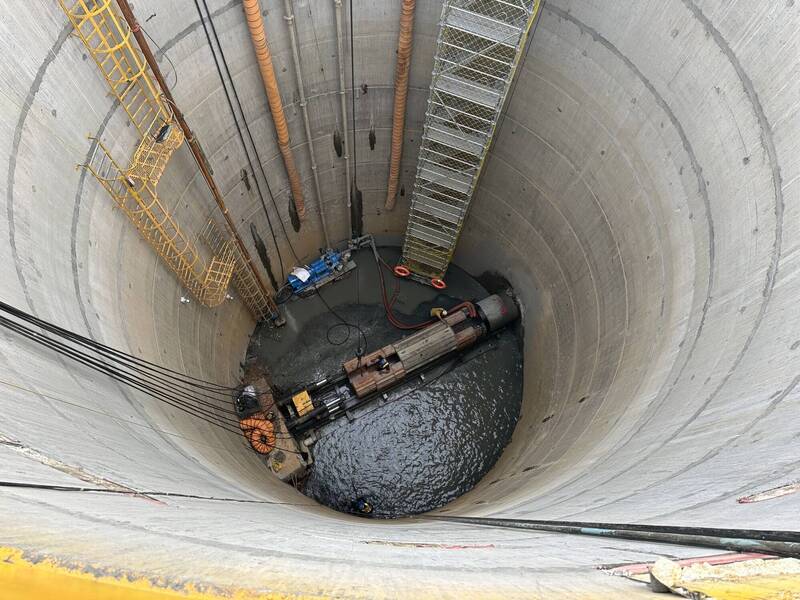
Unlike conventional reservoirs, the project draws water from beneath the riverbed, using natural sand and gravel layers as filtration. Engineers have installed a 1,200-meter steel-reinforced collection pipe, along with two intake wells positioned along the Laonong and Cishan (旗山溪) rivers.
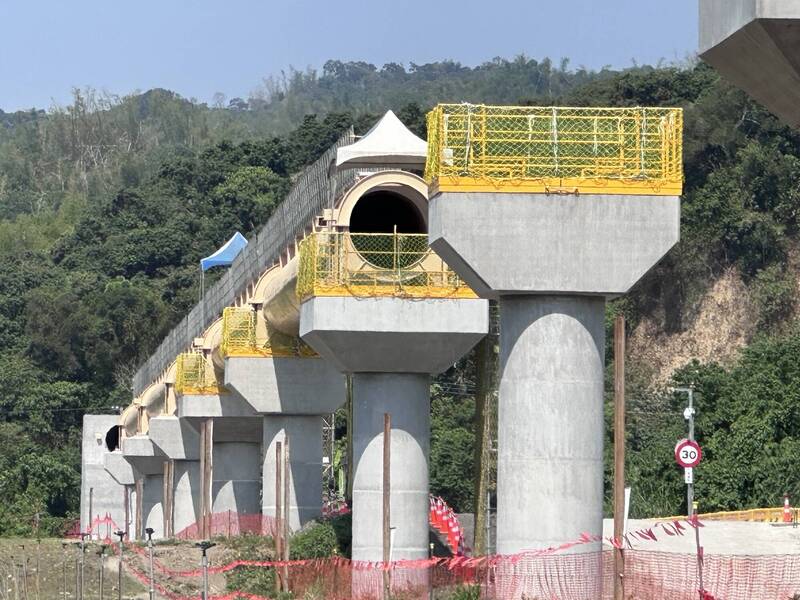
A 946-meter pipeline bridge crossing the Cishan River has also been completed, linking the system to the Nanhua–Gaoping pipeline (南化高屏聯通管), which distributes water across southern Taiwan.
Officials say sub-surface water sources are more stable and less affected by seasonal extremes, producing clearer water and reducing treatment demands. Once completed, the project will increase total sub-surface water capacity in the region to approximately 440,000 metric tons per day.
With southern Taiwan lacking large reservoir capacity and daily demand reaching around 1.6 million metric tons, authorities say diversified supply systems will be critical as drought conditions deepen.