
By KHT Staff. Images via THSR 台灣高鐵 FB page.
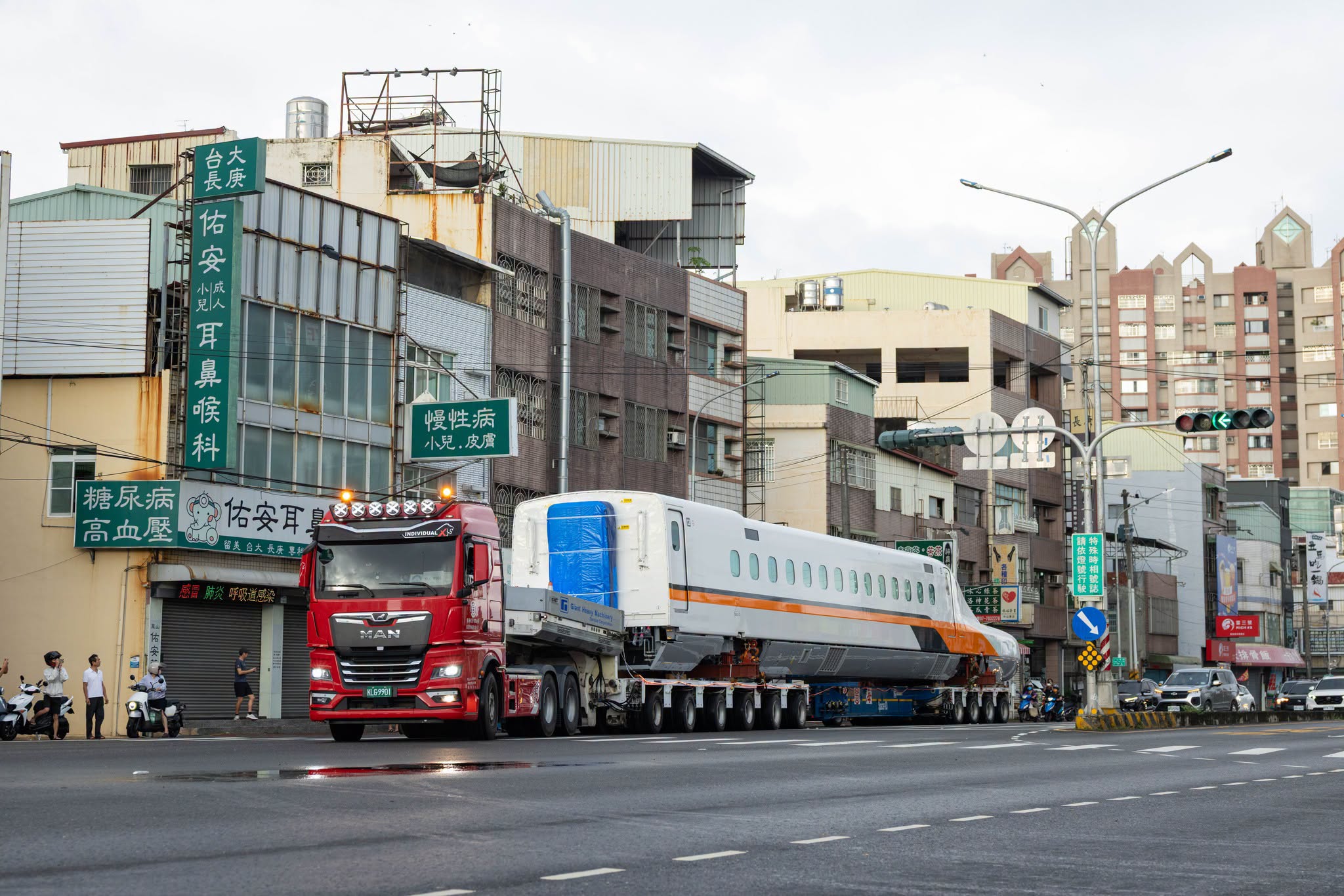
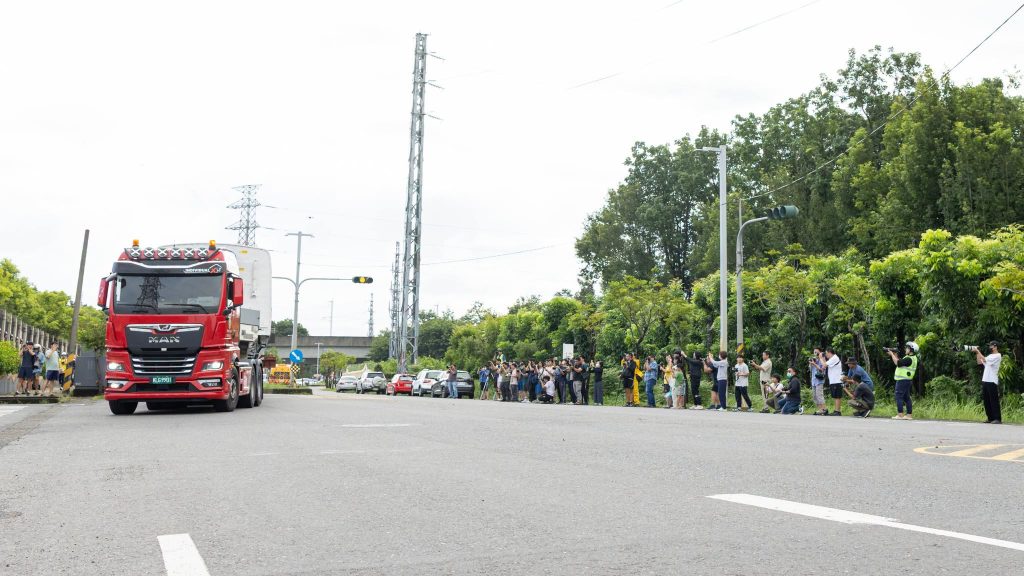
KAOHSIUNG — Taiwan’s first next-generation N700ST high-speed train arrived at the Port of Kaohsiung on Saturday, marking the beginning of the biggest expansion of the country’s high-speed rail fleet since service began nearly 20 years ago.
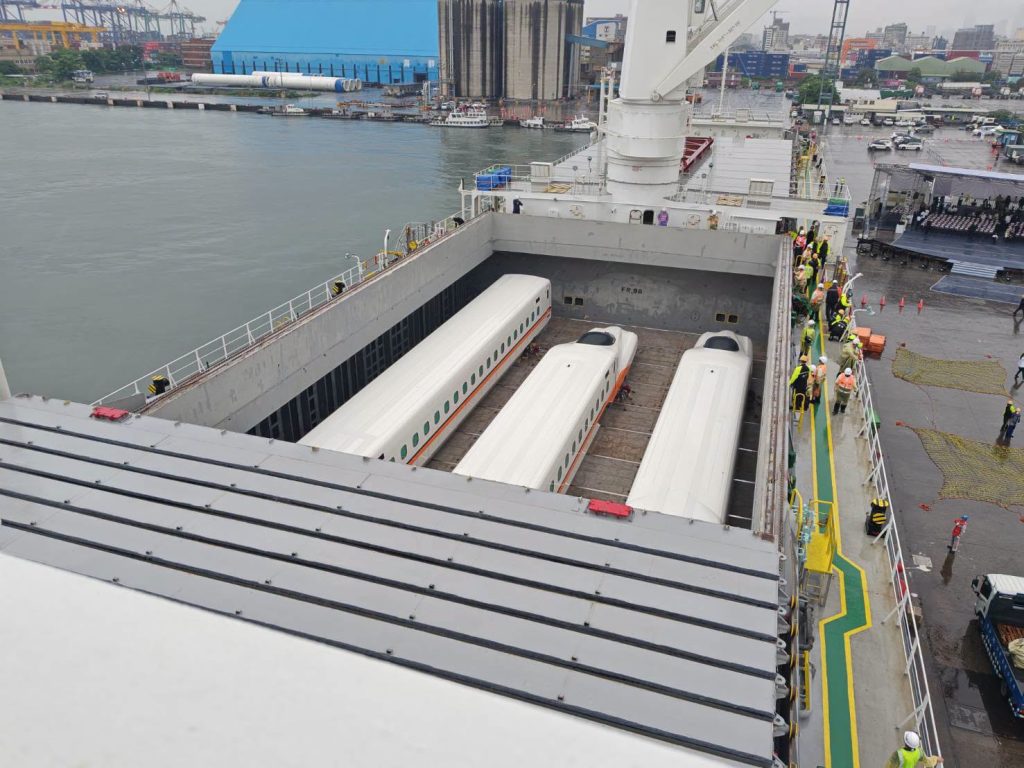
Images shared over the weekend showed the white, orange and black cars being unloaded in the port under rainy skies.
Although the cars were transported separately, they make up one complete 12-car trainset. It is the first of 12 N700ST sets ordered by Taiwan High Speed Rail Corp. (台灣高鐵), which will eventually expand the company’s fleet from 34 to 46 trains.
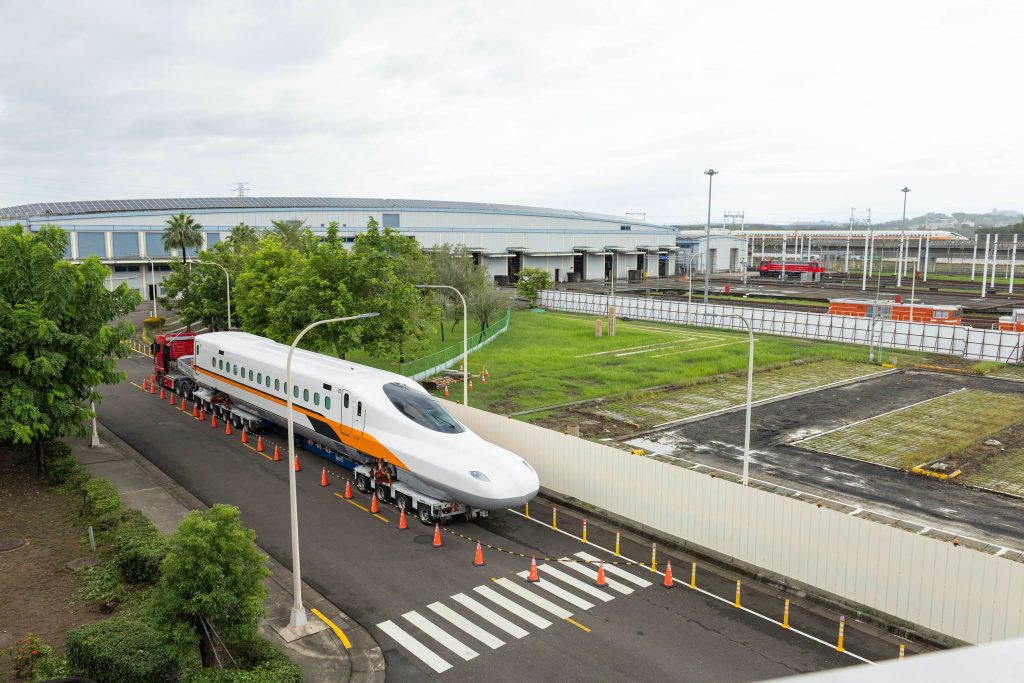
The train left Japan after a July 30 ceremony at Hitachi’s Kasado factory in Yamaguchi Prefecture. Its arrival was the first delivery of a new generation of high-speed train to Taiwan in 22 years.
Passengers will not be able to ride it immediately.
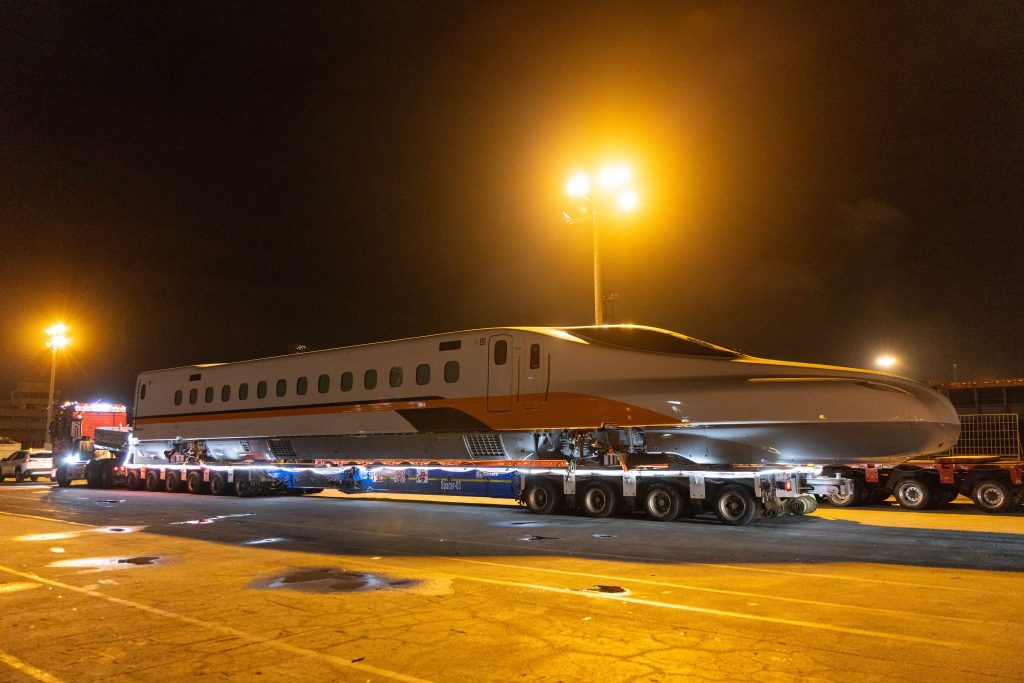
The cars must first be reassembled and inspected before the train begins static and dynamic testing on Taiwan’s rail system. According to the Railway Bureau, the process will include four stages of dynamic testing and must be completed before the train can receive regulatory approval.
Taiwan High Speed Rail Chairman Shih Che (史哲) has set July 1, 2027, as the target date for the first N700ST to enter passenger service. That date remains dependent on the train completing testing and safety certification.
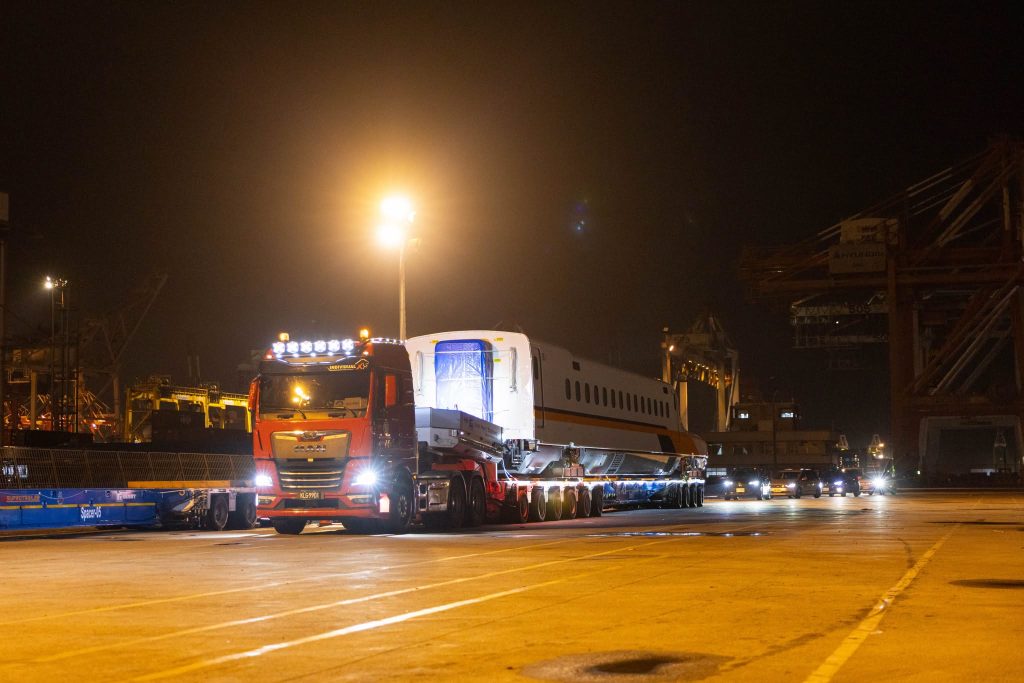
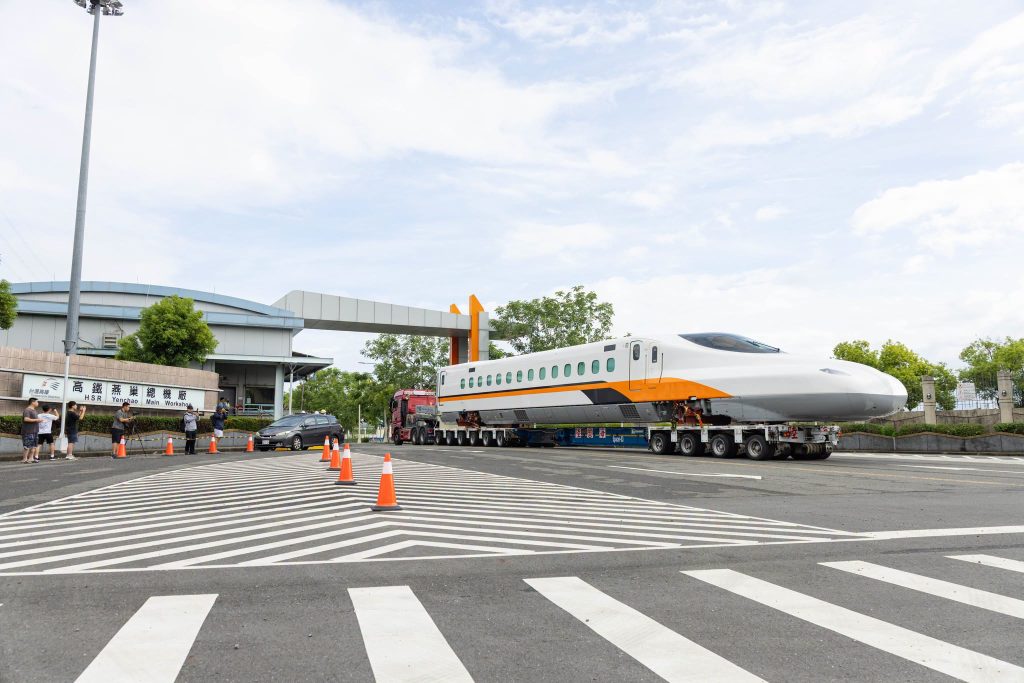
The N700ST is based on Japan’s N700S Shinkansen but has been modified for Taiwan. The “T” in its name stands for Taiwan, following the naming system used for the existing 700T fleet.
The trains were ordered from the Hitachi Toshiba Supreme Consortium under a contract worth approximately ¥124.1 billion. Parts of each train are being manufactured by Hitachi and Nippon Sharyo before final integration in Japan.
While the new trains will continue to operate at a maximum service speed of 300 kilometers per hour, most of the changes concern safety, reliability and passenger comfort.
Taiwan High Speed Rail says the N700ST uses about 20% less energy than the older 700-series design. Its more aerodynamic nose reduces resistance and tunnel noise, while active suspension is expected to make the ride smoother.
The train also has a backup lithium-ion battery system. During a loss of external power, the battery can move the train at low speed for up to approximately 10 kilometers, allowing it to leave a tunnel or elevated section and stop at a safer location. Its emergency braking distance is also expected to be about 20% shorter than that of the existing fleet.
Changes passengers are more likely to notice include charging outlets at every seat, full-color information displays, larger luggage areas and deeper overhead racks. The trains will also have quieter interiors, redesigned reclining seats and washlet-style toilets.
Accessibility has been improved as well. Each train will have six wheelchair spaces, compared with four on the existing trains, along with wheelchair restraints. An expanded nursing room will include a sink, infant seat and enough space to bring in a stroller.
Taiwan High Speed Rail has said the new trains will initially be assigned mainly to long-distance, limited-stop services. Fares will be the same as for existing trains, and the company has discussed identifying N700ST services in its booking system so passengers can choose them, although train assignments could still change for operational reasons.
The remaining 11 trainsets are scheduled to arrive in stages. All 12 are expected to be operating by September 2028, raising peak-hour capacity by an estimated 25% and allowing the company to operate more frequent services.
Kaohsiung will play a central role in maintaining the expanded fleet. Taiwan High Speed Rail is enlarging its Yanchao main maintenance workshop and building a second vehicle maintenance hall at its Zuoying base.