By KHT Staff. Images via FB.
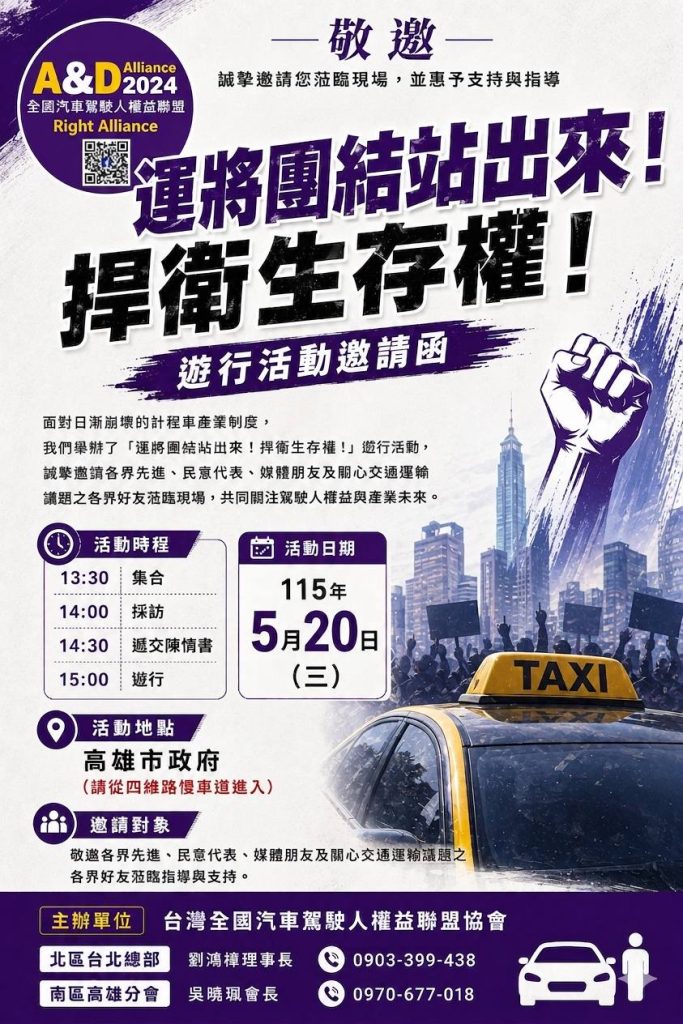
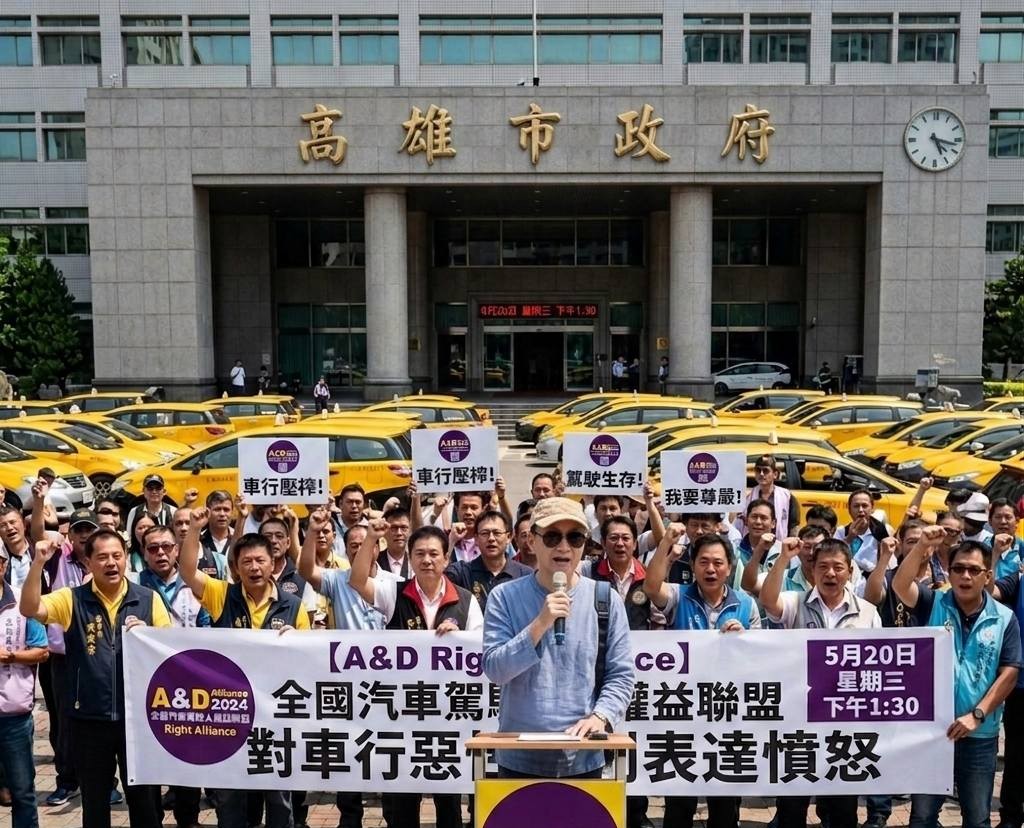
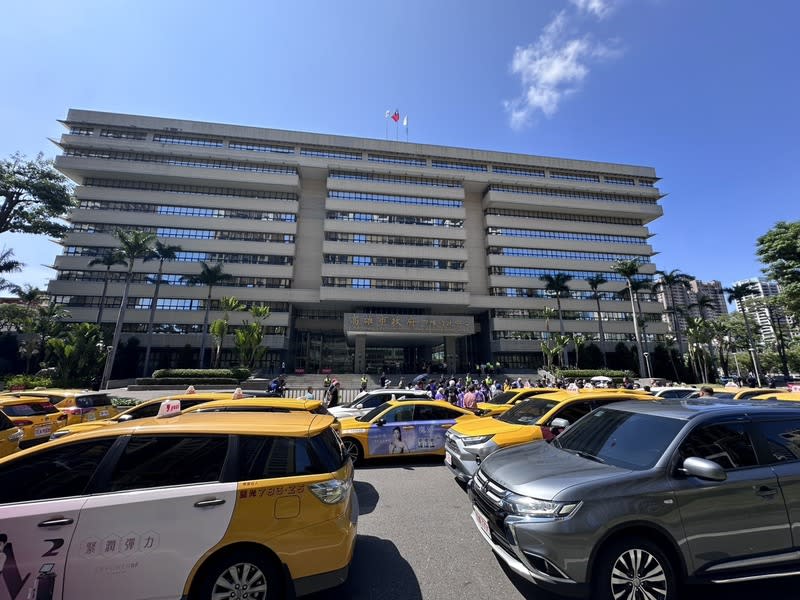
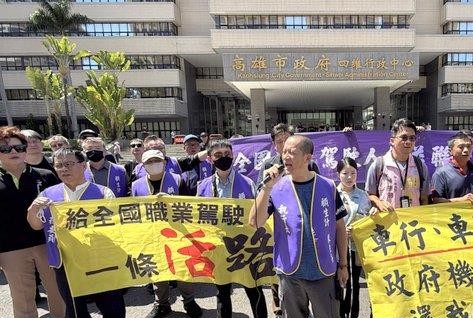
KAOHSIUNG — Nearly 100 taxis gathered outside Kaohsiung City Hall this week as drivers said rising fuel, insurance, and maintenance costs were colliding with flat incomes, outdated fare rules, and what they described as abusive practices by some fleet operators. Protesters said the pressure was forcing drivers to work longer hours while leaving them with little room to absorb higher living costs.
One of the sharpest complaints involved 靠行費, the fees drivers pay to affiliate with taxi companies. TVBS reported that drivers said some operators were demanding far more than the roughly NT$1,800 monthly service fee they said should apply, with some plate-related charges allegedly reaching NT$200,000. Kaohsiung officials stated that there is no genuine shortage of taxi plates and promised stricter enforcement of checks on unreasonable charges. TVBS also reported that the central government amended the fee rules last month, with violations carrying fines of up to NT$90,000.
Drivers also pressed for a fare review, arguing that Kaohsiung’s delayed-time meter remains out of step with other cities. According to Kaohsiung’s official taxi fare table, the meter adds NT$5 every 100 seconds when the speed falls below 5 kilometers per hour. TVBS noted that Taipei uses NT$5 every 60 seconds, and that Kaohsiung drivers say the gap matters more now that concerts, tourism and congestion often make trips slower and more labor-intensive.
A third grievance centered on spaces to park and rest. UDN reported in March that Kaohsiung’s smart curbside parking system charges even for short stops, with only the first five minutes free in many spaces and a limited noon exemption for roadside parking. Drivers told UDN that this leaves them choosing between paying to eat or use the toilet, risking tickets by stopping elsewhere, or staying on the road while tired. The city has said it already provides 176 taxi stands with 365 spaces, but drivers argue that those do not solve the broader need for cheap, legal short-rest stops near busy operating areas.
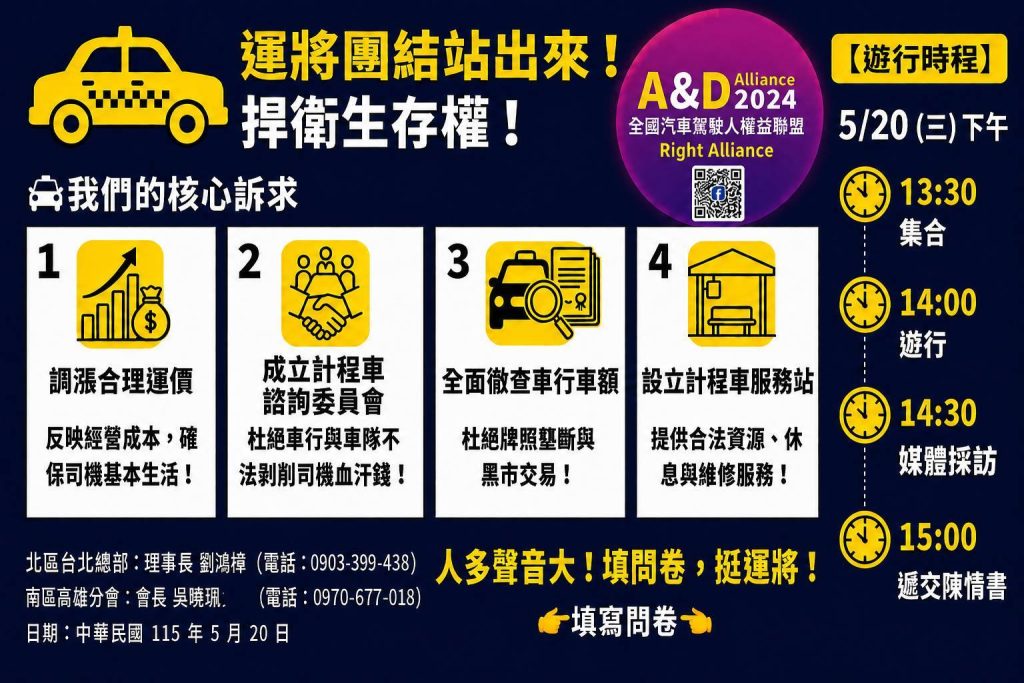
City Hall responded by promising to crack down on unfair charges, set up a taxi consultative committee within one month, and begin trial runs of free taxi driver rest areas.