
By Eryk Michael Smith / Staff
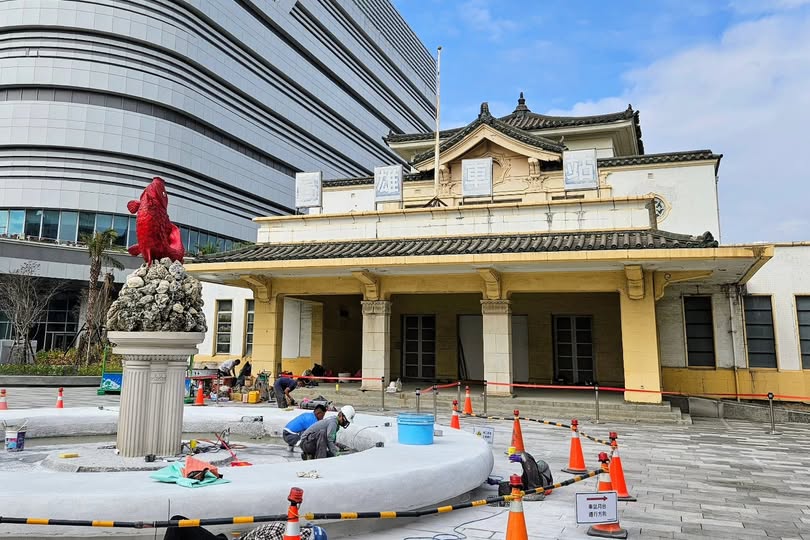
After more than two decades out of sight, the “Red Carp” (紅鯉魚) sculpture at Kaohsiung Station (高雄車站) is finally returning to its traditional spot, sparking nostalgia and renewed interest in the city’s historical identity. The long-missing landmark is now visible again at the fountain plaza in front of the restored Japanese “Imperial Crown-style” Kaohsiung Station building (opened June 1941), with only final trimming and site-finishing work left to complete.
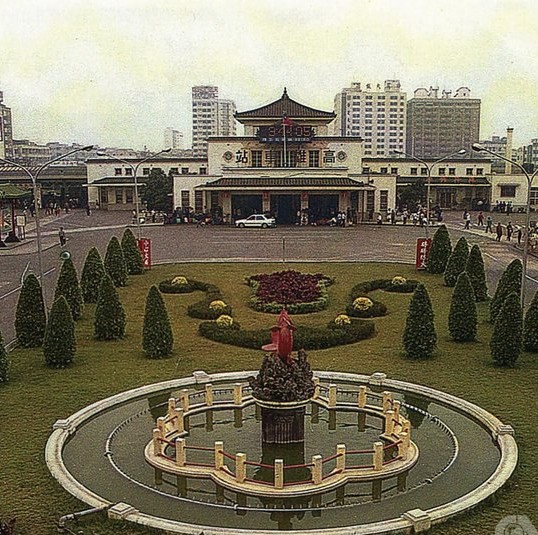
The Red Carp was originally installed in the 1960s as a symbolic reference to the site’s older place name 𩻸仔港 (pronounced tāi-á in Taiwanese), an area known for abundant carp in the old waterways. That name later evolved into 大港埔 (Dàgǎngpǔ), and eventually just 大港 (Dàgǎng) under Japanese rule — a name that remains used for various general purposes in Kaohsiung, such as in the Chinese name of the local Megaport Music Festival.
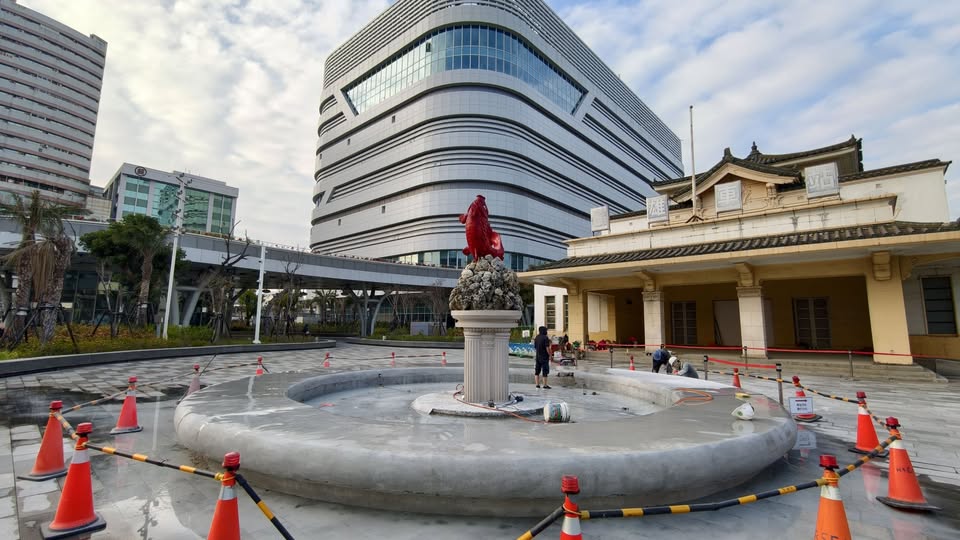
Over the years, the Red Carp sculpture became a meeting spot and a landmark for residents and travelers, even though it never received formal cultural heritage status.
Railway Undergrounding, Preservation, and Rediscovery
In 2002, during the relocation of the 1941 Imperial Crown-style building to accommodate the new underground station, the sculpture was moved into storage for safekeeping. It’s remained out of public display for nearly 24 years as the sprawling infrastructure project progressed.
Local cultural officials confirmed that the statue was restored and repaired starting in late 2025. Structural repairs to the fish itself and redesign of its surrounding fountain — including a terrazzo finish and reinstalled water-spray features — have been underway through early 2026. Night lighting will be added as part of the final installation, with the full public reveal anticipated just ahead of the Lunar New Year holiday that begins on February 14th.
Atmospheric and Civic Resonance
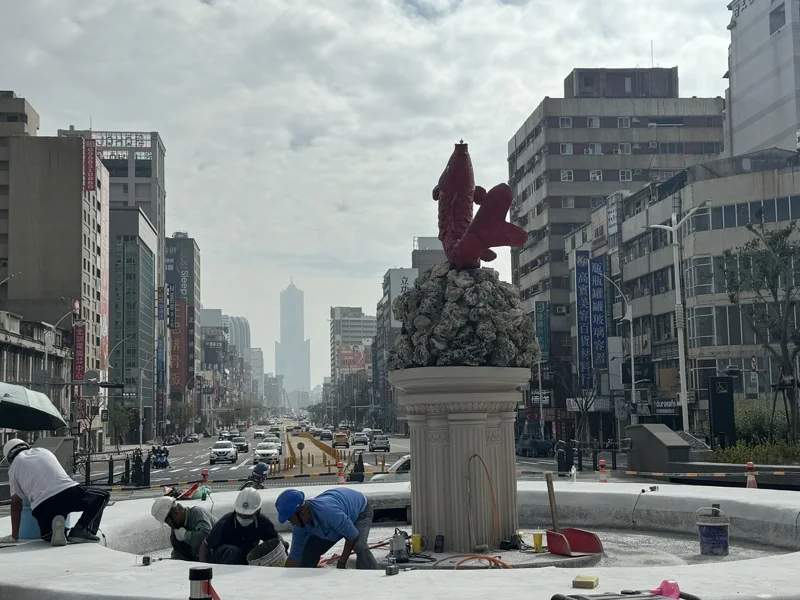
For some here, the return of the Red Carp isn’t just about a sculpture; it’s an emotional symbol of a changing Kaohsiung that would hardly be recognizable to a time traveller from the 1960s — perhaps not even to someone from 2002.
Once the plaza work is completed and barriers come down, the site will doubtless resume its role as both a physical gateway to the city and a layer of living collective history, with the new main station serving as both a demonstration of Kaohsiung’s current status as a major urban center and as a link to its industrial/fishing past.
Source links:
Photos via Chih-Hao Tsai FB / 阿捷的打飯班 旅遊&美食分享 FB