
By Dr. TUNG Chen-Yuan
(Book is reproduced in the Kaohsiung Times with permission from the author)
Singapore’s policy planning closely follows the currents of globalization. As a highly open economy, it was hit particularly hard by the outbreak of the COVID-19 pandemic in early 2020. The movement of people, goods, and capital came to a standstill. In response, the government swiftly implemented strict zero-COVID measures. The entire population cooperated with control efforts and proactively received vaccinations. Despite over a million confirmed cases, Singapore recorded one of the lowest COVID-19 fatality rates in the world. After the pandemic, Singapore took flight once more, achieving rapid growth. By 2024, many of its indicators ranked among the world’s highest, and in some cases, the highest in Asia.
For instance, according to International Monetary Fund (IMF) estimates, Singapore’s GDP grew by 51.9%, from USD 349.5 billion in the pandemic’s most severe year (2020) to USD 530.7 billion in 2024. GDP Per capita rose 45.4%, from USD 61,476 in 2020 to USD 89,370 in 2024. Statistics from 2023 showed that Singapore’s GDP per capita ranked fifth globally and firmly held the top position in Asia.
World Bank data on purchasing power parity further highlighted Singapore’s economic advantage. In 2020, Singapore’s GDP (PPP) per capita stood at USD 115,304, already surpassing Hong Kong (USD 61,329), South Korea (USD 46,507), and Japan (USD 43,238). By 2023, Singapore’s GDP per capita increased by another USD 12,239 to reach USD 127,544, maintaining a wide lead over Hong Kong (USD 64,468), South Korea (USD 50,572), and Japan (USD 46,158).
Both Singapore and Hong Kong were once British colonies and have been known as key hubs for international finance, trade, transport, and tourism. In 1997, the year Hong Kong’s sovereignty was handed over to China, IMF data showed the two cities had similar GDP per capita levels—USD 26,376 for Singapore and USD 27,215 for Hong Kong. By 2024, Singapore’s GDP per capita had reached USD 89,370, nearly 1.7 times that of Hong Kong’s USD 53,165.
In 2023, Singapore’s assets under management reached USD 4.094 trillion, surpassing Hong Kong’s USD 3.993 trillion for the first time and becoming Asia’s largest financial center. The COVID-19 pandemic also accelerated the shift in capital flows between the two cities. From 2020 to 2023, Singapore’s managed assets grew by 16.3% (an increase of USD 573 billion), while Hong Kong’s declined by 11.4% (a drop of USD 512 billion).
Singapore also became Asia’s leader in family offices after the pandemic. At the end of 2020, there were just 400 family offices in Singapore. By the end of 2023, the number had surged to 1,400, and by the end of 2024, it had exceeded 2,000—representing an annual growth rate of over 42.9%, with around 3,000 applications still pending approval. In contrast, Hong Kong had only 450 family offices by the end of 2023, with projections suggesting the number will rise to 650 by the end of 2025. This underscores Singapore’s significant advantage in attracting high-net-worth families.
Moreover, more than 7,000 multinational corporations (MNCs) currently operate in Singapore, with 4,200 of them establishing regional headquarters—more than any other city in Asia. In comparison, the number of MNCs with regional headquarters in Hong Kong fell from over 1,500 in 2019 to just 1,366 in 2023, indicating that companies are gradually shifting their regional focus toward Singapore.
Business-Friendly Environment
Singapore’s rapid economic recovery following the severe impact of the COVID-19 pandemic can be attributed to the solid foundations laid over many years. Although the World Bank’s Doing Business report was discontinued in 2021 due to the pandemic, Singapore had consistently ranked among the world’s top two economies in previous editions. From 2006 to 2016, Singapore was ranked the most business-friendly country in the world for ten consecutive years. From 2017 to 2020, it was ranked second globally, just behind New Zealand, out of 190 economies evaluated.
Economic Freedom
According to the 2024 Index of Economic Freedom published by The Heritage Foundation, Singapore is the world’s freest economy. From 1995 to 2019, Singapore consistently ranked second globally. From 2020 through 2024, it has held the top spot as the freest economy in the world.
Foreign Investment Appeal
UN data shows that Singapore attracted USD 74.9 billion in foreign direct investment (FDI) in 2020, which rose to USD 159.7 billion in 2023—an increase of 113%. This placed Singapore third globally and second in Asia for FDI inflows. It trailed only China by USD 3.6 billion and outpaced Hong Kong by USD 47 billion, underscoring Singapore’s growing stature as a premier destination for international investment.
Singapore’s Role as a Global Shipping Hub
In 2023, the Port of Singapore handled over 39 million twenty-foot equivalent units (TEUs), ranking second globally, just behind the Port of Shanghai. Its total cargo throughput reached 590 million tonnes, placing it among the world’s busiest ports. As the world’s largest transshipment hub, Singapore processes about 20% of global transshipment containers annually. It is also the busiest port for marine fuel bunkering, supplying over 50 million tonnes of fuel each year.
In 2024, the gross tonnage of vessels arriving at Singapore’s ports set a new record, reaching 3.11 billion gross tonnes—an increase of 0.6% compared to 2023—further solidifying Singapore’s position as a global maritime center. Container throughput surpassed 40 million TEUs for the first time, hitting 41.12 million TEUs, a 5.4% increase over the 39 million handled in 2023. Total cargo volume also exceeded 600 million tonnes, returning to pre-pandemic levels. Additionally, Singapore-registered vessels crossed the 100 million gross tonnes mark for the first time, growing 8.5% to reach 108 million gross tonnes by the end of 2024.
Talent Competitiveness
Between 2022 and 2023, Singapore attracted approximately 102,684 professionals. According to the IMD World Talent Ranking, Singapore rose from 9th place globally in 2020 to 2nd in 2024, ranking 1st in Asia—demonstrating its strong talent appeal.
Global and Digital Competitiveness
According to IMD’s World Competitiveness Report, Singapore ranked 1st globally in 2020 and regained the top spot in 2024. In terms of digital competitiveness, Singapore was ranked 2nd in the world in 2020 and rose to 1st place in 2024.
Global University Rankings
According to the latest QS World University Rankings, the National University of Singapore (NUS) rose from 11th globally in 2020 to 8th in 2025, maintaining its position as the top university in Asia. Nanyang Technological University (NTU) also performed impressively, ranking 15th globally and 3rd in Asia.
International Student Assessment
The Organisation for Economic Co-operation and Development (OECD) released the results of the 2022 Programme for International Student Assessment (PISA). Singapore’s 15-year-old students performed exceptionally well in the latest round, ranking first globally in all three categories: reading, mathematics, and science. Out of 81 participating education systems, Singapore claimed the top spot, and also ranked first globally in the creative thinking assessment.
The International Association for the Evaluation of Educational Achievement (IEA) conducted the 2023 Trends in International Mathematics and Science Study (TIMSS), a quadrennial survey assessing the knowledge, application, and reasoning skills of Grade 4 and Grade 8 students. Among 64 education systems, Singapore’s students topped the global rankings in both mathematics and science. Singapore has participated in every round since the survey’s inception in 1995 and was ranked first in 2003, 2015, and 2019.
Smart City Index
According to the Smart City Index published by the International Institute for Management Development (IMD), Singapore rose from 7th globally in 2020 to 5th in 2024, maintaining its position as the top city in Asia. This reflects Singapore’s outstanding progress in smart city development.
Startup Ecosystem and Venture Capital
According to The Global Startup Ecosystem Report 2024 by Startup Genome, Singapore ranked 7th globally and 1st in Asia for its startup ecosystem. As of September 2024, Singapore’s venture capital deal volume reached USD 4.05 billion, ranking 5th globally and 2nd in Asia.
Global AI Index
In the Global AI Index published by UK-based media group Tortoise in June 2023, Singapore ranked 3rd in the world for artificial intelligence development, behind only the United States and China. The index evaluates countries’ overall strengths in AI research, investment, talent development, and policy support, highlighting Singapore’s strong competitiveness in the AI sector.
Additionally, Stanford University’s Human-Centered AI Institute reported in November 2024 that Singapore ranked 10th globally and 6th in Asia in its Global AI Vibrancy Tool. Notably, Singapore ranked 1st worldwide in AI talent hiring rate and 2nd in talent density, underscoring the country’s advantage in nurturing and attracting AI professionals.
In the area of AI infrastructure, a December 2024 report by ARKANCE, a subsidiary of the French MONNOYEUR Group, ranked Singapore 1st globally among 23 evaluated countries with a score of 8.91. The evaluation covered key indicators such as venture capital, talent development, research output, cybersecurity, and government tech maturity—showcasing Singapore’s leadership in AI infrastructure.
Global Rule of Law Index
According to the 2024 Global Rule of Law Report published by Gallup, Singapore ranked 2nd globally. Similarly, the Rule of Law Index 2024 released by the international nonprofit World Justice Project also placed Singapore in 2nd place worldwide. In the “absence of corruption” category, Singapore ranked 3rd, behind only Denmark and Norway, making it the highest-ranking Asian country among 142 jurisdictions assessed.
International Corruption Perceptions Index
Transparency International’s 2024 Corruption Perceptions Index ranked Denmark first globally with a score of 90 for the seventh consecutive year, followed by Finland with 88. Singapore ranked 3rd with a score of 84, making it the least corrupt country in the Asia-Pacific region. Notably, in 2010, Singapore tied with New Zealand and Denmark for first place globally.
Global Peace Index
According to the Global Peace Index released by the Institute for Economics & Peace (IEP), Singapore was ranked among the most peaceful countries in the world, placing 5th globally. This annual index, established in 2008, evaluates 163 countries using 23 qualitative and quantitative indicators across three domains: societal safety and security, domestic and international conflict, and militarization—covering 99.7% of the world’s population.
Iceland has held the top position for 17 consecutive years. In 2023, the top five most peaceful countries were Iceland, Ireland, Austria, New Zealand, and Singapore.
National Happiness
According to the United Nations World Happiness Report, Singapore’s global happiness ranking between 2012 and 2024 ranged from 22nd to 35th. From 2012 to 2017, Singapore was ranked the happiest country in East Asia. Although it dropped slightly to second place between 2018 and 2022, it regained the top spot in East Asia in both 2023 and 2024.
Best Cities in Asia-Pacific Ranking
According to the Asia-Pacific’s Best Cities Report released by international consultancy Resonance Consultancy on February 12, 2025, Singapore claimed the top spot. It was followed by Tokyo, Seoul, Hong Kong, Beijing, Bangkok, Sydney, Shanghai, Melbourne, and Kuala Lumpur. The report highlighted Singapore’s outstanding performance in various economic indicators and its long-standing reputation as one of the safest cities in the world.
The ranking was based on three major categories: Livability, Lovability, and Prosperity. It evaluated 100 cities in the Asia-Pacific region with populations over one million, considering both performance and perception.
World’s Best Airports Ranking
In 2025, Changi Airport reclaimed the top spot in the Skytrax World’s Best Airports ranking. Since the award’s inception in 2000, Changi Airport has consistently ranked among the top three and has been named the world’s best airport a total of 13 times.
About the Author:
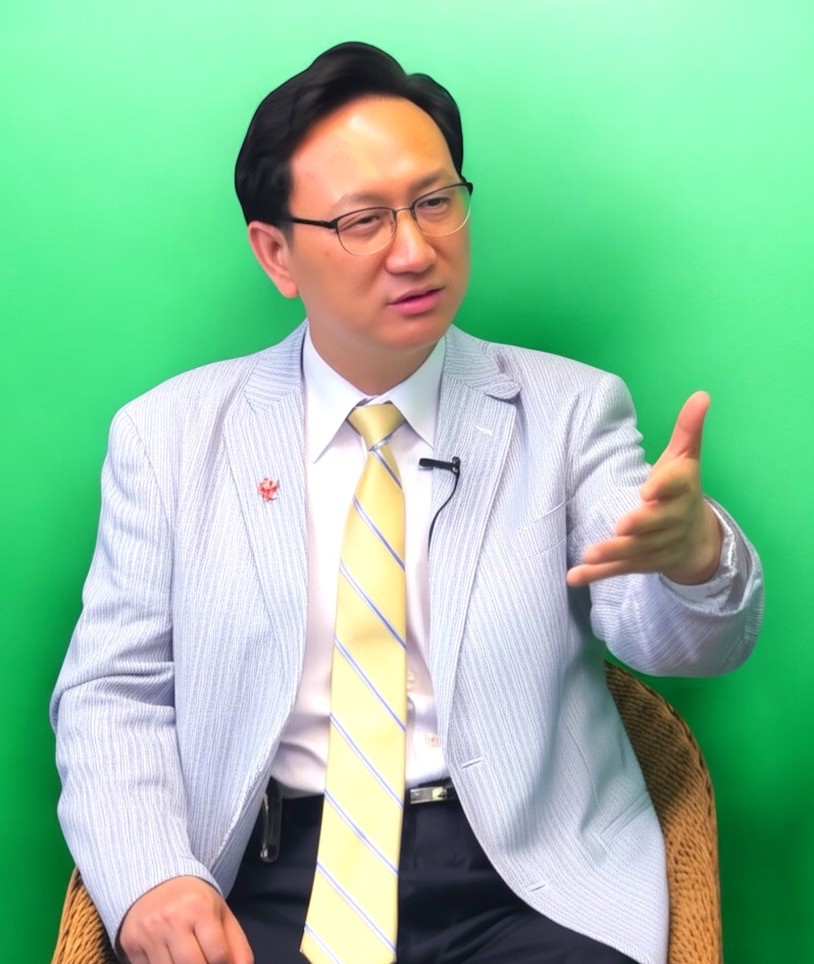
Dr. Tung Chen-Yuan is currently Taiwan’s Representative to Singapore. He was Minister of the Overseas Community Affairs Council of the Republic of China (Taiwan) from June 2020 till January 2023. He was Taiwan’s ambassador to Thailand from July 2017 until May 2020, senior advisor at the National Security Council from October 2016 until July 2017, and Spokesman of the Executive Yuan from May to September 2016. Prior to taking office, Dr Tung was a distinguished professor at the Graduate Institute of Development Studies, National Chengchi University (Taiwan). He received his Ph.D. degree in international affairs from the School of Advanced International Studies (SAIS), Johns Hopkins University. From September 2006 to May 2008, he was vice chairman of the Mainland Affairs Council, Executive Yuan. His areas of expertise include international political economy, China’s economic development, and prediction markets.