
By Pei-Hwa Pai (白佩華)
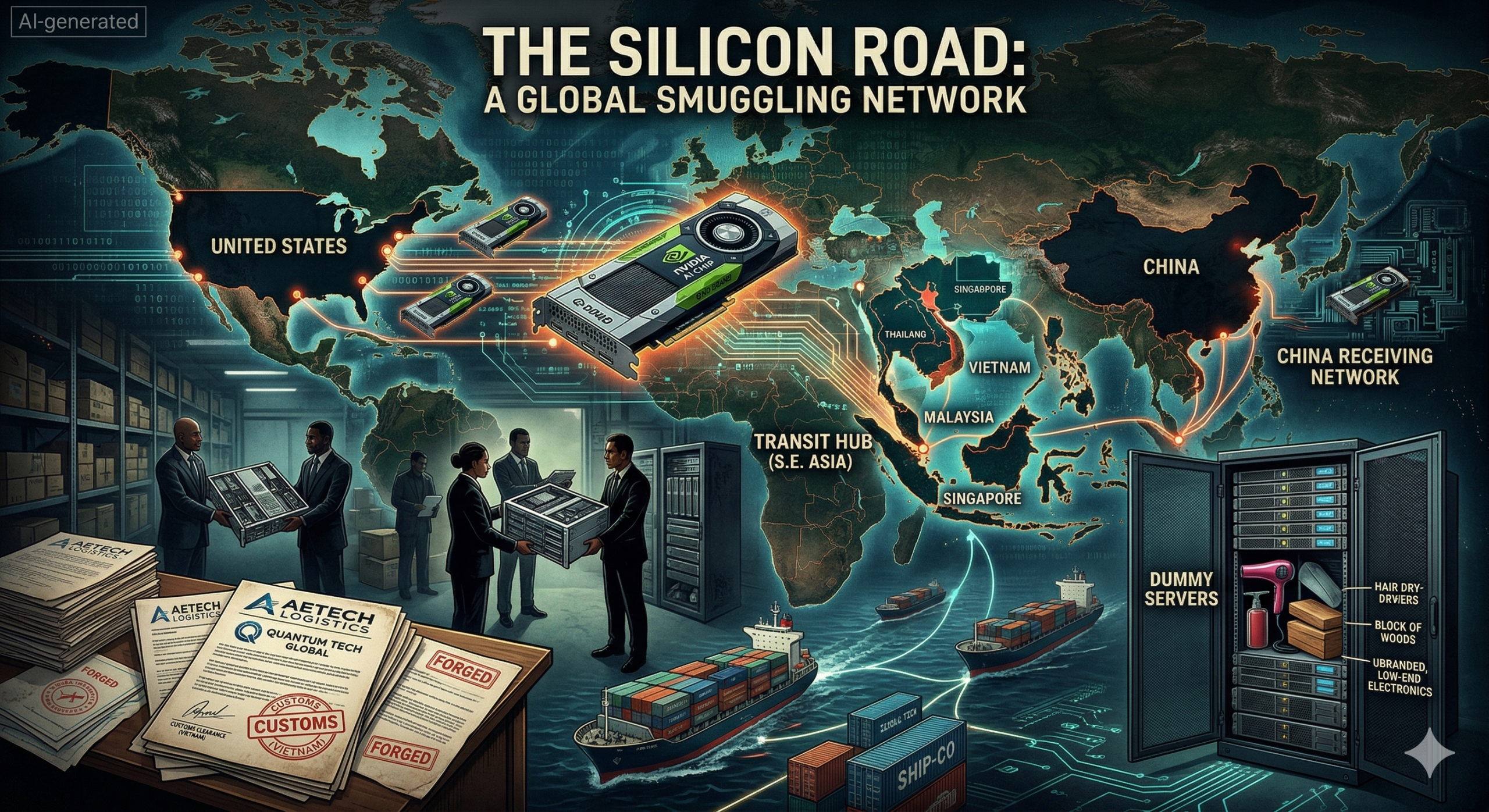
The global technology and semiconductor industries were recently rocked by a massive legal bombshell. The U.S. Department of Justice has formally indicted three individuals, including Liao Yi-hsien, a co-founder of the server giant Supermicro, for allegedly orchestrating an illegal smuggling operation valued at $2.5 billion.
The methods used were startlingly brazen: the group utilized shell companies in Southeast Asia, forged trade documents, and even employed physical decoys—using “dummy servers” and hair dryers to swap serial numbers—to bypass U.S. export controls and funnel high-end NVIDIA AI chips into the Chinese market.
A New Era of “High Regulation × Geopolitics”
This incident is more than a simple corporate “compliance slip-up”. It signals a fundamental shift in the global supply chain:
- Strategic Assets: AI chips are no longer mere commercial hardware; they are now “strategic assets” tied to national security.
- Market Impact: Following the news, Supermicro’s stock plummeted by over 30% in after-hours trading.
- Survival Risk: Under the “Small Yard, High Fence” strategy, regulatory risk has become synonymous with survival risk. If placed on the U.S. Entity List, Supermicro would be cut off from key suppliers like NVIDIA, Intel, and AMD—effectively a corporate death sentence.
The Anatomy of a Structural Failure
The scale of this $2.5 billion operation suggests a systemic breakdown within the company’s risk judgment model:
The Anatomy of a Structural Failure
The scale of this $2.5 billion operation suggests a systemic breakdown within the company’s risk judgment model:
| Level of Failure | Description |
| Geopolitical Misjudgment | Prioritizing “market profit maximization” while ignoring the fact that the U.S. views AI technology as a non-negotiable national security baseline. |
| “Regulatory Arbitrage” Mentality | Viewing third-country transshipments as a “gray area” rather than a criminal act. When a company focuses on bypassing rules rather than following them, it enters a minefield. |
| Structural Corruption in Governance (G) | With a co-founder personally involved, internal controls and audits were completely paralyzed in favor of a “performance-first” culture. |
Crisis Management: Passive vs. Proactive
Supermicro’s initial response included standard “firewalling” tactics, such as the resignation of Liao Yi-hsien and the issuance of an 8-K filing claiming “robust compliance programs”.
However, from a risk advisory perspective, these measures are viewed as weak and passive. In the face of systemic smuggling evidence, merely claiming a program is “robust” often invites market ridicule. True recovery requires aggressive “self-purification,” such as hiring independent third-party investigators to overhaul the corporate structure.
Survival Guide for the High-Regulation Era
For companies operating at the heart of the AI supply chain, a new framework of “Secure Growth” is essential:
- Elevate Compliance to the Boardroom: Compliance must be a core agenda item for the Board, not just an administrative task for legal departments. Performance reviews for executives should include “compliance indicators”.
- Implement Dynamic Export Compliance (ECP): * KYP (Know Your Product): Master ECCN codes to define control boundaries.
- KYC/EUS (Know Your Customer/End Use): Verify customer ownership and include audit clauses in contracts.
- Automation: Integrate these checks into ERP systems to intercept suspicious orders automatically.
- Identify “Red Flags”: Train staff to recognize warning signs, such as customers hiding end-uses, using unknown warehouses for delivery, or offering extreme premiums far above market value.
- Independent Whistleblowing: Establish anonymous hotlines reporting directly to the Audit Committee to protect whistleblowers from high-level retaliation.
Conclusion
Supermicro’s gamble for $2.5 billion has cost the company many times that amount in market value and trust. In today’s landscape, a company’s competitiveness is no longer measured solely by technical lead or expansion speed, but by its ability to walk the tightrope of global regulations.
The greatest risk is not the regulations themselves, but the arrogance of underestimating the cost of crossing the line.
About the Author:

Pei-Hwa Pai (白佩華) is a Chief Strategy Officer and Consultant in Risk and Sustainability Governance. She focuses on geopolitical risk, supply chain restructuring, and resilience design, helping financial institutions and corporations integrate risk management into strategic and financial frameworks.