
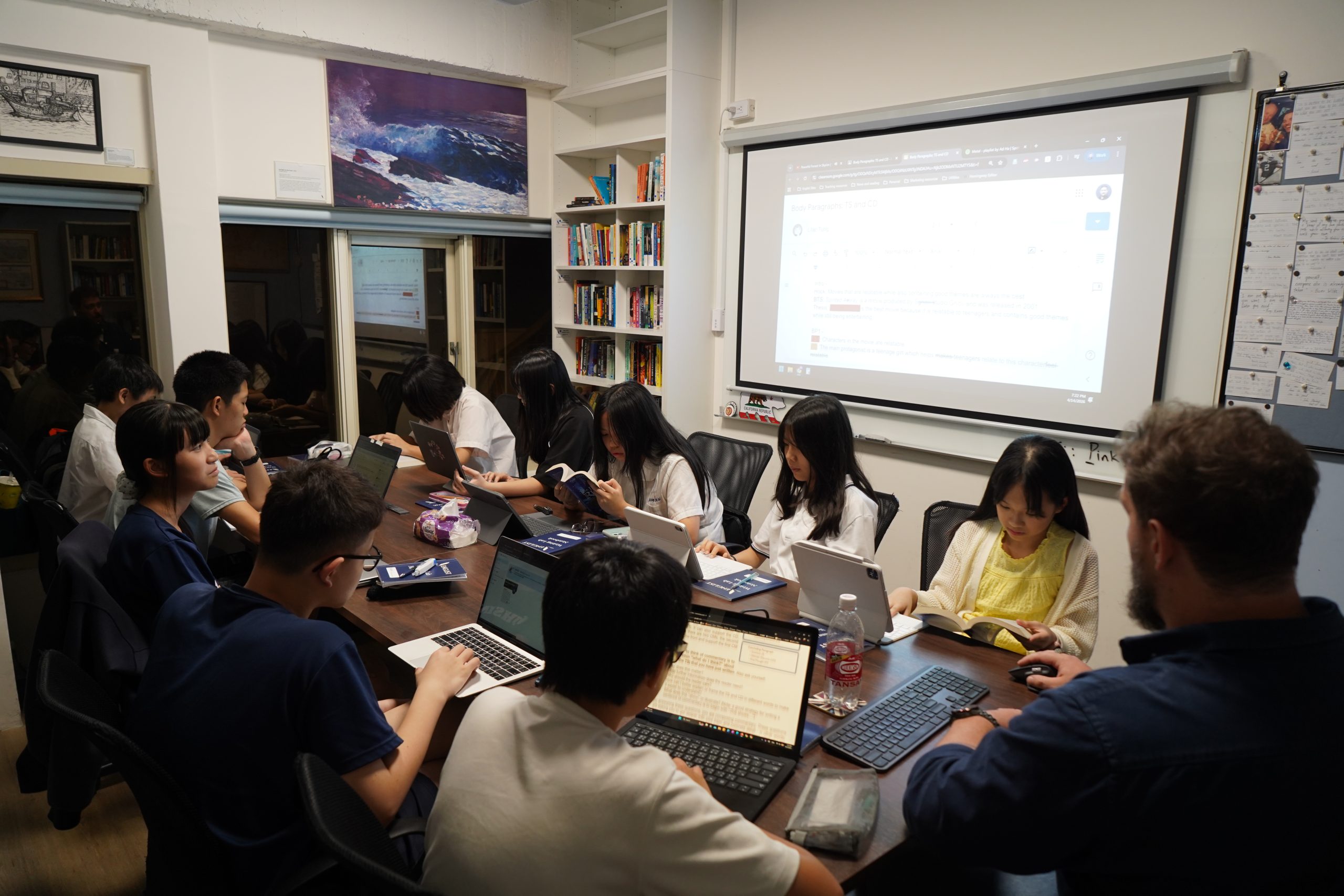
By Eryk Michael Smith. Images courtesy of Englist.
One of the winning speeches at the 2026 Englist Speech & Essay Contest made the case that Taiwanese people should stop having children.
The student’s argument, delivered with the mischievous confidence of someone who knew he had found a good comic premise, at first seemed to boil down to: kids are too much work.
I was about to give them a decent, but not excellent, score for creativity and good use of humor. Then they surprised me with the closer.
It’s not just that parents have to spend too much money, and are forced to give up their lives and dreams. Kids aren’t loving their existences either. They get yelled at, forced to attend long hours of classes, and pressured into scholastic achievements they don’t care about.
Oh. Well, now we’ve got a completely formed argument.
The delivery was engaging and the idea humorous enough that it took me a few hours to register the quieter sadness of the speech, which likely wasn’t fully intentional.
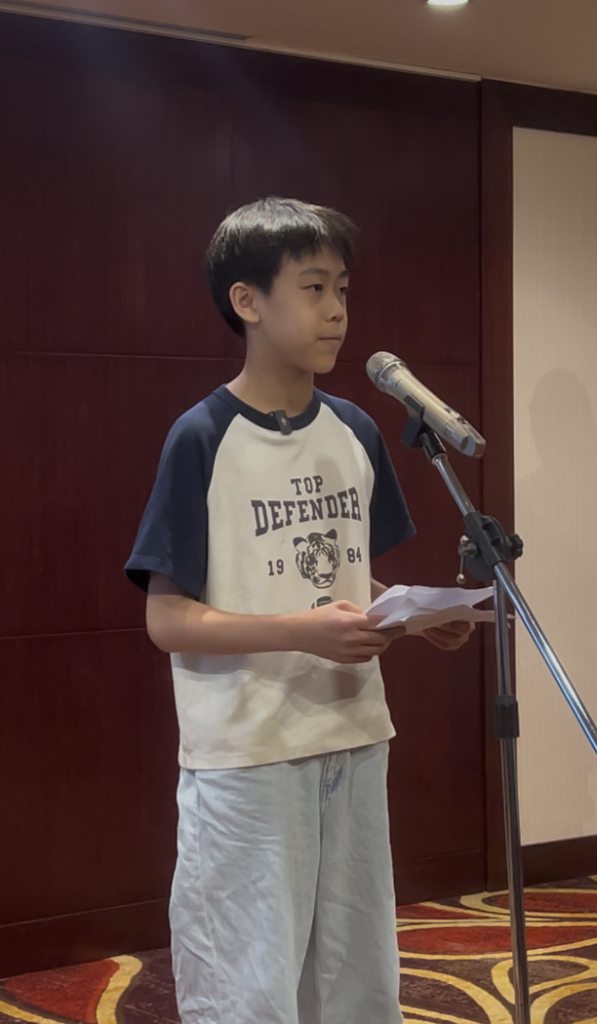
Beneath the jokes was a familiar complaint: The life of a Taiwanese parent is filled with stress and sacrifice, while the life of a Taiwanese student is too often exhausting, narrow, and joyless.
If this is what parenthood and childhood look like, why keep making more children?
It is probably going too far to think the kid was aiming for satire. But in a few years, they might come to recognize such ideas as social commentary. In any case, for the people watching and listening, it checked the biggest box.
It was interesting.
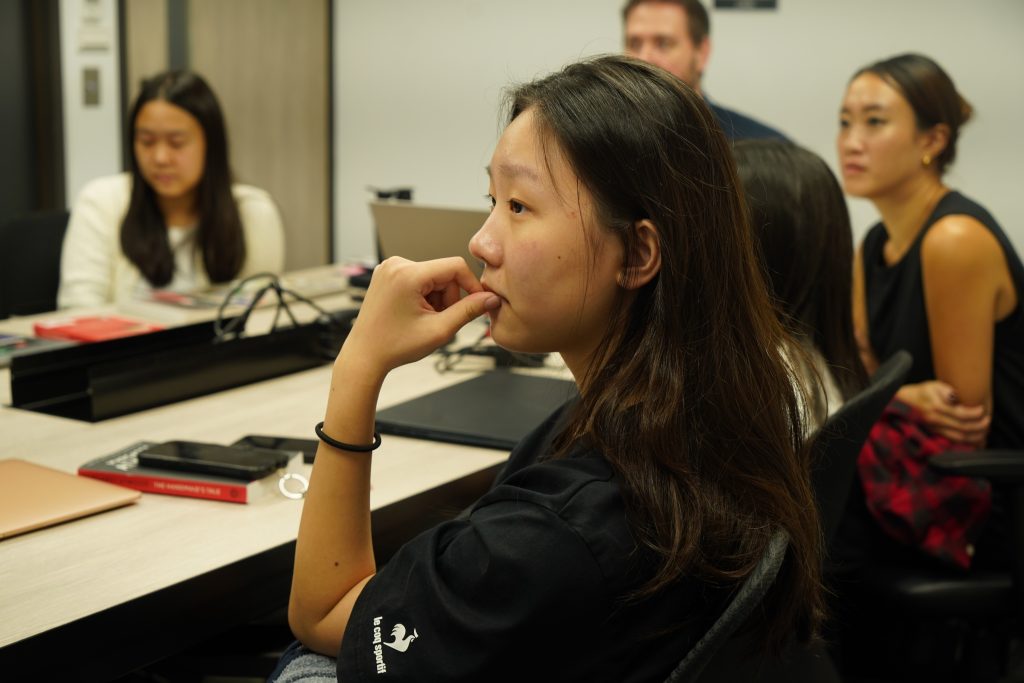
The 2026 Englist Speech & Essay Contest, held in late June, featured written and spoken work from students across several levels.
One of the winning essays went surprisingly dark, with a story written in the voice of a stalker who sees himself as “a devoted man,” but ends with more than a hint of murder.
Neither the speeches nor the essays stuck to tried-and-true topics. Obviously, at least to me, that was one of the big reasons they worked.
Much of the writing and speaking had tension and risk. It had students trying to control tone, structure, and expectation, instead of filling a page or five minutes with perfectly correct or fancy English.
Some contestants spoke or wrote in more polished ways. But from the lower levels to the highest, the strongest students were not simply the ones with the largest vocabulary. They were the ones showing they could think.
That is also the point of Englist.
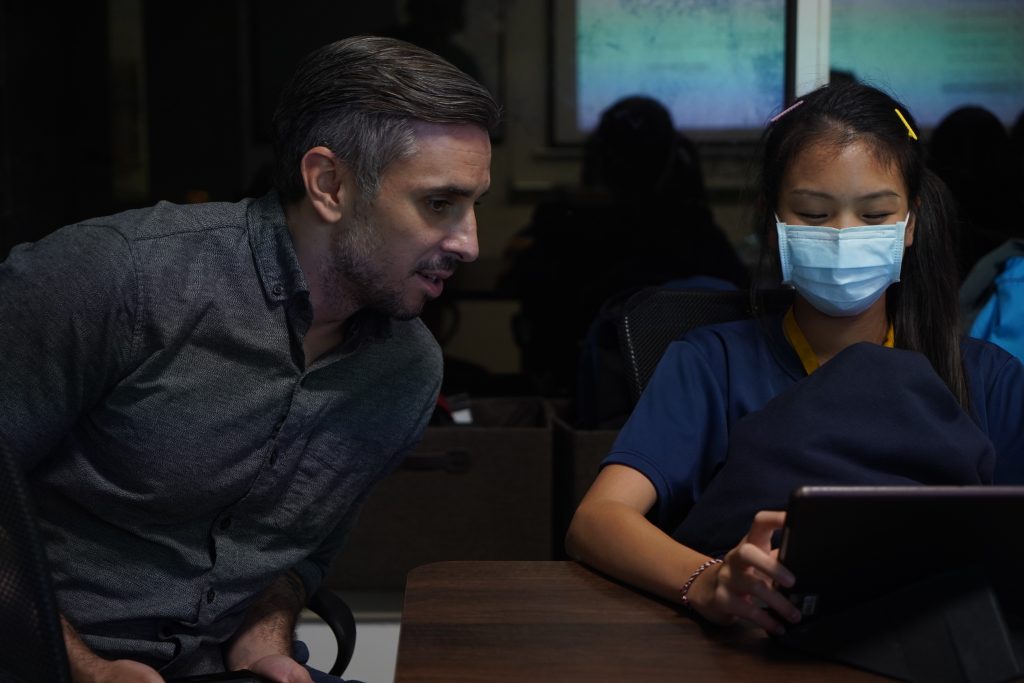
The Taipei-based program grew out of American Adam Hatch’s teaching experience and curriculum, beginning with Taipei Teen Tribune, an online student newspaper and magazine that he first ran from his living room on weekends.
TTT, as it is called, remains one of Englist’s more interesting classes. It is also not open to everyone. Students already need to have enough of an academic writing foundation to appreciate and benefit from the required level of writing, which includes journalism, satire, and – perhaps most importantly – opinion.
From that class, Englist was born.
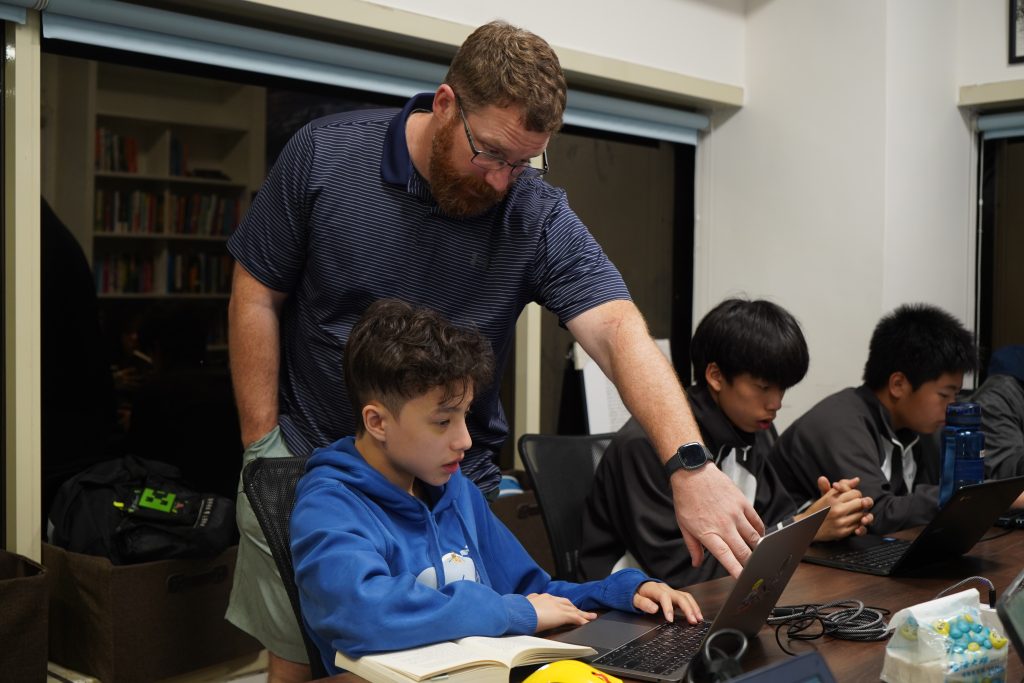
The company was officially incorporated in late 2018, with early input from Adam’s brother, Aaron Hatch. Liz Tsai, Adam’s wife, helped with the legal and logistical side of turning the program into a solvent, working company. She is now Englist’s COO and media/publishing director, overseeing much of the company’s operations, finance, and growth.
I’ve known Liz Tsai (an American who grew up in Taiwan) for close to 20 years. We worked together at ICRT, and she later became my supervisor at Next Media Animation Studios. It wasn’t too long after COVID-19 was at its peak here that she told me more about the company she and Adam Hatch were running.
That may not have been the most auspicious period for any company that works best when students and teachers are in the same room. But Englist weathered the pandemic, shifting efficiently and effectively to online learning quickly enough that it not only survived, but also actually gained students.
Today, several hundred kids attend various classes at Englist, most of which focus on writing skills.
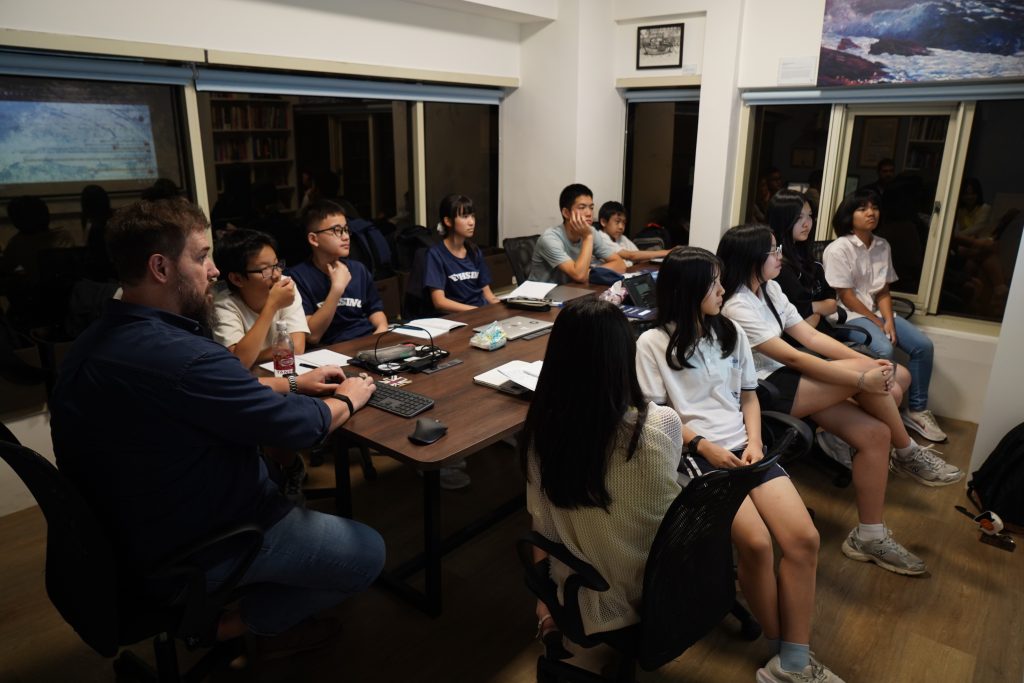
Naturally, I was more than pleased to be invited to judge this year’s event and asked to write up my thoughts on what I witnessed.
The conversations I enjoyed with Liz Tsai and Adam Hatch that day affirmed a few things I’ve been kicking around in my head for a long time. I’ve taught and tutored in southern Taiwan for a very long time. I know that going to an “international school” or an expensive private academy is no guarantee of either English ability or the ability to think while using it.
Adam said there is often a gap between the promise of a Western-style curriculum and the skills students actually need to survive in one.
Some schools advertise American, Western, AP, or IB-style programs. Students may speak enough English to get through the school day. But when they are asked to write an essay, develop an argument, or revise their own work, many are lost.
That is where Englist has found its niche.
“We aren’t a cram school. We aren’t trying to ‘cram’ in anything,” said Adam. Liz agreed, “We don’t just accept tuition and move them through the program. If they can’t or won’t do the work, we’re not going to push. The student needs to buy in.”
Buy into what?
“That reading and writing in English makes you a more interesting person now,” Adam explained. “Writing helps you understand your own thoughts now. Having ideas gives you something to say now; before the grade, before the application, before the future salary. A teacher has to make the case that these skills are valuable now.”
Which, of course, is easier said than done.
We went down a lengthy rabbit hole on ESL schools in Taiwan, various teaching methods, and then teachers themselves.
Adam talked about how teachers are often expected to be part performer, part comedian, and part psychologist. But for writing and reading, he said, “you kind of have to be an evangelist,” describing the fervor required to convince young people “why this is important, why this is valuable, and what good it’s going to do for you.”
I said Amen.
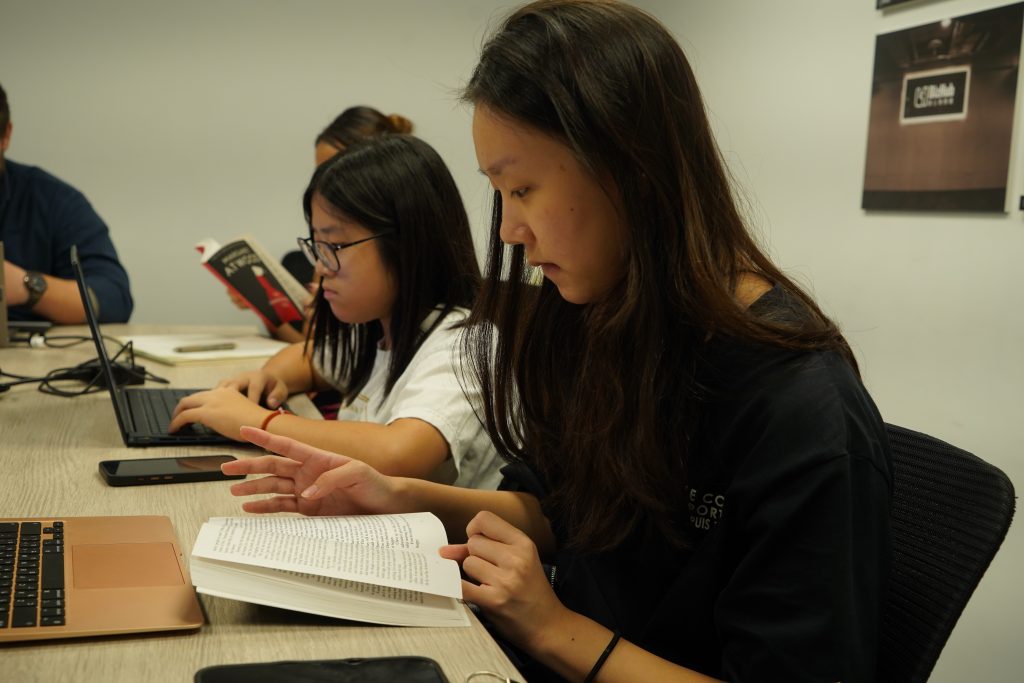
I thought about the last time I spoke about my Taiwan history podcast at a high school in Kaohsiung. I asked the students, “How many of you read for fun?”
They thought I was joking.
It is certainly not their fault. Between excessive schoolwork and excessive entertainment options, there is a lot pushing young people away from books.
Still, I know from personal experience that it is possible to plant a love of reading. Even with older students, slow exposure to the joy of thinking and talking about something they have read can become addictive. And the dopamine hits from a teacher or classmates are not all about praise. The biggest hits come from being understood. That is why Englist’s tagline works so well.
Writing is thinking.
Writing, and of course, reading, is where the real work happens. It is where fuzzy ideas become thoughts. It is where students often find out they don’t actually understand their own argument yet.
Liz stressed that the issue is rarely intelligence. Taiwanese junior and senior high school students, I’ve found, partly by having two daughters in local schools, can generally run rings around me in subjects from physics to chemistry.
They know how to perform as students. They know how to chase a score. They know, very often, how to sound impressive.
What they do not always know is how to be clear.
A lot of writing in Taiwan, from student essays to government press releases, suffers from the belief that complicated language and high word counts equal intelligence.
This is not only a Taiwan problem. Plenty of American high school students do the same thing. Adults from all over the world do it too. AI has been very helpful in making the problem worse.
But for Taiwanese students heading into Western academic settings, the problem becomes urgent very quickly. Professors and admissions readers eventually ask: What are you trying to say?
Adam tries to impart a simple mantra: “You just want to be clear,” he said. “That’s all you’re trying to be.”
It’s not only about language mechanics, either. Adam and Liz said many students arrive at Englist unused to being asked what they actually think.
Those with enough teaching experience here know exactly what they mean. “So. Tell me. What do you genuinely think about this?” – It’s a question many aren’t used to hearing. It causes some to freeze, eyebrows raised, eyes darting left and right as if they’re wondering if it’s a trick question.
Once they believe that it’s a “safe space” and dissenting ideas are welcome, the floodgates usually open. Of course they have thoughts and opinions. Just not much practice forming them, saying them out loud, and then figuring out why they have this or that thought.
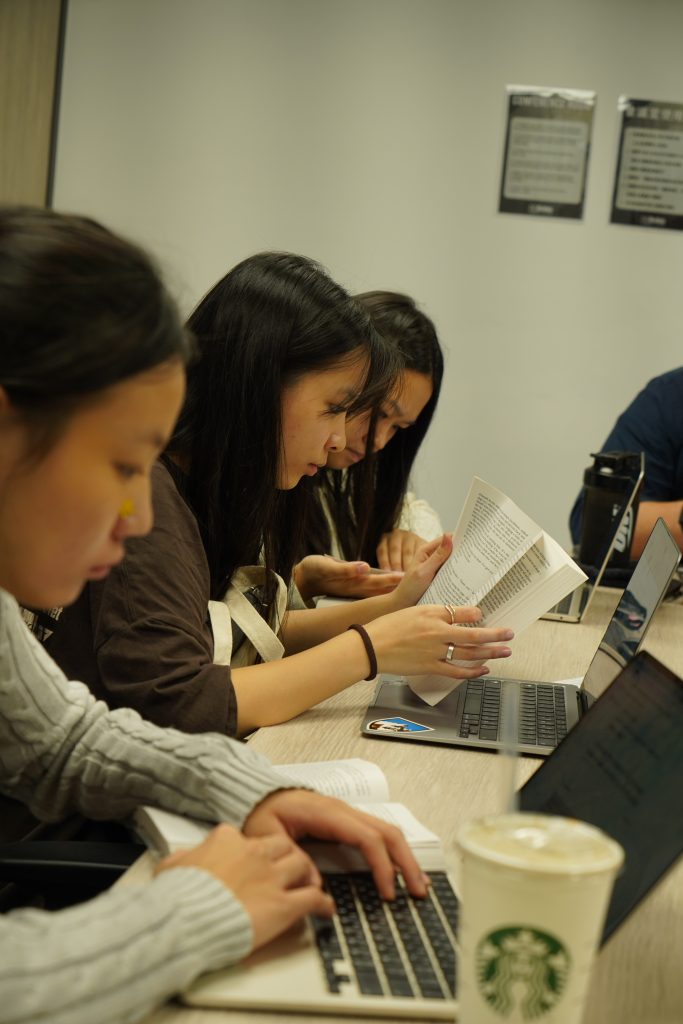
More critical thinking is something we all could benefit from.
But how do you help a teenager learn to think and write clearly in a second language? Englist’s answer is to slow down. Adam described the program’s work as iterative. Students write, receive feedback, revise, and then revise again. Teachers use comments and suggestions in Google Classroom. Students learn how to draft, proofread, edit, and respond to criticism. That last part, responding to criticism, is no small skill.
In many Taiwanese classrooms, students complete an assignment, turn it in, receive a grade, and move on. Englist tries to break that rhythm. The point is not the first draft. The point is what the student can do after someone asks, “Is this really what you mean?”
That approach shaped the essay and speech contest.
Students weren’t given a few safe topics. Writing styles varied. Some wrote personal narratives. Some wrote persuasive pieces. Some wrote fiction. Some were funny. Some were strange. Not all the writing was perfect. Some pieces needed a stronger structure. Some showed ambition that ran ahead of control. But the flaws were evidence of work in progress.
Liz said the speech portion also tries to get away from choreography and memorization, both of which can get in the way of meaning.
“I make it very clear that they can’t think of it as any other speech contest they’ve been in,” Liz said. “This is your presentation. This is not theater.”
They could bring notes. They could stumble. They could forget a phrase and recover. What mattered was whether they understood what they had written and could present it to other people.
That may sound obvious, but it is not always how public speaking is taught here; the surface of English too often becomes the goal: pronunciation, memorization, posture, and confidence.
Those things do matter, of course. But only if there is a thought underneath them.
This brainwork matters much more now, in the age of AI.
We’ve all heard the line “AI is a language model.” It’s worth thinking about for a moment. If language is the math this new magic runs on, the people who will benefit most from these tools will be the people with enough vocabulary, clarity, and judgment to know what to ask, how to ask it, and whether the answer they get back is any good.
Used as a search tool or a starting point, AI may have a place. Adam said he has seen students use it that way. But if students use AI to do the thinking and writing for them, they are not really cheating Englist, he said, they are cheating themselves out of the practice they came for. Nothing students write at Englist appears directly on a college application unless they decide to use it that way. There is no official grade to game. So, if a student has AI produce the essay, the question becomes: why?
“You’re not going to gain anything by that,” Adam said. “You’re only taking away a chance for you to get better at this.”
That is the challenge for Englist and for anyone trying to teach serious language arts skills in 2026. The world now overflows with wordy, empty prose. Clear human thinking is desperately needed, and very likely will become more and more valuable.
For Taiwanese students heading into international schools and overseas universities, that skill is not optional. They will be asked to write essays, analyze texts, make arguments, and explain themselves in classrooms where English is not just a subject, but the medium of thought.
Englist thinks students can be taught to develop clear thinking, but not by rushing them forward before they are ready.
Adam said if students need to repeat a writing level, they repeat it. If they are not ready for advanced work, pretending otherwise helps no one. It’s a model that would be rejected as a corporate business plan, but it clearly provides better education.
As I rode the High-Speed Rail train back to Kaohsiung, it occurred to me that such education isn’t only about ESL. English was the medium, obviously. But the real lesson was clarity.
Can you explain what you mean? Can you revise after someone points out that you have not said it yet? Can you stand in front of a room and speak as yourself, rather than performing what you think adults want to hear?
Those are not only English skills. They are thinking skills. They are, increasingly, survival skills.
That’s why there are things in Englist’s approach that many teachers could borrow, even in small ways.
None of this is easy. Most teachers do not have the time, class size, or freedom to run every assignment this way.
But watching the students read their essays and give their speeches, I kept wishing more Taiwanese kids had access to at least some version of it.
Not necessarily the same model. Just more chances to slow down.
More chances to write before they are graded. More chances to revise before they are judged. More chances to read something that is not immediately turned into a test. More chances to stand in front of a room and speak as themselves, not as contestants performing for adults.
More chances to think.
About the Author:

Eryk Michael Smith is a journalist, editor, broadcaster, and podcast host based in Kaohsiung. He is editor-in-chief of Kaohsiung Times, chairperson of the American Chamber of Commerce in Kaohsiung, and co-creator and host of the English-language Taiwan history podcast Formosa Files. He also writes for Fox News Digital and serves as ICRT’s southern Taiwan correspondent. Smith has made Taiwan his permanent home since 1997.