
By KHT Staff. Image via China Times.
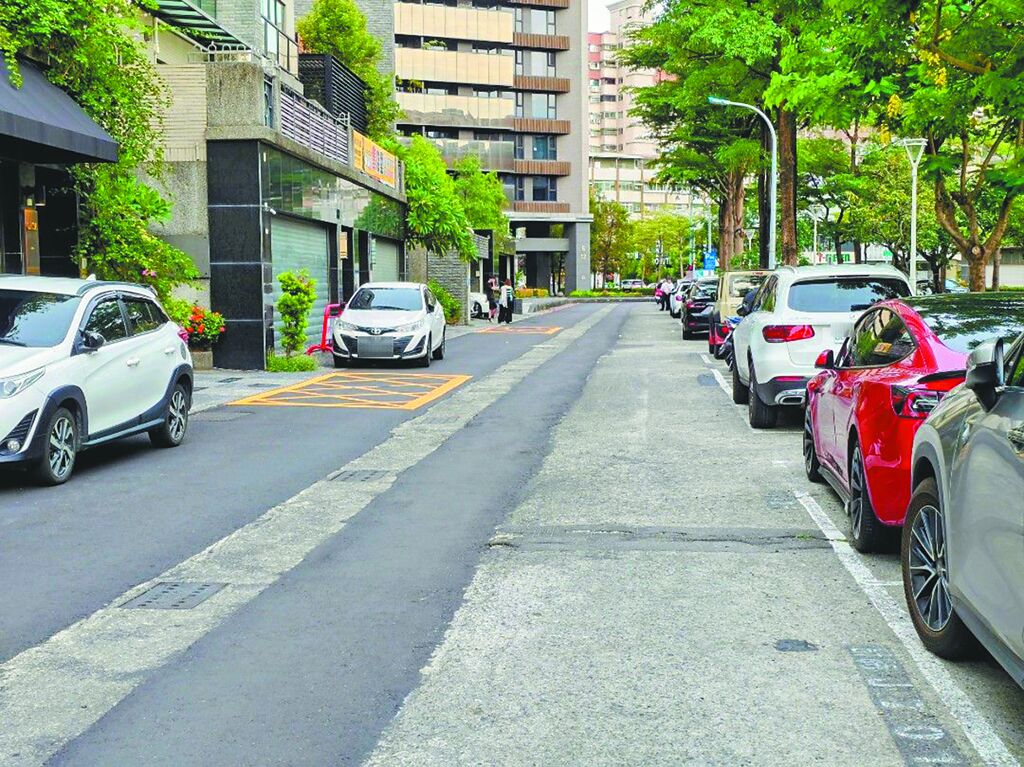
KAOHSIUNG — Workers did not accidentally stop halfway when they resurfaced part of Wenlong Road Lane 16 (文龍路16巷) in Fongshan District (鳳山).
They completed the section that the Fongshan District Office (鳳山區公所) was authorized to maintain. The rest was left untouched because, according to the city’s urban planning designations, it was not technically part of the road.
The result was a roughly 100-meter-long street divided between fresh black asphalt and an older, damaged surface, quickly nicknamed a “yin-yang road” by residents.
The partial resurfacing was completed July 2. A Public Television Service report the following day showed the new asphalt covering only part of the approximately eight-meter-wide passage.
Residents said similar work had been carried out several times, with crews resurfacing only the same portion. Motorcyclists complained that the difference between the two surfaces made the road uneven and uncomfortable to use.
A later China Times report said residents were also concerned that the height difference interfered with drainage, leaving standing water and increasing the risk of vehicles slipping.
The unusual appearance is the result of how the land is divided among city offices.
The legally designated four-meter roadway is maintained by the district office. A strip beside the park is classified as “park setback” land and falls under the city’s Parks Office (公園處), while a drainage channel involves the Water Resources Bureau (水利局).
In practice, the agencies were maintaining separate pieces of what residents use as a single road.
This is not a dispute between separate jurisdictions: all of the offices involved are part of Kaohsiung City Government. It is a case of fragmented administrative authority, with the official land designations no longer matching how the space is actually used.
The park-side strip is used for driving and parking, but officially remains “park” land. The Parks Office told PTS that covering it with asphalt would therefore involve urban planning and traffic-safety questions, rather than being treated as routine road maintenance.
Kaohsiung City Councilor Chen Hui-wen (陳慧文) held an on-site inspection July 7. According to a summary published by her office, Chen called for the height difference to be removed and for the drainage channel to be moved toward the side of the road if possible.
If the channel cannot be relocated immediately, Chen said the city should add markings or other guidance to warn cyclists and motorcyclists.
Her proposed long-term solution is an amendment to the urban plan that would redesignate the park setback as “road” land. The entire passage could then be transferred to one public works agency for construction and maintenance.
The city said it would first improve the overall surface and evaluate widening the road through an urban planning amendment. Officials also said they would discuss the eventual road design with residents and seek funding, although no timetable was provided.
For the offices involved, stopping at the administrative boundary followed the map. For residents driving down the alley, it looked like the city had simply stopped halfway.