

By KHT Staff
KAOHSIUNG — Kaohsiung’s government says it has facilitated more than NT$2.7 trillion in investments over six years, even as the southern Taiwan port city’s registered population fell to 2,709,973 in June, nearly 64,000 fewer than in 2018.
The contrasting figures illustrate the central challenge facing Kaohsiung as semiconductor plants, technology offices and financial services reshape an economy long associated with heavy industry: New projects are creating jobs, but they have not reversed the city’s aging-driven population decline.
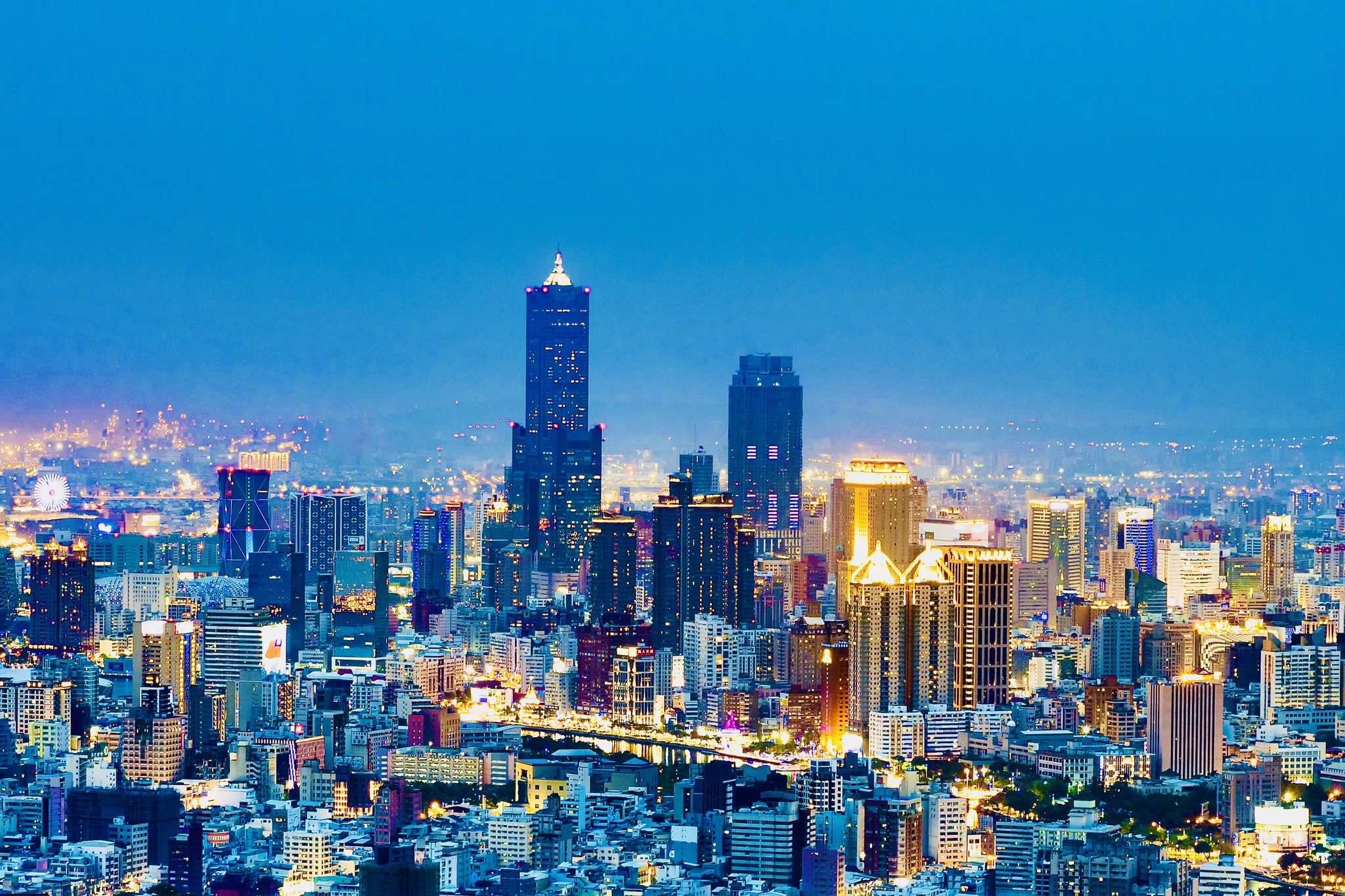
Investment is creating jobs
The city’s Economic Development Bureau said on Aug. 20 that the investment total covered semiconductors, traditional manufacturing and financial services. Six industrial parks have added 710 hectares of industrial land, while employment across the Kaohsiung, Ciaotou and Nanzih science parks increased from about 8,600 people in 2020 to more than 20,000 in 2025. The city’s 3.2% unemployment rate was the lowest among Taiwan’s six special municipalities, the bureau said.
The NT$2.7 trillion figure, however, represents investment the city says it has helped secure and includes projects at different stages of development. Second Space, a Kaohsiung coworking company that reviewed government statistics and budget documents, said authorities have not published a project-by-project accounting showing how much of the total has already been spent.
TSMC’s advanced semiconductor development in Nanzih anchors the city’s emerging technology corridor. The Asia New Bay Area program, based around Kaohsiung’s waterfront and software park, reports 340 participating companies and 5,700 jobs, according to the Second Space analysis. It also found that a 5G and artificial intelligence of things initiative within the program had reached NT$15.4 billion of a NT$30 billion investment target and NT$32.7 billion of a NT$120 billion output target.
Aging weighs on population
Kaohsiung’s registered population declined from 2,773,533 in 2018 to 2,709,973 in June 2026. More than one-fifth of residents are 65 or older, placing the city among Taiwan’s rapidly aging communities.
The decline cannot be attributed solely to people moving north for work. During the first half of 2025, about 76,000 people moved into Kaohsiung and about 75,000 moved out. Over the same period, the city recorded 6,320 births and about 13,000 deaths, meaning natural population loss outweighed a small migration gain.
The trend intensified in the first half of 2026. Kaohsiung lost 8,572 residents, with 5,243 births and more than 12,000 deaths recorded through June, according to local population figures reported in July.
Longer visa expands remote-work appeal
Taiwan’s digital nomad visa provides Kaohsiung with another route to attract working-age residents. Rules effective Jan. 1, 2026, allow eligible remote workers to remain for up to two years through extensions, although they may not provide services to employers or businesses in Taiwan.
Applicants must be eligible for visa-free entry and either hold another country’s digital nomad visa or meet an income threshold. People 30 or older must show annual earnings of at least US$40,000 in one of the previous two years, while those ages 20 to 29 must show at least US$20,000. Applicants also need an average bank balance of at least US$10,000 over six months and international medical insurance.
Second Space estimated that a one-bedroom apartment in central Kaohsiung costs about NT$8,000 to NT$12,000 a month, compared with about NT$21,000 in central Taipei. The lower cost comes with a smaller startup network: The analysis counted 592 registered startups in Kaohsiung at the end of 2023, compared with 4,253 in Taipei, where most of Taiwan’s venture capital firms are located.
Growth has yet to translate into residents
Kaohsiung has expanded its rail network and completed its circular light-rail line in 2024, but the city remains heavily dependent on scooters. Its planned Yellow Line is expected to open partially in 2032 and fully in 2034, leaving several densely populated districts without rapid-transit service for years.
The figures suggest Kaohsiung’s industrial transformation is advancing faster than its demographic recovery. Major plants, technology companies and infrastructure are arriving, but sustaining the shift will depend on whether the new jobs can attract and retain enough working-age residents to offset low births and an aging population.