
By KHT Staff. Image via 高雄好過日.
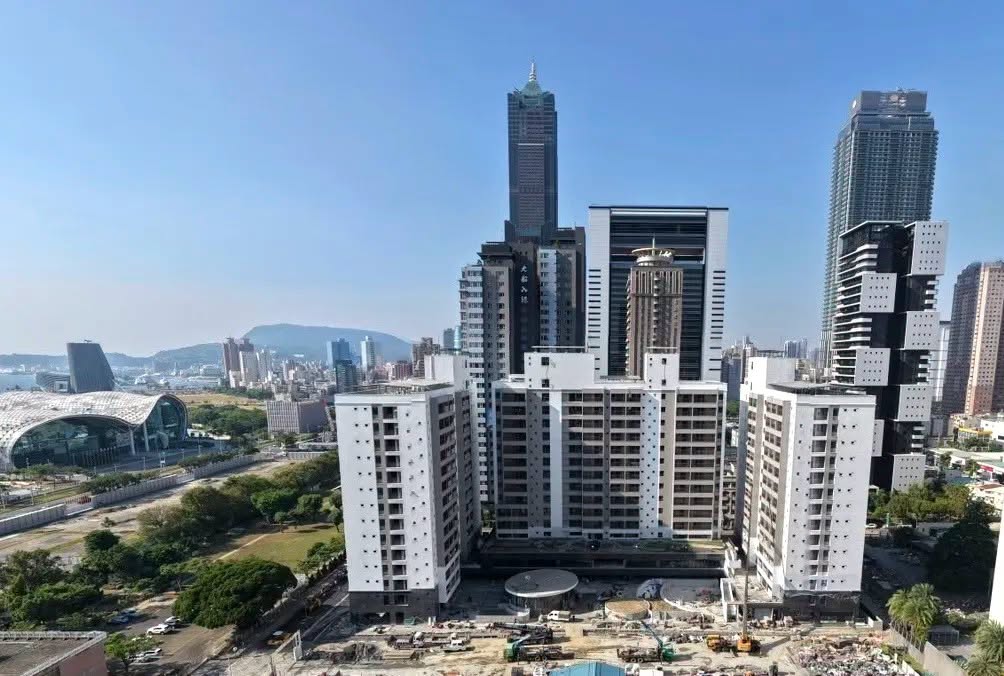
KAOHSIUNG — The Kaohsiung City Government is now accepting rental applications for the first phase of the Asia New Bay Area Smart Social Housing (亞灣智慧社宅) project, highlighting it as the only public housing development in Taiwan offering direct harbor views.
The main structure of the Phase 1 complex is complete, with exterior sidewalk and courtyard landscaping currently underway. The city expects to receive the building’s usage license by Oct. 30, 2026, and residents are scheduled to move in by March 2027, according to a public update detailing the project by the local civic advocacy group Kaohsiung Good Day (高雄好過日).
Constructed directly by the municipal government at a cost of approximately NT$3.16 billion, the Phase 1 development provides 634 units equipped with smart metering, specialized soundproofing, and earthquake-resistant designs. The inventory includes 451 studio apartments, 24 one-bedroom units, 147 two-bedroom units, and 12 three-bedroom units. The complex has secured multiple environmental certifications, including a Silver-level Green Building mark and Level 1 Building Energy Efficiency certification.
Sixty percent of the housing is allocated for standard applicants, while 40 percent is reserved for priority and care households. The city has established specific application quotas to guarantee housing for newlywed and child-rearing families, police officers, firefighters, and Indigenous residents.
The complex is designed to provide integrated, multi-generational social services that will open concurrently with resident move-ins next spring. The first floor will feature a kindergarten accommodating 76 children—with 30 percent of spots reserved for residents’ children—alongside a community care center for 18 seniors. The second floor will house a public infant daycare for 40 toddlers and a senior daytime care center for 60 older adults. Eight ground-floor commercial storefronts will host a laundromat, a convenience store, and youth startup offices.
As construction costs rise and central government subsidies shift, the city is increasingly utilizing public-private partnerships to expand its public housing stock.