
Close Menu
Kaohsiung Times

    Political commentator urges opposition to build long-term southern Taiwan strategy

    The story of Taiwan’s first sex change (1953-1955), on the FORMOSA FILES podcast.

    Pressure pattern brings typhoon-like winds to Kaohsiung

    Facebook X (Twitter) Instagram Threads
    Kaohsiung Times
    Tuesday, July 14
    Facebook X (Twitter) Instagram
    • Latest
    • Kaohsiung
    • South
      • Pingtung
      • Tainan
      • Chiayi
    • Crime
    • Business
      • ESG
      • Technology
      • Energy
      • Real Estate
    • Politics
    • Lifestyle
      • Sports
      • Health
      • Entertainment
      • Travel
    • Long-form
      • Editorials
      • Formosa Files
      • Article Series
      • Books
    • Youth
    Kaohsiung Times
    • Latest
    • Kaohsiung
    • South
    • Crime
    • Business
    • Politics
    • Lifestyle
    • Long-form
    • Youth
    Home » China’s Fishing Fleets Are Testing a New Form of Sea Control
    Editorials February 9, 20263 Mins Read

    China’s Fishing Fleets Are Testing a New Form of Sea Control

    “Civilian” boats could shape access, pressure shipping, and test regional response
    Share
    Facebook Twitter LinkedIn Email Copy Link Threads

    By Eryk Michael Smith

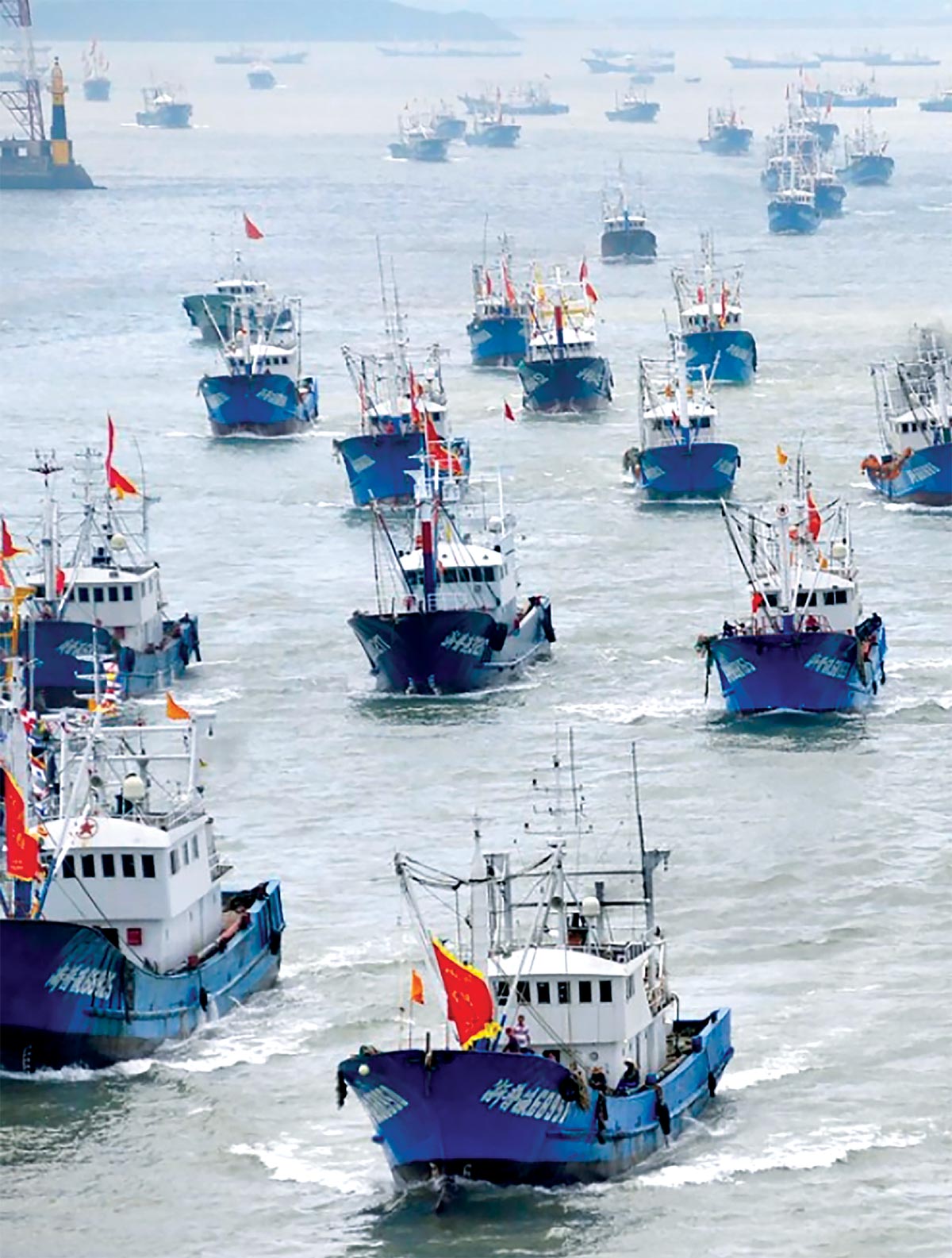
    A recent New York Times investigation has drawn attention to a quieter, less conventional way maritime power can be exercised, without warships ever leaving port. In early January 2026, thousands of Chinese fishing vessels assembled into tightly coordinated formations in the East China Sea, not to fish, but to hold position.

    Using ship-tracking data, researchers identified two separate operations involving roughly 1,400 and 2,000 vessels. Instead of spreading out, the boats formed dense, organized lines stretching hundreds of kilometers. Nearby cargo ships slowed, rerouted, or carefully threaded through gaps. The fleets remained in place for more than a day, an unusual sight for any commercial fishing operation.

    Analysts believe the activity reflects China’s growing maritime militia capability, which relies heavily on civilian fishing boats that receive state guidance and support. What stood out was not new hardware, but coordination: mobilizing thousands of vessels simultaneously and directing them into disciplined formations points to increasingly sophisticated command-and-control from shore.

    For shipping companies, the implications are practical rather than theoretical. Large clusters of small vessels complicate navigation, create radar clutter, and raise insurance and operating costs. Even without a declared blockade, few commercial operators would willingly sail through a crowded and ambiguous maritime barrier.

    For Taiwan, including port cities like Kaohsiung, the concern is less about one specific incident and more about precedent. Kaohsiung plays a central role in Taiwan’s energy and industrial logistics, handling a significant share of LNG imports and petrochemical processing. Any disruption near its sea lanes would have ripple effects across the island and beyond.

    Speaking to the Kaohsiung Times, ingeniSPACE COO Jason Wang, whose team first flagged the January activity, noted that regional neighbors are investing heavily in satellite-based maritime awareness, while Taiwan is still scaling up. Experts say closing that gap will be essential for monitoring fast-moving, gray-zone activity at sea. Speaking to the Kaohsiung Times, Wang said, “Taiwan needs hundreds of satellites across a wide-range of sensors that can image multiple times a day across multiple locations. Japan and Korea are doing just that and aggressively expanding the number of geospatial intelligence analysts to absorb the slew of data.”

    The broader takeaway is not that conflict is imminent, but that sea control no longer looks the way it used to. Chinese policy and military writings describe maritime militia forces as tools for signaling, surveillance, and pressure, often operating below the threshold of open confrontation. If challenged, their civilian status allows Beijing to frame incidents as accidents or overreactions.

    For Kaohsiung and other major ports across the First Island Chain, the lesson is straightforward: maintaining open sea lanes increasingly depends on visibility, data, and early awareness. In today’s maritime environment, fishing boats could matter almost as much as warships; perhaps more.

    editorial
    Share. Facebook Twitter Threads LinkedIn Email Copy Link

    Related Posts

    The story of Taiwan’s first sex change (1953-1955), on the FORMOSA FILES podcast.

    July 14, 2026

    Greater Sentosa: Singapore’s Twenty-Year Vision to Build a World-Class Island Destination

    July 14, 2026

    Writing is thinking at Englist

    July 13, 2026
    Add A Comment

    Comments are closed.

    The story of Taiwan’s first sex change (1953-1955), on the FORMOSA FILES podcast.

    July 14, 2026

    Greater Sentosa: Singapore’s Twenty-Year Vision to Build a World-Class Island Destination

    July 14, 2026

    Writing is thinking at Englist

    July 13, 2026

    OPINION: A Singaporean Reads Yang Shuangzi’s “Taiwan Travelogue”

    July 7, 2026

    OPINION: From Chile’s “Hour Zero” of Democracy, Rethinking Asia’s Transitional Justice Dilemma:

    July 7, 2026

    Political commentator urges opposition to build long-term southern Taiwan strategy

    The story of Taiwan’s first sex change (1953-1955), on the FORMOSA FILES podcast.

    Pressure pattern brings typhoon-like winds to Kaohsiung

    Kaohsiung street dance contest offers NT$820,000 in prizes

    Greater Sentosa: Singapore’s Twenty-Year Vision to Build a World-Class Island Destination

    Hengchun Cultural Center to Host 2026 Soundwave Art Festival Starting in August

    Facebook X (Twitter) Pinterest Vimeo WhatsApp TikTok Instagram

    News

    • Local
    • Business
    • Sports
    • Politics
    • Opinions
    • Lifestyle
    • Health

    News

    • Entertainment
    • Travel
    • Formosa FIles
    • Books
    • Technology
    • Youth
    • Latest

    Company

    • Information
    • Advertising
    • Contact Info
    • Privacy Policy & GDPR
    © 2026 Kaohsiung Times. Developed by Second Space.
    • Privacy Policy
    • Terms
    • Accessibility

    Type above and press Enter to search. Press Esc to cancel.