
By KHT Staff. Images via KH City Govt.
KAOHSIUNG — The Kaohsiung Labor Bureau is urging construction companies and other employers with outdoor workers to strengthen heat safety measures as extreme summer temperatures become a growing occupational hazard.
Labor Bureau Director-General Chiang Chien-hsing (江健興) said high-temperature work environments can lead to heat exhaustion, heatstroke, and other serious health risks.
He said employers should ensure workers have access to cooling measures, water breaks, and rest.
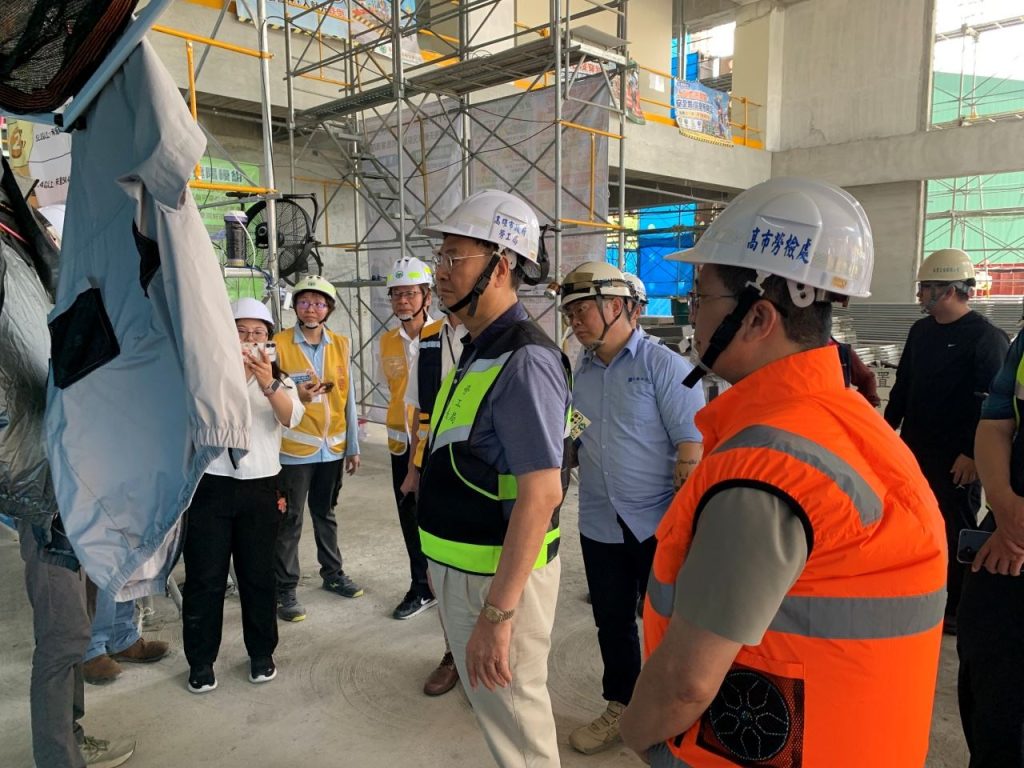
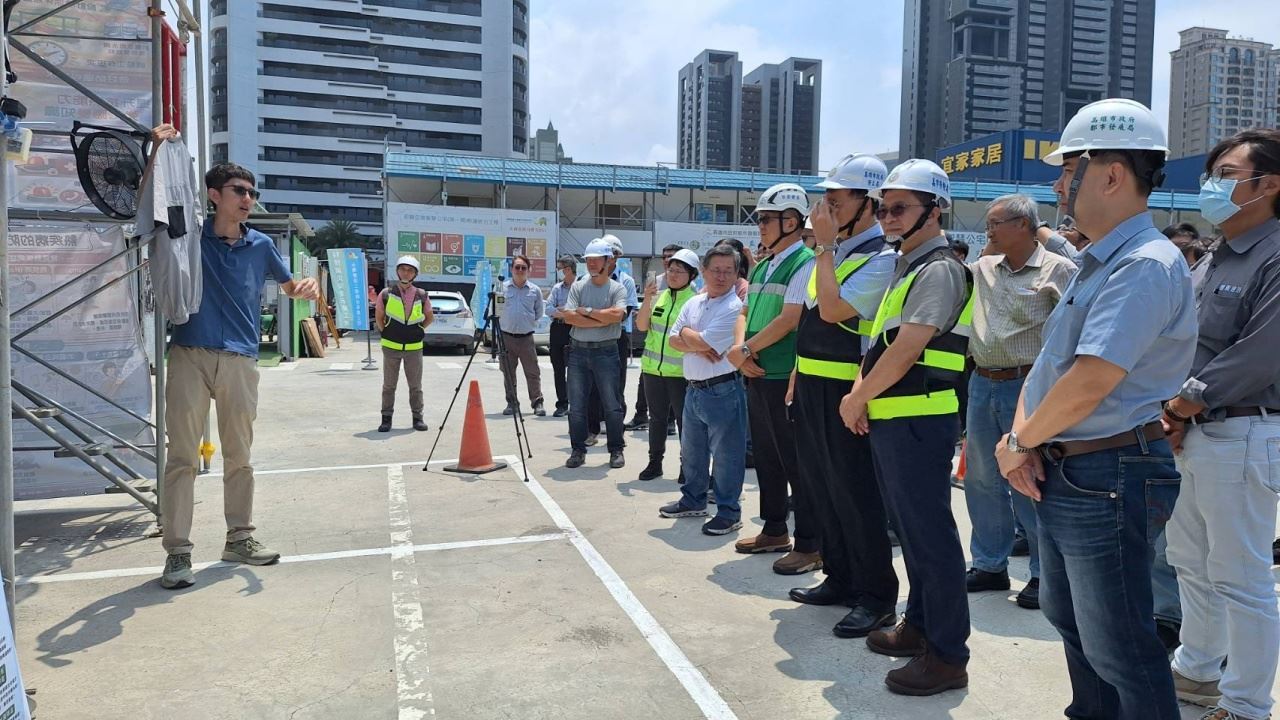
The bureau, together with the Occupational Safety and Health Administration and the Occupational Accident Prevention and Rehabilitation Center, held heat hazard prevention demonstrations on July 27 and Aug. 4.
The events brought together 125 representatives from construction companies and related businesses.
The sessions covered heat-related regulations, hazard identification, risk assessment, prevention measures, and workplace management examples.
Speakers included National Cheng Kung University emeritus professor Tsai Peng-chih (蔡朋枝) and Chang Jung Christian University researcher Tai Yu-tung (戴聿彤).
The events also introduced heat prevention equipment and smart monitoring systems, including shade and cooling modules, personal fan vests, and construction-site environmental monitoring tools.
The bureau said some systems can track temperature, humidity, PM2.5, wind speed, and noise levels at worksites in real-time.
When readings reach warning levels, alerts can be sent through electronic boards, warning lights, mobile phone notifications, and broadcasts.
The warnings are intended to remind managers and workers to hydrate, rest, cool down, adjust work schedules, or stop high-risk work when needed.
The bureau also highlighted an energy-saving cooling and shade module for rest areas. The system uses misting to reduce temperatures and is powered by solar panels.
Labor Inspection Office Director Kuo Ching-chi (郭清吉) said heat hazard prevention should be part of daily construction-site management.
He said employers should plan work and rest schedules based on heat index and workload, while also ensuring workers are acclimatized, hydrated, protected from sun exposure, and monitored for health risks.
Kuo said companies should also establish self-inspection systems and emergency response procedures.
The bureau said employers should make “cool downs, hydration breaks, and rest” part of regular summer worksite management.