
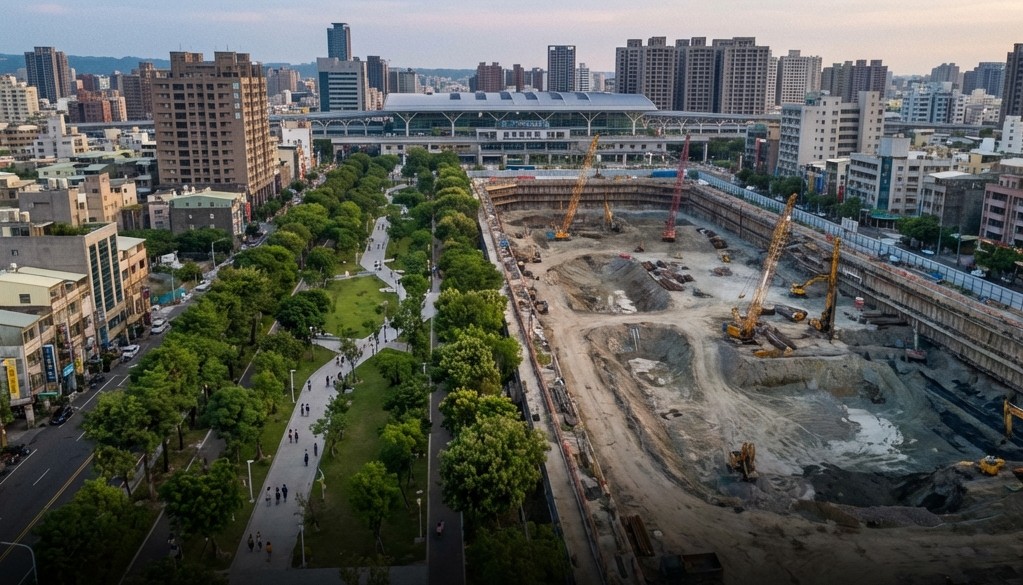
By RK Shih / Staff – AI cover image illustrates the feared disruptions in the Zuoying area.
KAOHSIUNG — Plans for the southern extension of Taiwan High Speed Rail (HSR) into Kaohsiung are moving forward, and the Ministry of Transportation and Communications’ Railway Bureau (交通部鐵道局) is trying to calm fears over major traffic disruptions. The HSR South Extension to Pingtung project will first push from Zuoying to the Kaohsiung Main Station, bringing high-speed rail services directly into the city center for the first time.
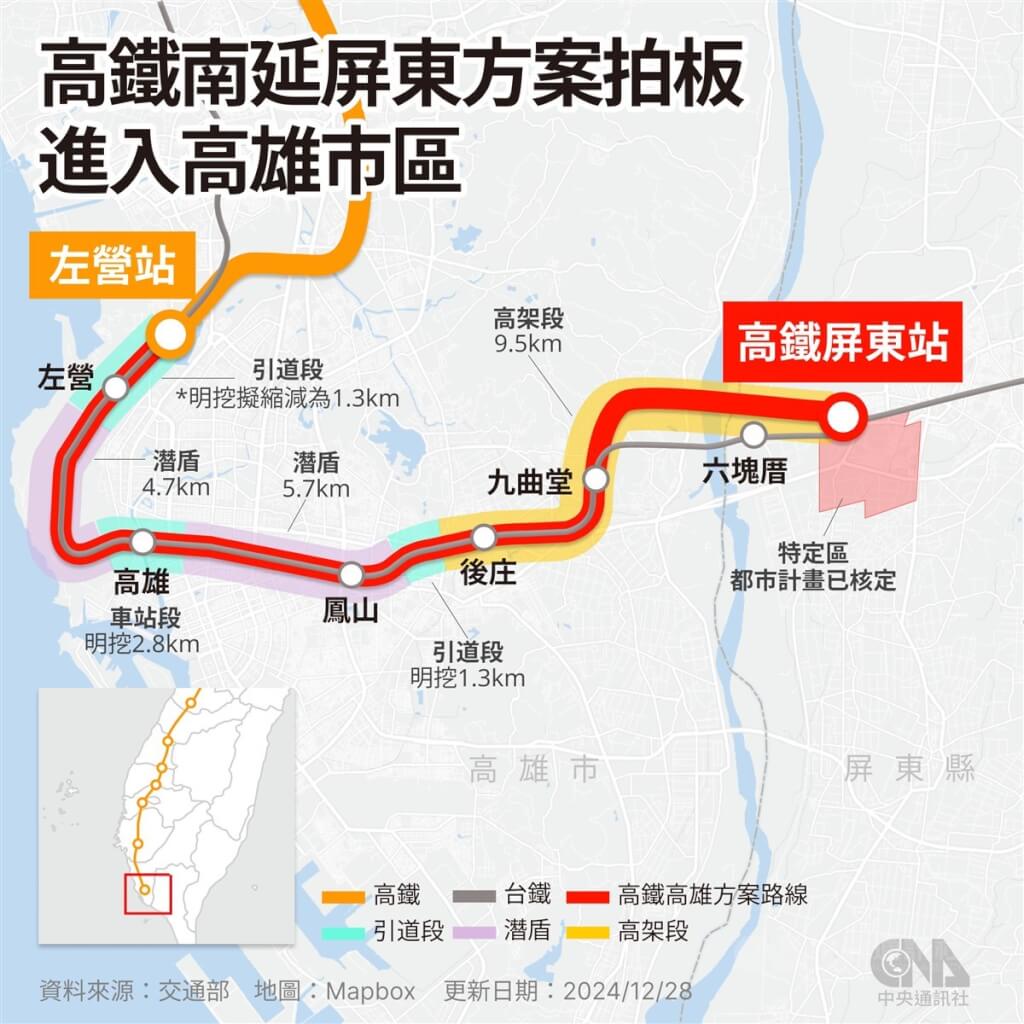
The Railway Bureau has acknowledged that the works will involve several kilometers of cut-and-cover excavation along the existing underground railway corridor, an unhappy prospect for residents who still remember the prolonged traffic disruptions during the earlier railway undergrounding project. Officials, however, have pledged that key north-south routes, particularly Jhonghua Road (中華路, Provincial Highway 17) and Minzu Road (民族路, Provincial Highway 1), will not be closed during construction. According to the bureau, phased construction and deck covering methods will be used so that road traffic can continue operating above the works once each section is completed.
Government planning documents indicate that the southern extension project carries an estimated total cost of roughly NT$250 billion, reflecting the complexity of integrating high-speed rail infrastructure into an already dense urban core while maintaining existing rail, road, and metro systems. The Railway Bureau has also stated that coordination has been conducted with the Kaohsiung MRT Yellow Line project to avoid major conflicts between construction schedules and underground works.
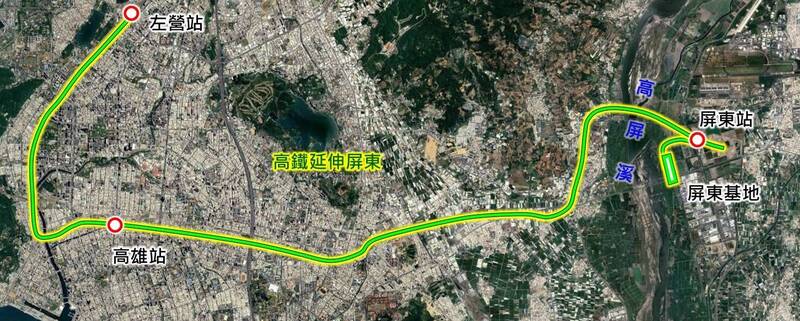
The selected route largely follows the former surface rail corridor that was placed underground during Kaohsiung’s decade-long railway undergrounding program. That corridor has since been redeveloped into green boulevards and linear parks, meaning portions of the landscaped public space may face temporary disruption during construction. Urban planners note that using an existing transportation corridor can reduce the need for new land acquisition, but it often concentrates construction impacts in areas that have recently undergone redevelopment.
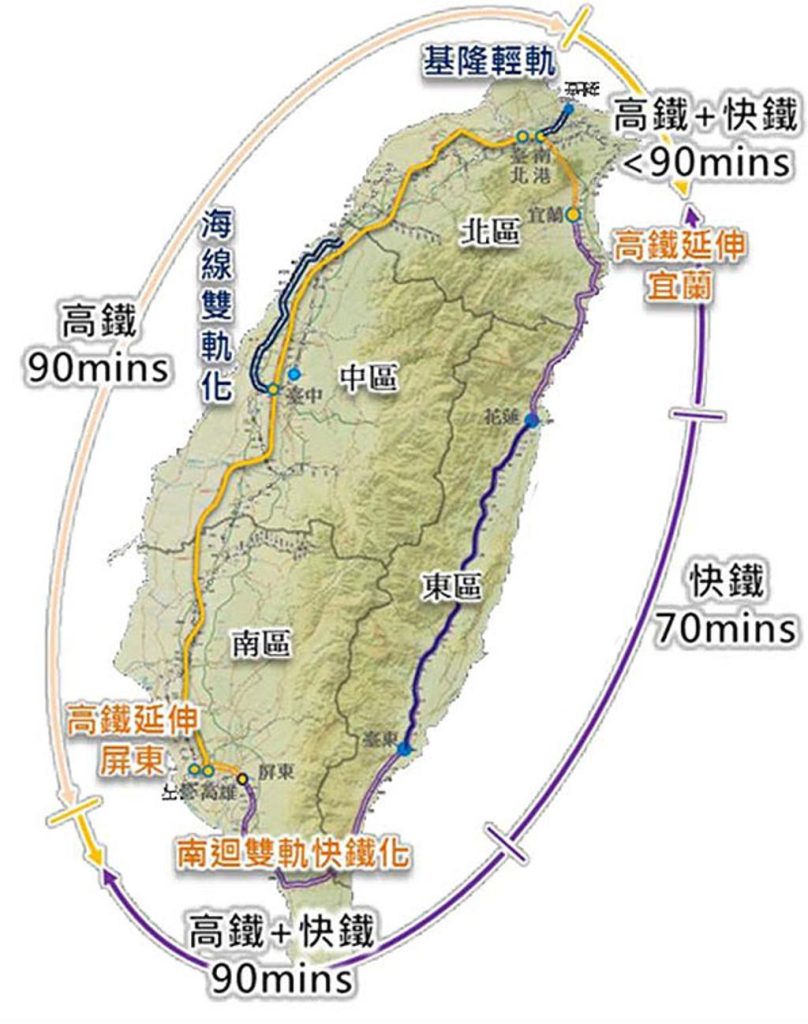
Transport officials argue that extending HSR to Kaohsiung Station will significantly improve regional connectivity between Kaohsiung and Pingtung, shortening travel times and strengthening the southern metropolitan area’s integration.
Nevertheless, skepticism remains among many who recall the “traffic dark ages” during earlier large-scale infrastructure projects. Traffic engineers say that even with mitigation strategies such as staged excavation and shield tunneling beneath intersections, congestion during peak construction phases will be difficult to avoid in dense urban environments.