
By KHT Staff
KAOHSIUNG — A proposal to create 508 hectares of new land along the southern edge of Kaohsiung Port could provide the region with a long-term destination for construction soil while substantially expanding the port’s industrial area.
However, the project has not received final approval. Environmental authorities have determined that its potential effects are serious enough to require a second-stage environmental impact assessment.
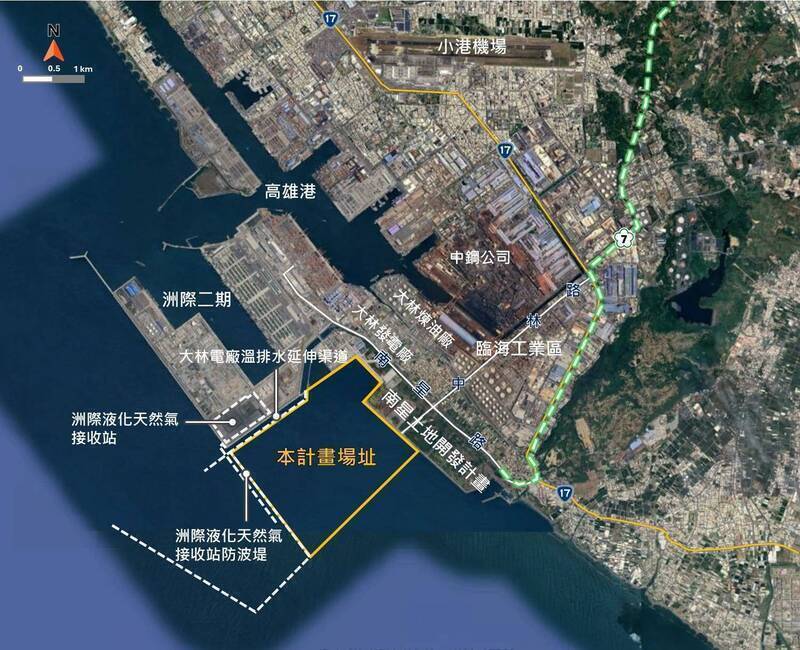
The Kaohsiung Port Fill Area Project, proposed by Taiwan International Ports Corporation (臺灣港務公司) and China Steel Corp. (中鋼), would reclaim waters south of the Intercontinental Container Terminal and near Dalinpu (大林蒲), Fongbitou Fishing Harbor (鳳鼻頭漁港) and the South Star Development Area.
The project would require about 100 million cubic meters of fill over a proposed 30-year period from 2029 to 2059. Approximately 58 million cubic meters would consist of surplus soil and rock from construction projects, with the remainder coming from port dredging and approved recycled aggregate.
Port authorities said the resulting land would be used by port-related industries. They also described the project as a circular-economy measure that would reuse material while reducing disposal and transportation costs.
The proposal comes as Kaohsiung faces a shortage of legal destinations for soil excavated from major construction projects. The MRT Yellow Line alone is expected to produce at least 5 million cubic meters, according to earlier reporting on the city’s soil-disposal capacity.
The shortage has become more pressing following tighter tracking of construction material and investigations into illegal dumping. The proposed port site could eventually provide an outlet, although its 2029 target remains dependent on environmental approval and construction progress.
At an environmental review meeting in March, committee members concluded that the project could have significant adverse effects and ordered the developers to complete a second-stage assessment.
The required studies will cover marine water quality, air pollution, truck traffic, extreme-weather risks and the combined effects of other port developments. Developers must also examine possible effects on fisheries, cetaceans and sea turtles, consult local fishing associations and establish controls over the material placed in the sea.
Reviewers raised particular concerns about potentially contaminated harbor sediment and called for testing for heavy metals and organic pollutants. They also requested clear inspection standards for recycled aggregate before it is accepted as fill.
One related marine construction contract, connected to the Kaohsiung Intercontinental LNG terminal, includes a 500-meter southern seawall and a 1,749-meter northern training wall. Taiwan International Ports Corporation, Taiwan Power Co. and CPC Corp. are jointly funding that NT$5.417 billion package, scheduled for construction between 2027 and 2031.
That figure does not represent the cost of the entire 508-hectare reclamation project. A complete project budget and final breakdown of future land uses have not been publicly disclosed.
The scale would be considerable even for a port largely built through reclamation. More than 1,000 hectares have been added to Kaohsiung Port over the past century, while this proposal alone would create another 508 hectares.
amount covers those structures, however, and is not the total cost of the wider 30-year reclamation project. A complete project budget has not been publicly disclosed.