
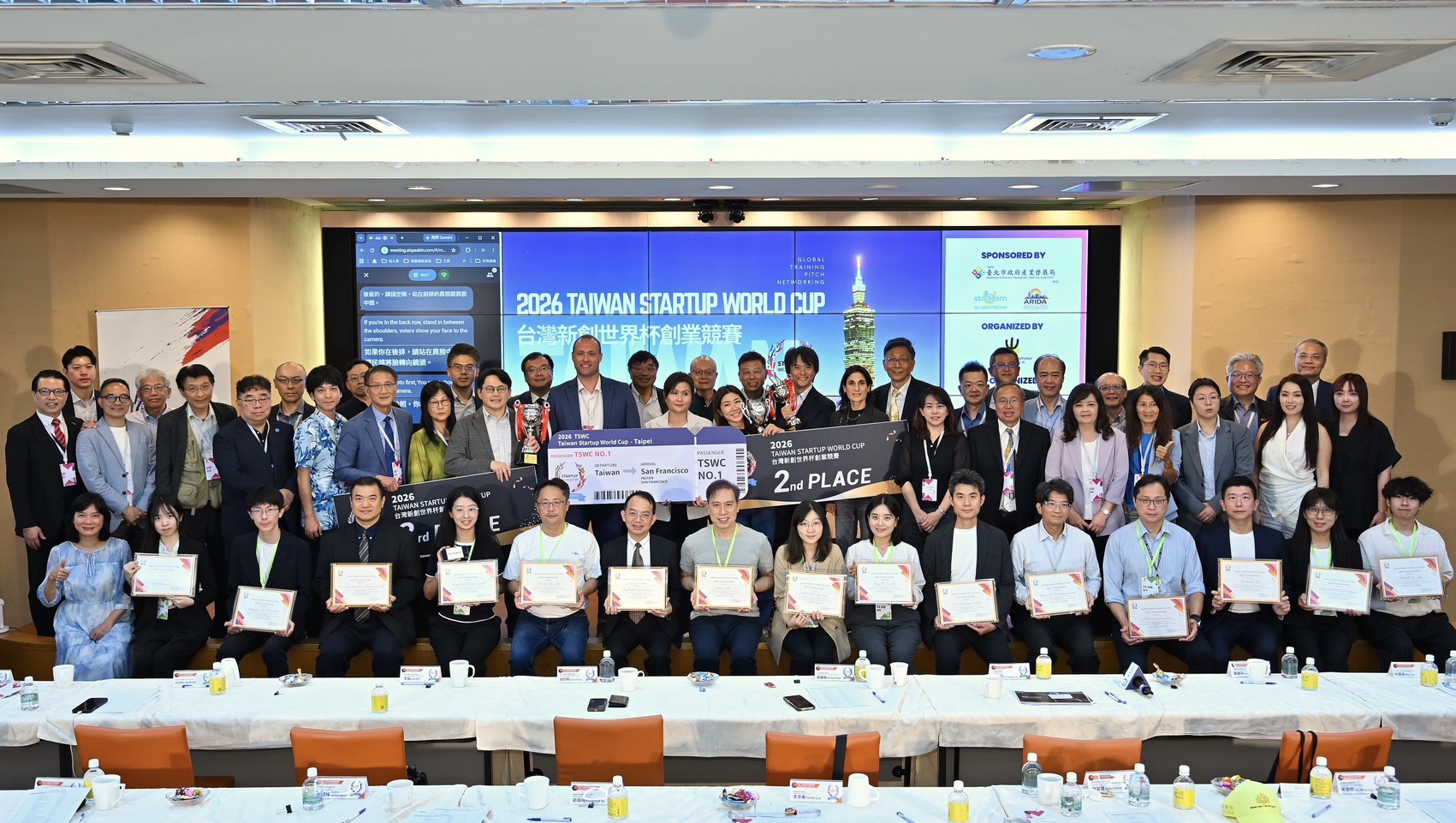
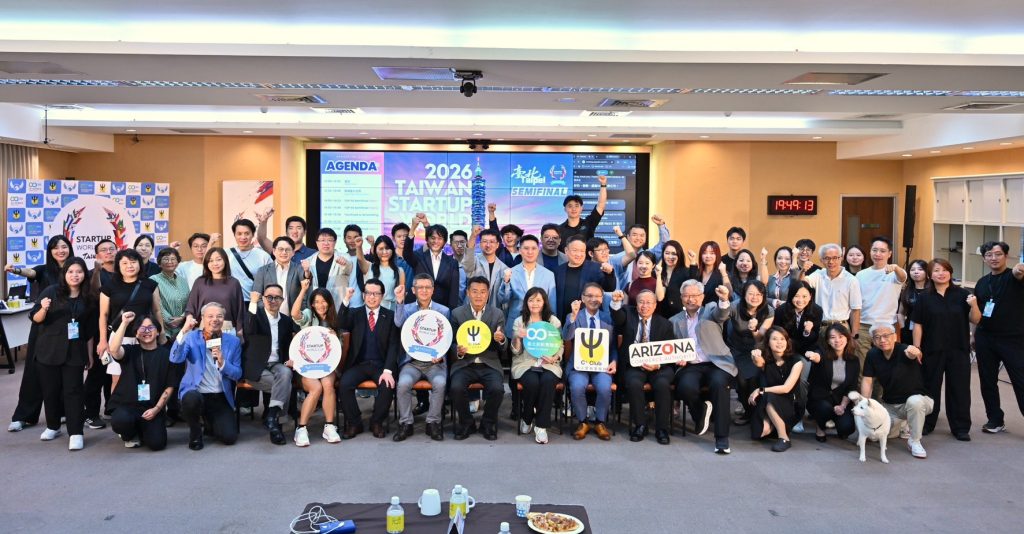
By Eryk Michael Smith/KHT Staff. Cover shows the top 15 startup teams, including the top three finalists, posing for a group photo with international judges and guests at the 2026 Taiwan Startup World Cup in Taipei, Aug. 27, 2026. Image via organizers.
TAIPEI — Taiwanese startups looking to expand overseas met international investors, industry leaders and startup ecosystem partners at the 2026 Taiwan Startup World Cup Taipei, a two-day event organized by CnC Venture that brought together startups, judges and guests from the United States, Germany, Israel, Japan, Thailand and Vietnam.
The event, which wrapped up in Taipei on Aug. 27 (after a mid-August round held in Kaohsiung), combined a startup competition with an international exchange, giving Taiwanese founders opportunities to present their businesses to overseas judges while building connections with investors, industry partners and organizations that could help them enter foreign markets.
Among the government and industry leaders attending the event was Lee Guann-jyh (李冠志), also known as GJ Lee, director-general of Taiwan’s Small and Medium Enterprise and Startup Administration under the Ministry of Economic Affairs.
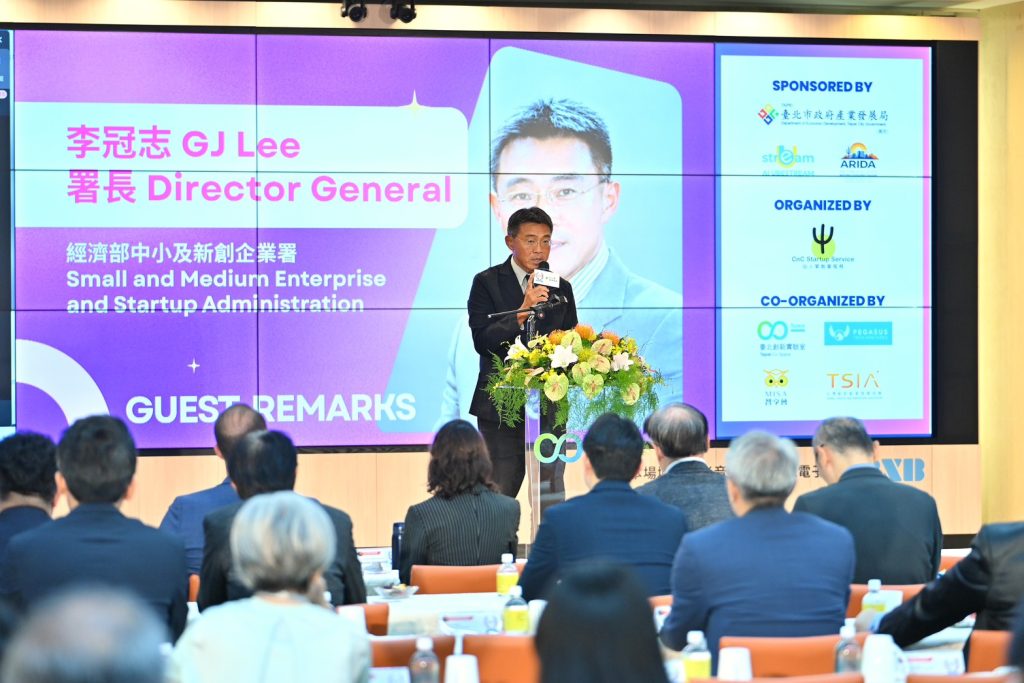
Lee attended the Startup World Cup finals on Aug. 27, where he met participating startup teams and international guests and encouraged Taiwanese founders seeking opportunities abroad.
Speaking with the Kaohsiung Times at the event, Lee said entering an overseas market can represent “a totally new world” for a young Taiwanese company.
Funding remains a major challenge, but regulatory requirements can be equally difficult, particularly for startups working in biotechnology, cybersecurity, defense technology and other tightly regulated fields.
“We need to help startups become more familiar with and fully understand all the regulatory requirements in the target market,” Lee said.
Visibility is another obstacle. Taiwanese startups may have competitive products but remain largely unknown among overseas customers, suppliers and potential business partners.
Lee said international exhibitions and events can help companies develop contacts, demonstrate their capabilities and build recognition for Taiwanese products and services.
“It is quite a long way to go,” he said. “We need to take every step solidly and be well prepared.”
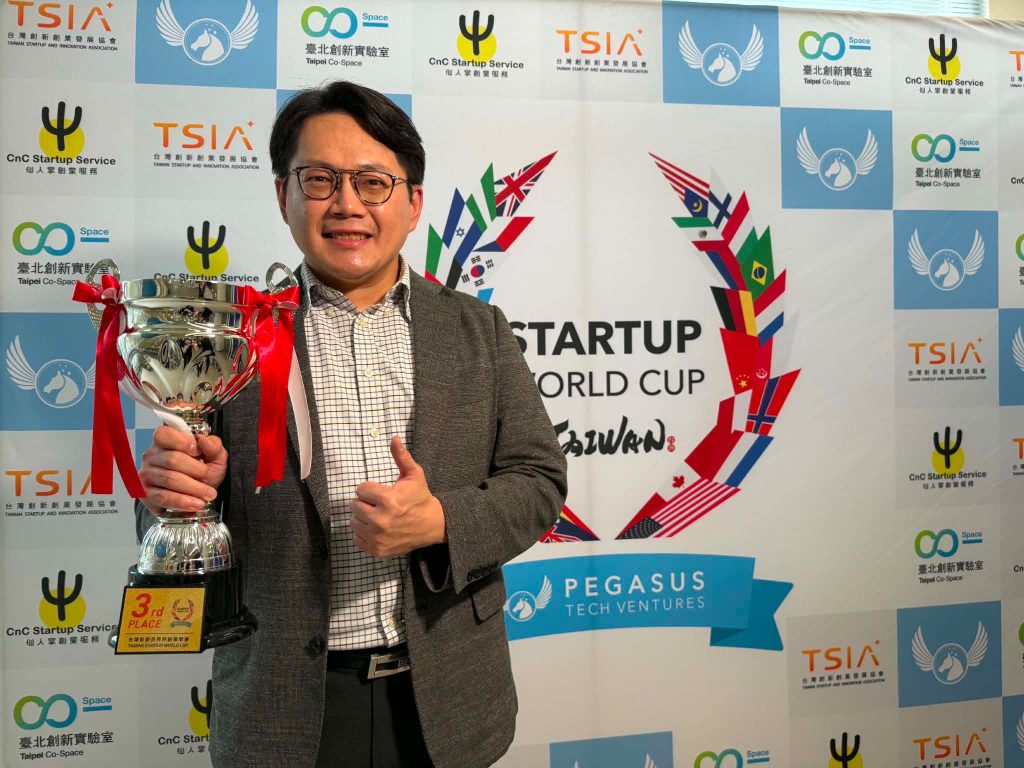
Top three finalists for the 2026 Taiwan Startup World Cup
The Grand Finale will be held in San Francisco in November
- Fluv Inc. is a pet care technology company that operates a platform connecting pet owners with specialized services. Its primary offerings include pet sitting, dog walking, at-home pet care, and pet grooming and bathing. The company also sells pet food and related supplies.

2. 星相科技股份有限公司 (Phasetrum Inc.)
- Phasetrum Inc. is a fabless semiconductor design company specializing in advanced high-frequency radio frequency chips. It focuses on phased-array and beamforming technologies, with its integrated circuit solutions used in satellite communications, automotive radar systems, and drone detection and communications.

3. 超術感醫學科技股份有限公司 (Xensur Medical Co., Ltd.)
- Founded in April 2025, Xensur Medical is a medical technology startup focused on data-driven, minimally invasive surgery training and artificial intelligence medical applications. Its mission is to improve physicians’ surgical skills and support the development of robotic cataract surgery.
Connecting startups with international markets
The Taiwan Startup World Cup Taipei is designed to provide more than a stage for startup pitches.
By bringing international judges, investors and startup ecosystem partners to Taiwan, the event gives local startups direct exposure to perspectives from different markets while creating opportunities for longer-term business and investment connections.
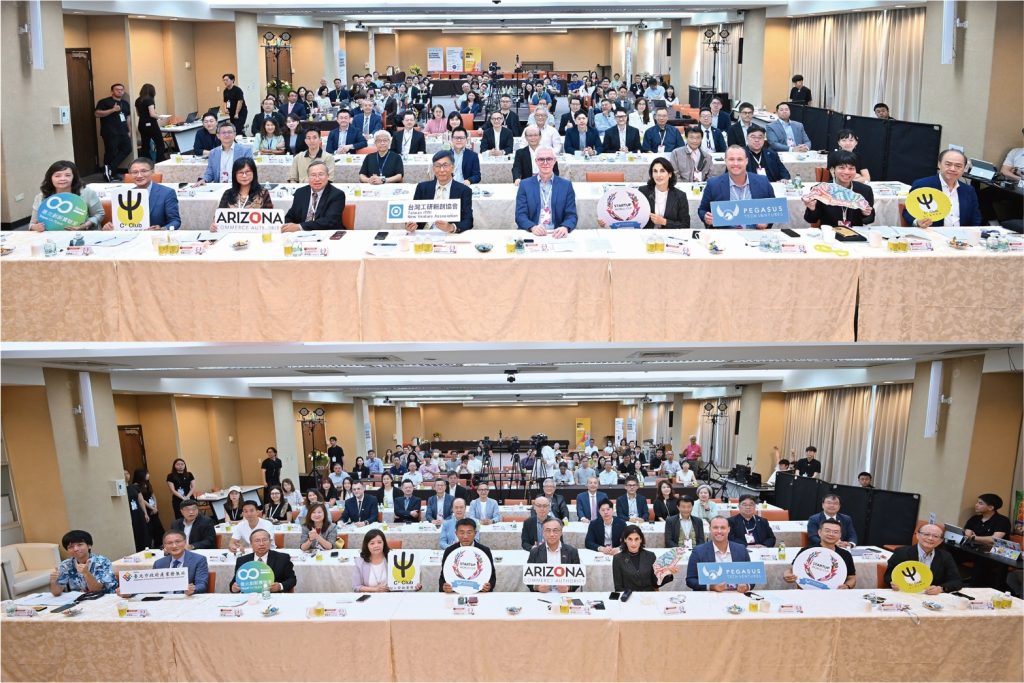
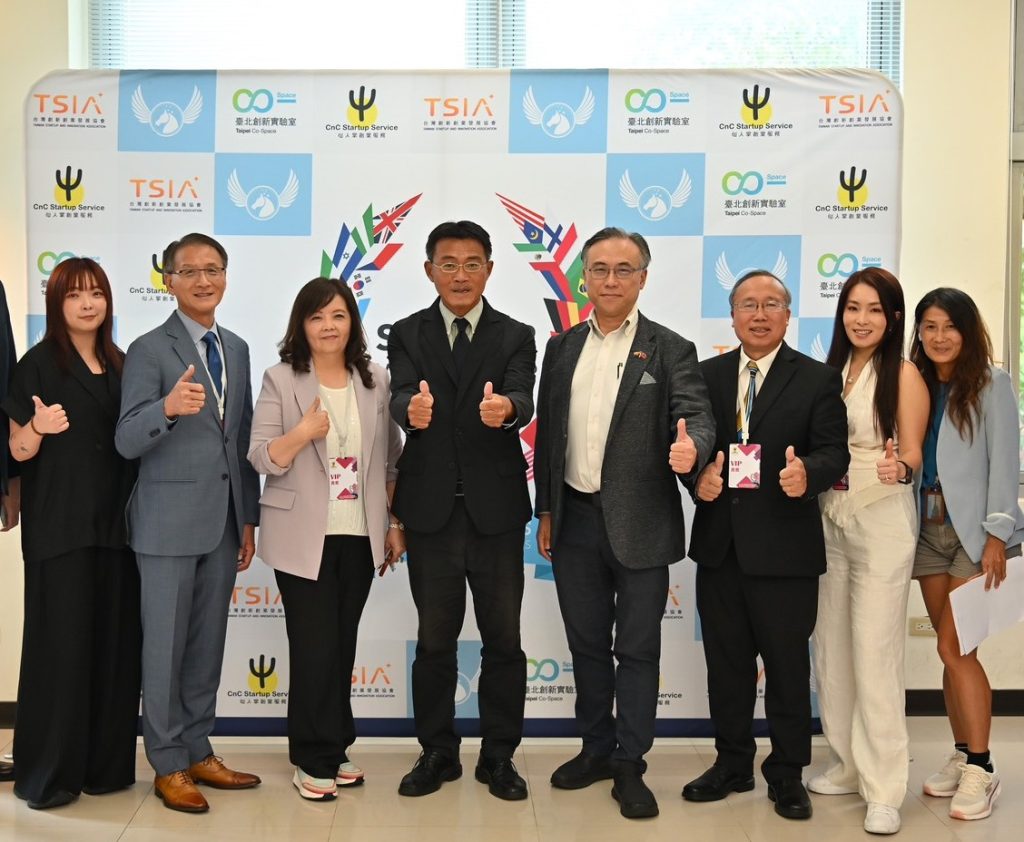
Bottom: Small and Medium Enterprise and Startup Administration (中企署) Director-General Lee Kuan-chih (李冠志) attends the 2026 TSWC Finals alongside international judges and industry guests.
For CnC Venture, which organized the Taiwan event, the broader goal is to connect promising Taiwanese startups with international markets, capital and overseas landing resources, helping companies move beyond the competition stage toward actual expansion.
The international composition of this year’s event reflected that focus, with judges and guests representing startup, investment and business networks across the U.S., Europe and Asia.
Government considers legal changes
The challenges discussed at the Startup World Cup also reflect broader questions facing Taiwan’s startup ecosystem.
Asked whether Taiwan’s own regulations create unnecessary difficulties for startups, Lee pointed to financial rules and intellectual property policy.
Many young companies are developing new approaches to payments and cash flow, placing them in areas where existing financial regulations may not adequately address emerging business models.
Lee said intellectual property rules must do more than protect patents and other assets. They should also make it easier for companies to put intellectual property to commercial use.
The government is preparing an overhaul of the Small and Medium Enterprise Development Act, with plans to turn it into a broader law covering the transformation and upgrading of small and micro businesses.
Lee said the government is considering provisions specifically designed to strengthen Taiwan’s startup ecosystem, including financing, tax incentives, research support, talent development and regulatory sandboxes.
Creating a successful startup economy, however, requires more than government funding or regulatory reform, he said.
Public agencies, private companies, universities, incubators and accelerators must work together to provide startups with the support they need to grow.
Taiwan should also judge its success partly by the number of overseas startups choosing the country as their base in Asia, Lee said, citing companies from the United States, Israel and Japan as potential targets.
From Taiwan to Arizona
One increasingly important international connection is developing between Taiwan and Arizona, where Taiwan Semiconductor Manufacturing Co. has made major investments.
In May, the SME administration and Kaohsiung City Government hosted a delegation led by Arizona Commerce Authority President and CEO Sandra Watson at Startup Terrace Kaohsiung. The visit focused on opportunities for cooperation in advanced manufacturing, emerging technology and the semiconductor supply chain.
Lee said TSMC’s expansion in Arizona could create opportunities for the smaller companies and startups that form part of Taiwan’s semiconductor supply chain.
Rather than entering foreign markets alone, Taiwanese startups can benefit from working together in industry clusters and participating in supply-chain partnerships, he said.
Taiwan’s established position in the global semiconductor industry could provide a foundation for building what Lee described as a “democratic supply chain” with international partners.
For startups taking part in the Taiwan Startup World Cup, that broader international network, connecting competition, investment, industry and overseas landing opportunities, could help turn a successful pitch into an opportunity to enter international markets.