
By Eryk Michael Smith. Images courtesy of Rueibin Chen.
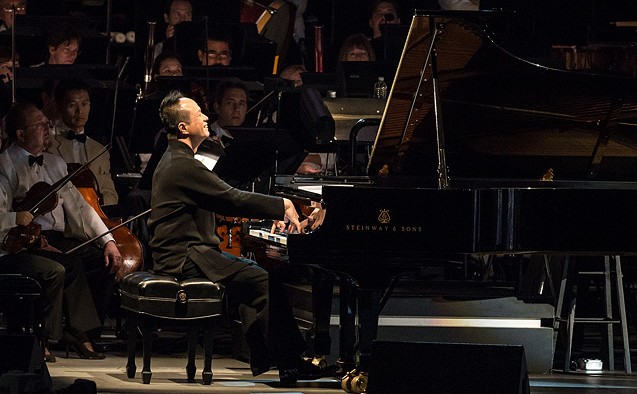
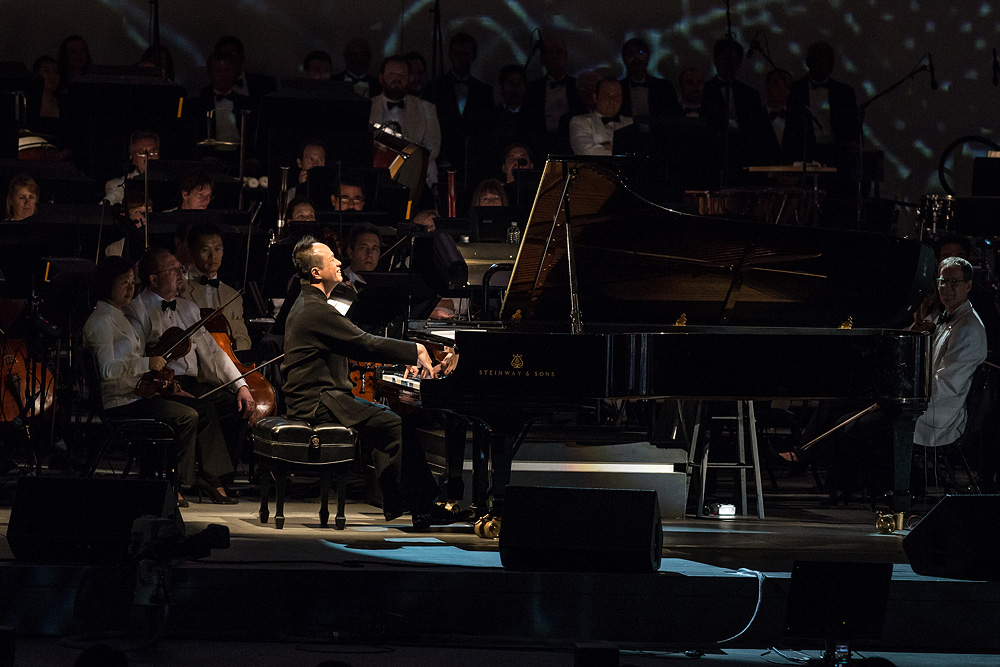
KAOHSIUNG — Watch a YouTube video of Rueibin Chen (陳瑞斌) performing and you’ll understand why a music critic from the Boston Globe wrote, “He plays with white-hot energy, steel-fingered power and athletic virtuosity.”
Chen is a modest person, joking that he hasn’t got the musculature to be described as “athletic.” When asked if performing with “white hot energy” could be attributed to a state of consciousness known as “flow,” he quickly agreed. “There could be 20 people or 20,000 people, I’m barely aware of them as the music takes over.”
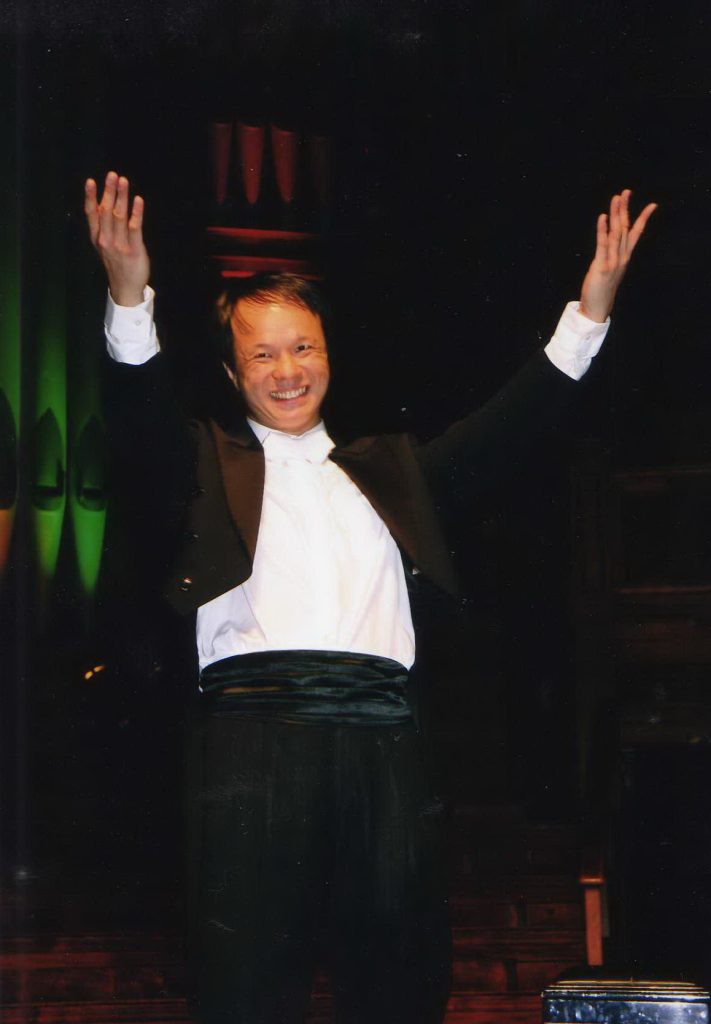
Chen has a backstory that would work well for a film. At 13, he left Taiwan for Vienna. His parents stayed behind as he entered a rigorous training system—the kind few young musicians today would be expected to endure.
“My parents basically had no idea what I was doing,” Chen said. “In the first ten years, I only made two phone calls a year. Letters back and forth would take months,” he recalled.
In an interview with Kaohsiung Times on April 3, Chen said he can’t imagine his career developing the same way had he stayed in Taiwan. He’s very fond of his native home, but also willing to be honest about the progress Taiwan still needs to make, acknowledging that “the system here hasn’t changed much in 30 or 40 years.”
He’s not a father, but said he almost certainly wouldn’t have left a 13-year-old to study alone and learn German from scratch. However, the experience forced him to mature quickly, he said, before adding after a pause, “maybe that’s what made me feel truly free.”
Now fluent in German, Chen joked (in English) about beginning to forget how to write some Chinese characters after decades abroad. But his early separation from Taiwan didn’t leave him deracinated. “My heritage is Taiwan… no matter where I go, the audience knows this,” he said.
Chen now frames his work explicitly as a form of cultural exchange, describing performances and projects that combine Western repertoire with Taiwanese and Chinese elements, such as his 2019 Taipei 101 New Year’s Eve show. He’s also proud of performances in Indonesia and elsewhere in Southeast Asia, where he has helped introduce classical European composers to new audiences.
That role extends beyond the stage. As a cultural tourism ambassador linked to Kaohsiung, Chen said he actively promotes Taiwan through his performances abroad.
“When I played at Lincoln Center in New York, people who hadn’t been back to Taiwan in 30 or 40 years were moved to tears,” he said. “And many Westerners who had never been to Taiwan wanted to visit after hearing the music.”
His programming often incorporates local themes into international settings. “My concept of ‘East meets West’ isn’t just about playing a concerto,” he said. “It’s about bringing Taiwanese elements into the ensemble, and presenting that to audiences overseas.”
Despite his global career, Chen remains closely tied to southern Taiwan, where he became involved in cultural projects around Kaohsiung’s Love River (愛河). “When the area reopened, I played there, at the docks, all over,” he said, referring to earlier redevelopment efforts along the waterfront. The iconic Kaohsiung waterway also inspired his Love River Concerto.
He sees the current moment as an opportunity, especially now: “When the world is so concerned with Taiwan, it’s a great opportunity,” Chen said. “I was born in Taiwan; no matter what, I am Taiwanese.”
Asked about the demands of training to become a world-famous concert pianist, Chen admitted that it does indeed require a level of effort that leaves little time for anything else. But he says training needs to be holistic. “Training is not just about technique. You must also build your mind, your confidence, and your identity as an artist. And you have to think about how to give back and pass skills on to the next generation,” he said.
Whether that next generation is willing—or allowed—to be taught is another question. Many in Taiwan still hope their children become doctors; artistic pursuits, even a classical musical education, aren’t always encouraged as a primary career path.
Chen definitely isn’t one of those finger-wagging “kids these days” people, but as he travels around the world, it seems clear that significantly fewer people are interested in fully devoting their lives to music.
A hero to Rueibin Chen is Franz Schubert, the great Austrian composer who lived in an area of Vienna just 15 minutes by tram from where Chen lives today. Schubert only lived to be 31, but he left the world some 1,500 works—music that continues to delight and inspire almost two centuries since he died in 1828.
“You know,” Chen said. “They say upon his death, Schubert’s possessions were a single pair of shoes. He gave his life to music. I’m amazed by this dedication. Not just time. Your whole life.”
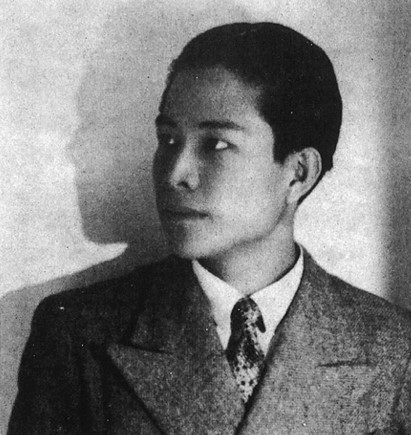
As the conversation wrapped up, Chen reiterated that he’s not only a fan of European composers, specifically singling out Jiang Wenye (江文也), also known as Koh Bunya こう ぶんや in Japanese, as another of his heroes. Chen often plays Jiang’s Formosan Dance (1936), as well as other of Jiang’s works.
Born in 1910 to Fujianese Hakka parents in Tamsui (淡水), Taiwan—then part of the Japanese empire—Jiang studied in Japan and eventually ended up in Beijing after being appointed professor of musical arts at the Teachers’ College. At the time, the area was under Japanese control, but when Japan surrendered in 1945, Jiang found himself suddenly a citizen of China. Unable to flee, he later became a citizen of the People’s Republic of China. He died in Beijing in 1983.
Rueibin Chen has agreed to appear as a guest on both the English and Chinese versions of the Taiwan history podcast Formosa Files to tell Jiang’s story in greater depth.