
By Eryk Michael Smith/KHT Staff. Images via Lai Jui-lung FB page, Wiki Commons.
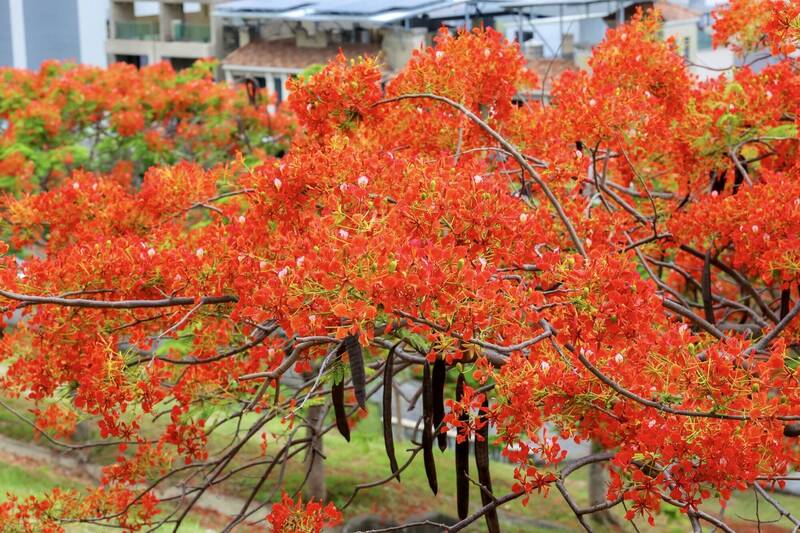
KAOHSIUNG — Flame-colored royal poinciana trees are blooming across the city, but especially in Siaogang District’s (小港區) Dapingding (大坪頂).
The trees, known in Chinese as fenghuangmu (鳳凰木), usually bloom from May to July. Their bright orange-red flowers make them a familiar seasonal sight in southern Taiwan. Recent visitors to “monkey mountain” or Shoushan/Chaishan might have noticed much more red (and variant colors) in the treeline than usual, thanks to flame trees.
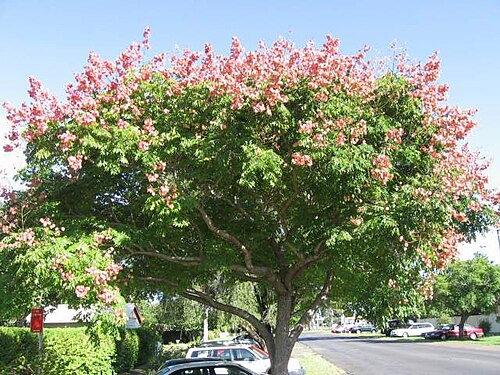
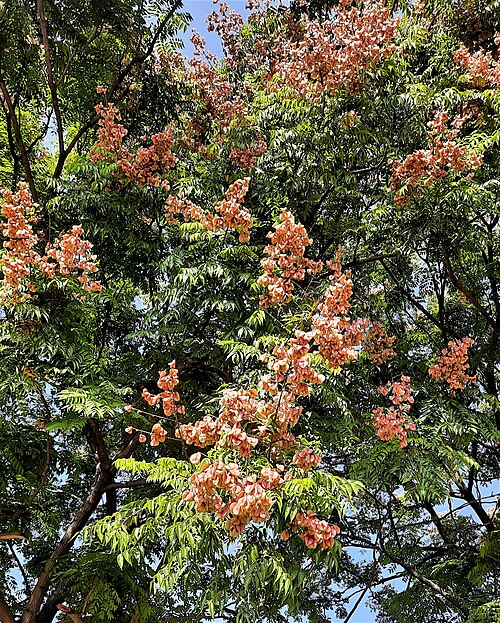
Democratic Progressive Party Kaohsiung mayoral hopeful Lai Jui-lung (賴瑞隆) recently highlighted the Dapingding bloom on Facebook, pointing to the area’s cafes, wooden walkways, and city views as a seasonal attraction. He said the trees were part of an earlier greening effort in Cianjhen (前鎮) and Siaogang that included planting Taiwan golden rain trees and royal poincianas.
Lai said the effort was tied to a broader push to plant 100,000 trees in the two districts, with work involving the city’s Public Works Bureau and state-owned enterprises.
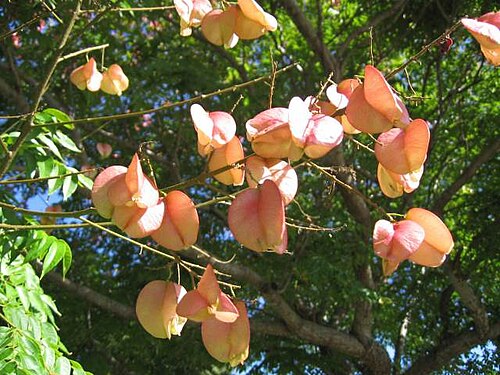
The flamegold rain tree has a subspecies that’s endemic to Taiwan: K. elegans ssp. formosana, sometimes called the Taiwan golden rain tree. The royal poinciana (Delonix regia), however, is native to Madagascar and was widely planted in tropical and subtropical regions for its broad shade canopy and dramatic summer flowers. It is also known internationally as the royal poinciana, flame tree, flamboyant tree, and in Taiwan, the phoenix tree (鳳凰木).
In Taiwan, the tree’s strongest historic association is with Tainan (台南). Historical accounts generally trace its introduction to the early Japanese colonial period. Some have apparently mistakenly attributed them to the Dutch period, but records indicate seeds were first provided to the Taiwan Governor-General’s Office by Japanese forestry scholar Honda Seiroku (本多靜六), then cultivated in official nurseries. Another account says early plantings in Tainan included official sites in Anping (安平), before the tree became part of the city’s streetscape.
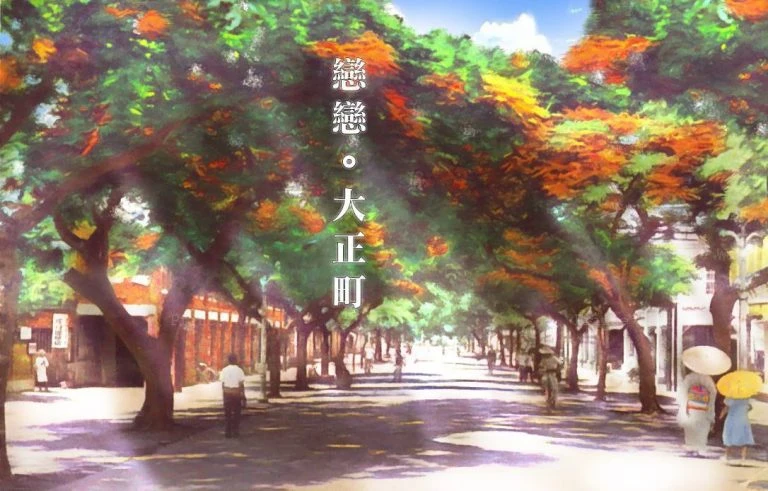
The tree later helped shape Tainan’s “phoenix city” image. In 1917, more than 100 royal poinciana saplings were planted along Taishocho (大正町), now Jhongshan Road (中山路), near Tainan Railway Station. As the trees matured, their summer flowers formed a red canopy that became one of the city’s best-known urban scenes, although much of that streetscape was, sadly, later removed for traffic reasons.
In 2014, Tainan adopted the royal poinciana as its official city tree, and the National Cheng Kung University (國立成功大學) includes the tree on its emblem.
In Kaohsiung, the Dapingding blooms show how a tree introduced from overseas more than a century ago has become a colorful part of southern Taiwan’s early summers. For several weeks, its flowers turn hillsides, campuses, and roadsides into flashes of red and orange well worth making a trip to see.