
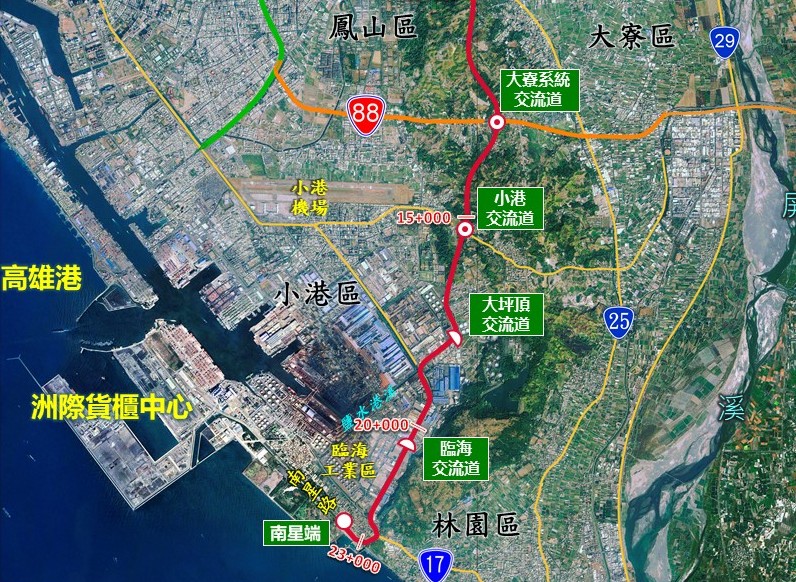
By RK Shih/Staff. Images via National Freeway Bureau, MOTC.
KAOHSIUNG — The long-delayed National Freeway No. 7 project is showing new signs of movement, with parts of the 23-kilometer Kaohsiung route entering the tendering process after years of planning, environmental review, and local opposition.
But the project has not yet crossed the finish line from paperwork to full construction. The Highways Bureau’s latest public update shows several sections are still under design, while others have only recently moved into public review or online tendering. Land acquisition also remains a major issue, with local reports saying negotiated purchases have reached about 70 percent.
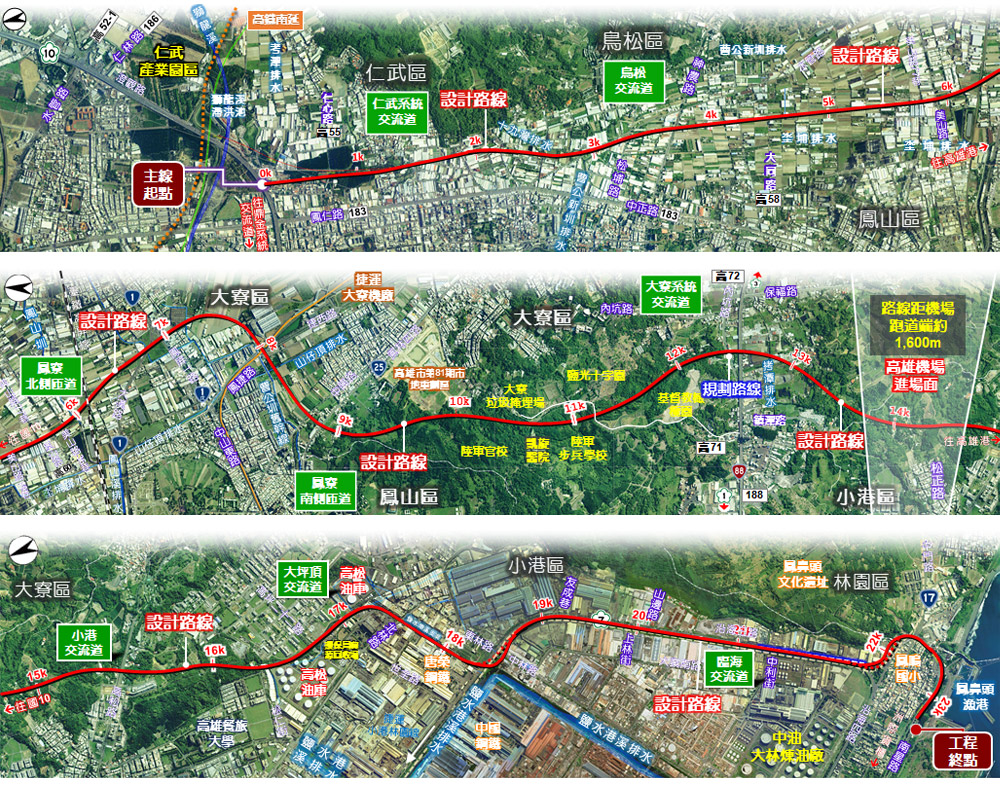
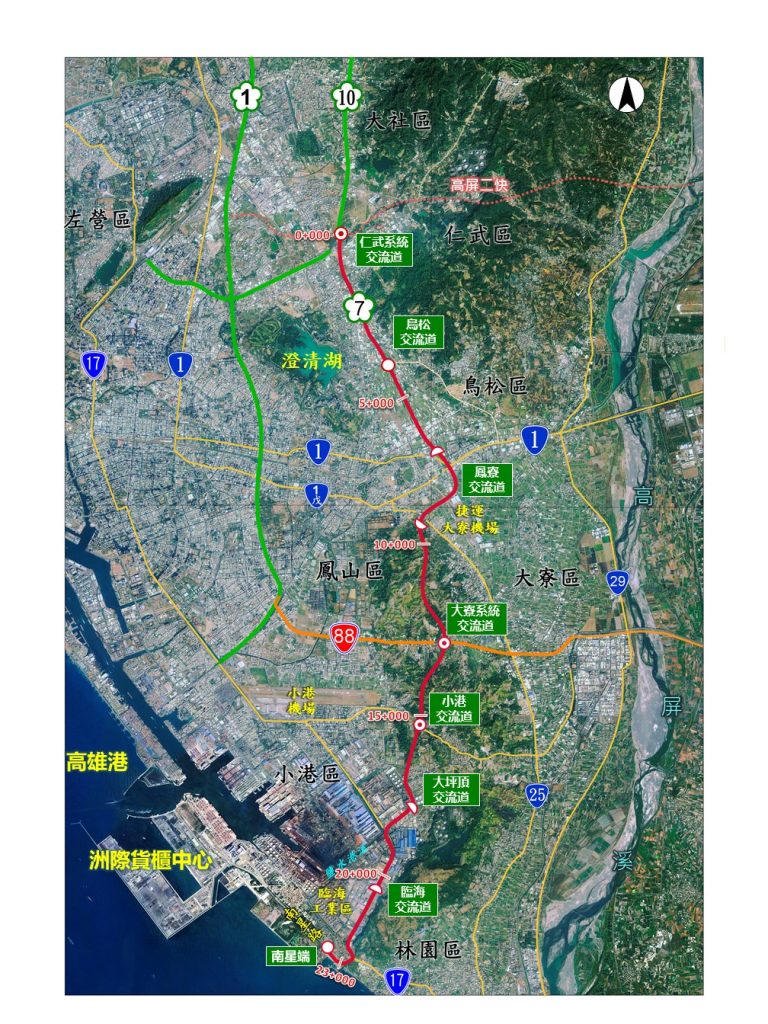
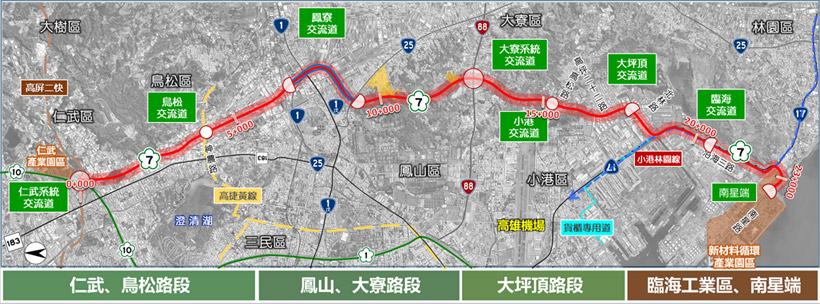
National Freeway No. 7’s Kaohsiung section is planned as a roughly 23-kilometer route from National Freeway No. 10 to Nansing Road (南星路), passing through or near Renwu (仁武), Niaosong (鳥松), Fongshan (鳳山), Daliao (大寮), Siaogang (小港), and Linyuan (林園). The route is designed to include five regular interchanges and two system interchanges, with completion currently listed for 2030, a timetable that many say is unrealistic. But, the freeway could open in stages as has happened for other such projects.
The budget has risen to about NT$150.17 billion, after the Executive Yuan approved a revised construction plan in August 2025 that added NT$14.38 billion because land acquisition costs were insufficient.
The Highways Bureau’s own procurement page shows the project has been divided into sections. As of its April 8 update, the C701S Renwu section and C702S Niaosong section were still under design; the C703S Fongliao section had undergone public review; the C705S Siaogang section had its first online tender announcement on Feb. 11, 2026; and the C706S Linhai section had tender announcements on Nov. 5, 2025, and Jan. 16, 2026.
The official rationale is that Freeway No. 7 would relieve traffic on National Freeway No. 1 south of Nanzih (楠梓), reduce pressure on the Dingjin (鼎金) and Wujia (五甲) system interchanges, ease backups between Provincial Highway 88 and Freeway No. 1, and move heavy industrial and port-related traffic away from urban roads.