
By KHT Staff
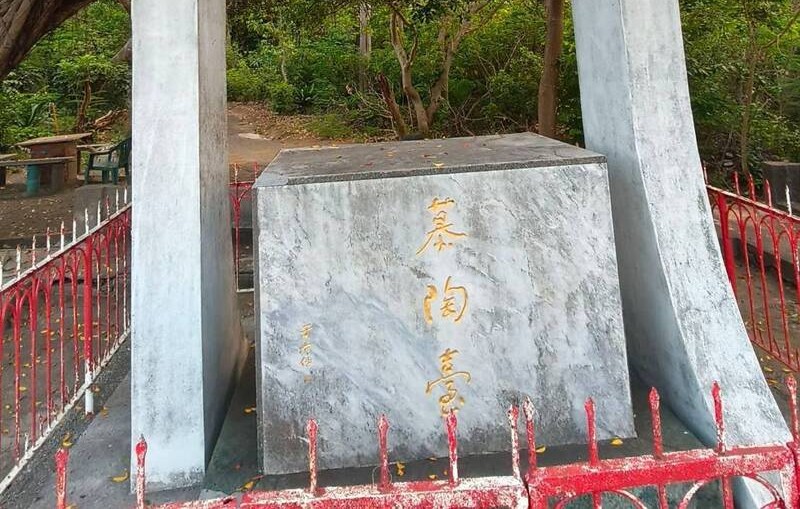
KAOHSIUNG — A white structure resembling a Japanese shrine gate at Cingshueiyan (清水岩) in Linyuan District (林園區) has inspired several explanations over the years. According to research highlighted by the Liberty Times, its name points to a physician with a love of poetry.
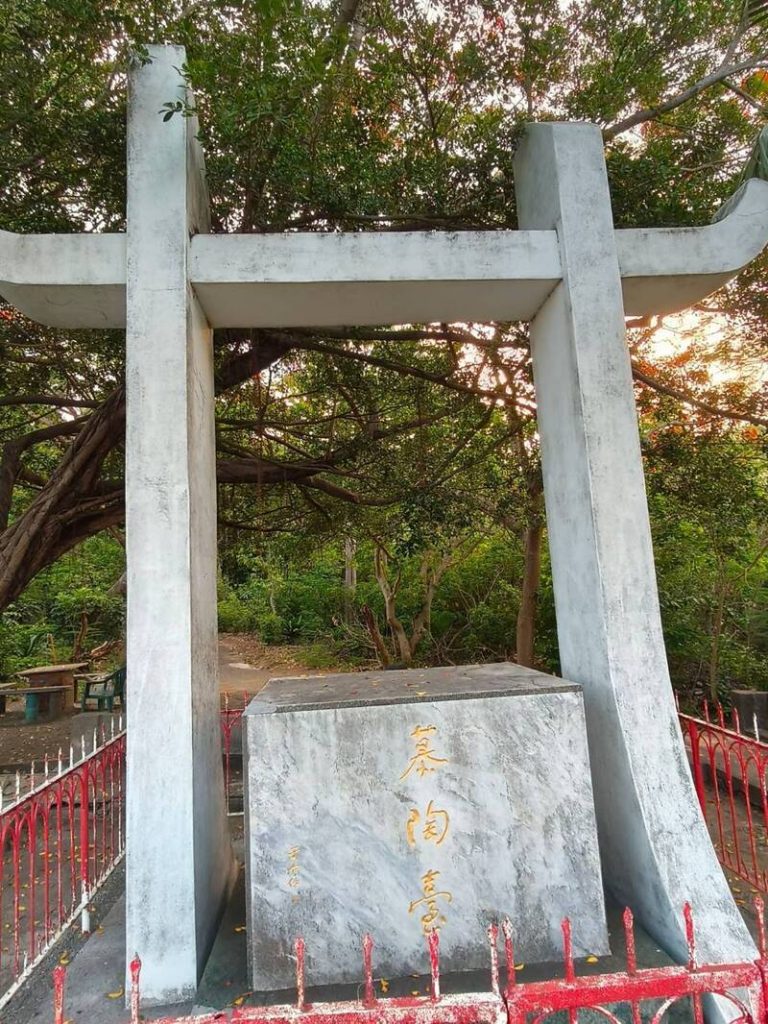
The newspaper reported Oct. 20 that Chung Yun Junior High School history teacher Chien Yi-lun (簡義倫) traced the name “Mutao Terrace” (慕陶臺) to Hsu Tsun-chin (許寸金), a doctor who practiced in Fongshan (鳳山).
“Mutao” was Hsu’s courtesy name, reflecting his admiration for the poet Tao Yuanming (陶淵明). Chien said he consulted medical association and church records to investigate the landmark, which some visitors had mistaken for a surviving shrine gate.
According to Chien’s account, Hsu’s children created the site as a memorial space for their father. The teacher linked its Japanese architectural appearance to Hsu’s years of study in Japan.
Other records support Hsu’s literary interests. A family biography preserved by the Taiwanese American Historical Society describes his fondness for poetry and admiration for Tao Yuanming. The National Taiwan University Library’s collection also lists his work Mutao Hsiao-chi (慕陶小輯). taiwaneseamericanhistory.org
The landmark’s association with Hsu predates the latest report. An older account of Cingshueiyan identifies the site as his burial place, suggesting its history was recorded even while other explanations circulated locally.