
By Eryk Michael Smith / Staff
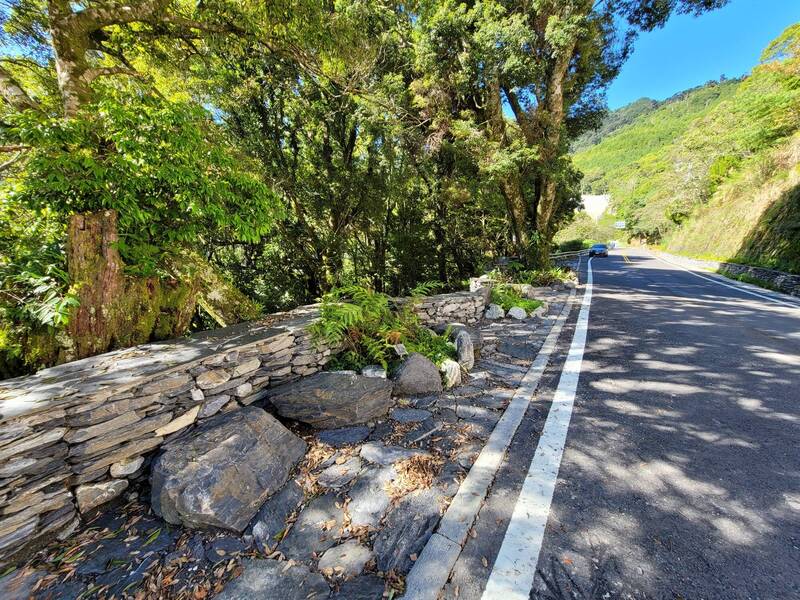
KAOHSIUNG — A stretch of Provincial Highway 20 (台20線), part of the Southern Cross-Island Highway (南橫公路) in Kaohsiung’s Taoyuan District (桃源區), has received national recognition at the 13th Taiwan Landscape Awards for integrating ecological restoration, Indigenous culture, and road safety improvements.
The awarded segment — known as “Forest of Time” (嵵榯之森) — covers 18K to 25K along the temporary 105 detour route of the Southern Cross-Island Highway (南橫公路), between Meishankou (梅山口) and Tianchi (天池).
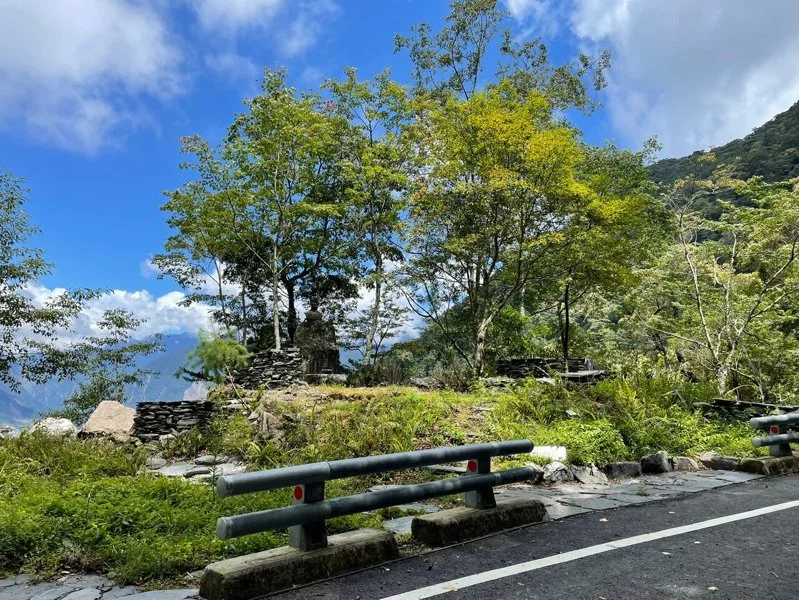
The section sits at elevations of roughly 1,600 to 2,200 meters along the Yushan Range (玉山山脈), an area formed between one and three million years ago by the collision of the Philippine Sea Plate and the Eurasian Plate. Its geology, including slate, phyllite, and metamorphosed sandstone, makes it highly prone to landslides.
In the 18th century, the Bunun (布農族) people migrated south from Nantou and became early settlers of the area. During the Japanese colonial period, authorities constructed the Guanshan Cross-Ridge Trail (關山越嶺古道), originally developed as a “pacification road” to manage Indigenous communities. Stretching roughly 171 kilometers from Liugui (六龜) in Kaohsiung to Guanshan (關山) in Taitung across the Central Mountain Range, it remains Taiwan’s longest historic mountain trail.
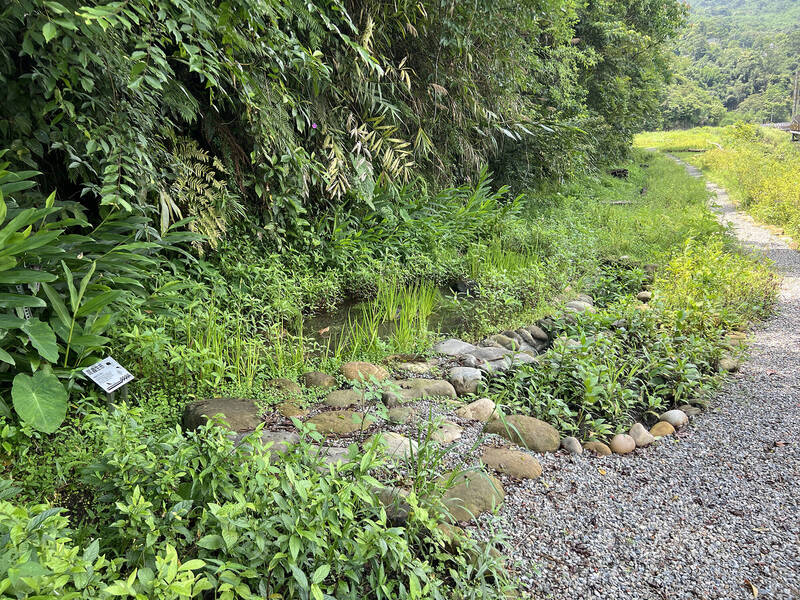
Parts of that corridor survive today as the Zhong Zhiguan Historic Trail (中之關古道), a 3.5-kilometer section between Zhong Zhiguan and Tianchi rebuilt by Yushan National Park and reopened in 1997.
After World War II, the Taiwan Provincial Government used the ancient trail corridor as the foundation for Highway 20, which opened in 1972. Construction was difficult and dangerous; in 1979, Changqing Shrine (長青祠) was built to commemorate 116 engineers and workers who died during the project.
The highway suffered severe damage during Typhoon Morakot in 2009, leading to a decade-long closure and reconstruction effort. Officials say the redesign of the 18K–25K section reflects lessons learned from that period, using slope stabilization, for example.
Stonework along the route now uses locally sourced slabs laid in a style reflecting Bunun (布農族) craftsmanship. Public spaces such as the plaza near Changqing Shrine at 25K and a memorial garden at 22.2K were also redesigned to blend into the surrounding mountain environment.
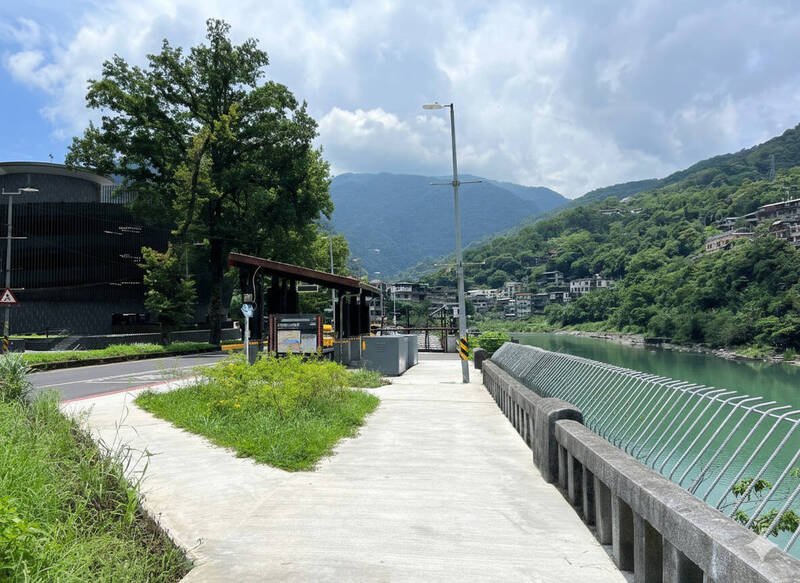
Highway officials said the award recognizes a broader shift from purely engineering-focused road construction toward a “green infrastructure” approach that emphasizes resilience, cultural memory, biodiversity, and human-centered design.
Sources: Liberty Times (自由時報), United Daily News (聯合報), Directorate General of Highways.