
By KHT Staff. Images via KH City Govt.
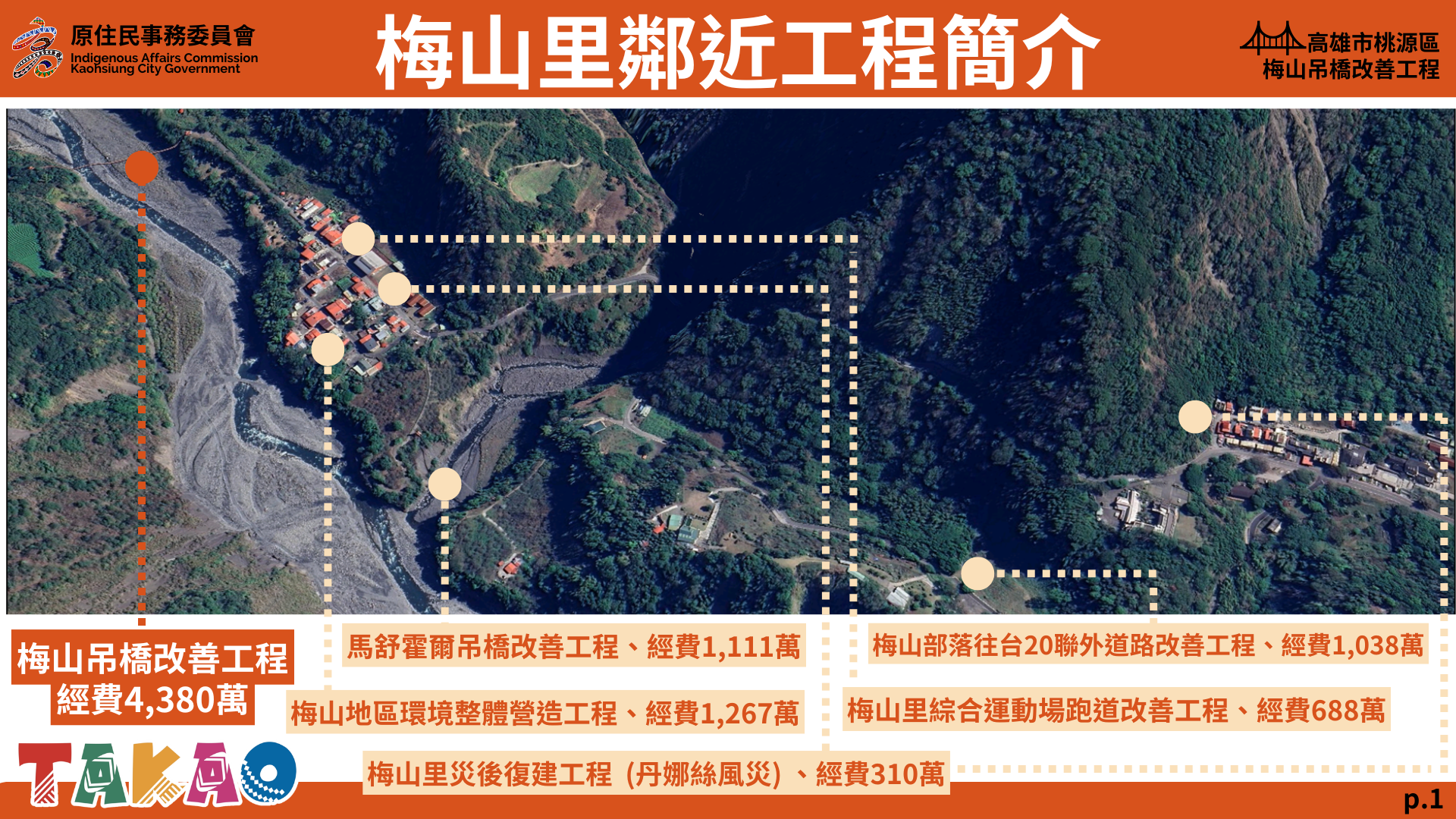
KAOHSIUNG — Reconstruction work has begun on the Meishan Suspension Bridge in Meishan Village (梅山里) in Kaohsiung’s Taoyuan District (桃源區), with city officials saying the project will strengthen transport access, improve disaster resilience, and support local agriculture and tourism after storm damage.
A temporary riverbed access road has already been completed for residents to cross and transport crops during construction. The project is expected to take eight months, with completion targeted before February next year.
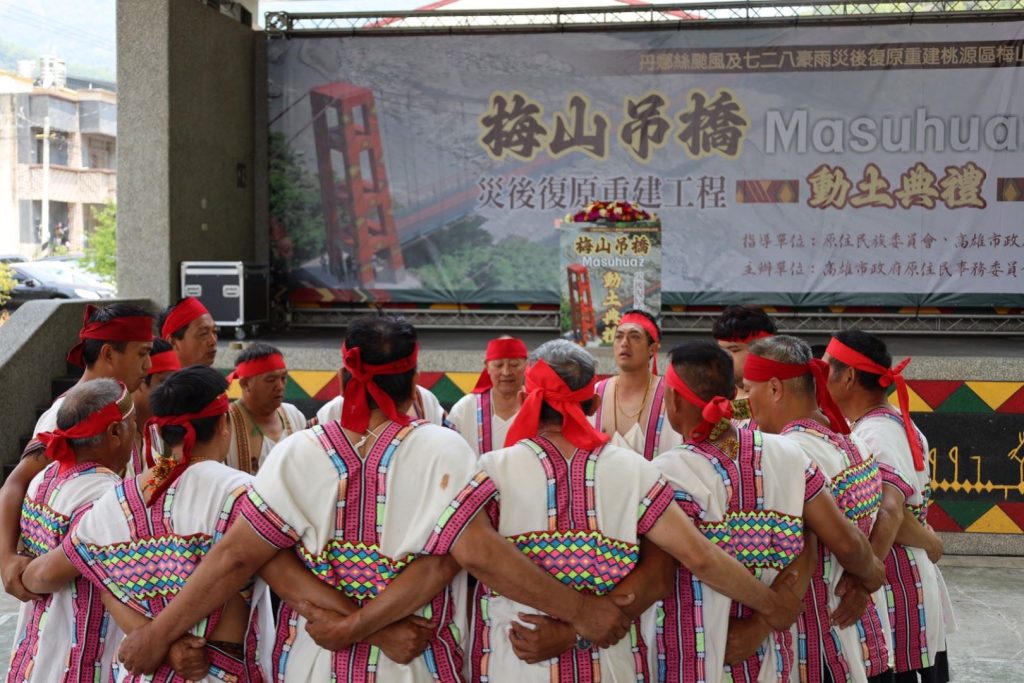
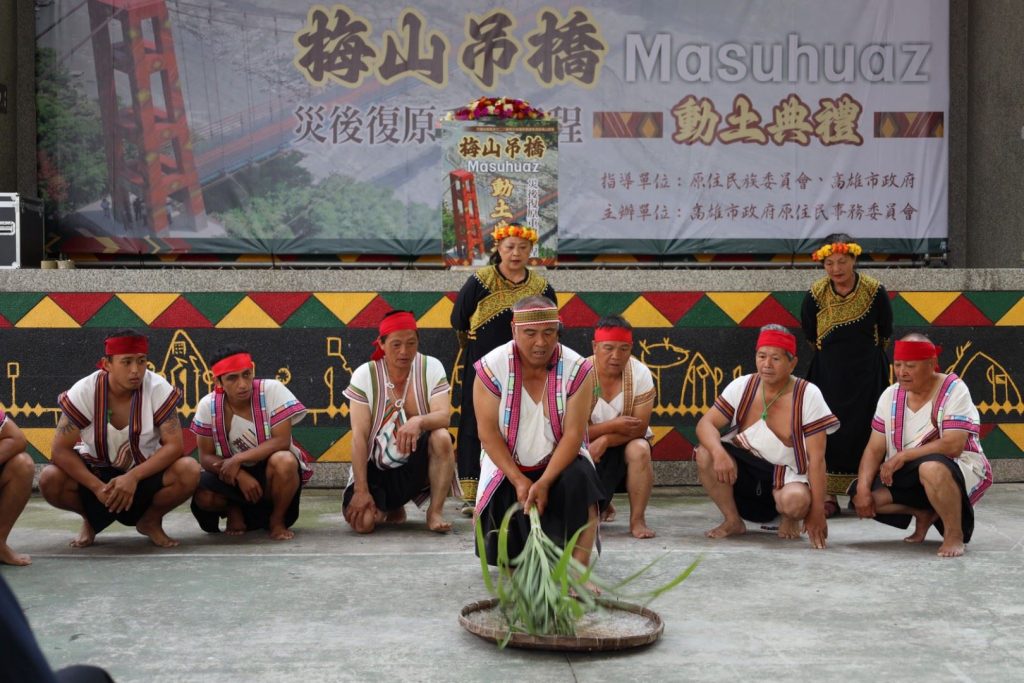
The groundbreaking ceremony was held on Tuesday at the Meishan sports field, where community members offered a blessing with a traditional Bunun eight-part harmony performance. The bridge was damaged by a typhoon and torrential rains last summer, according to the Kaohsiung City Government’s Indigenous Affairs Commission.
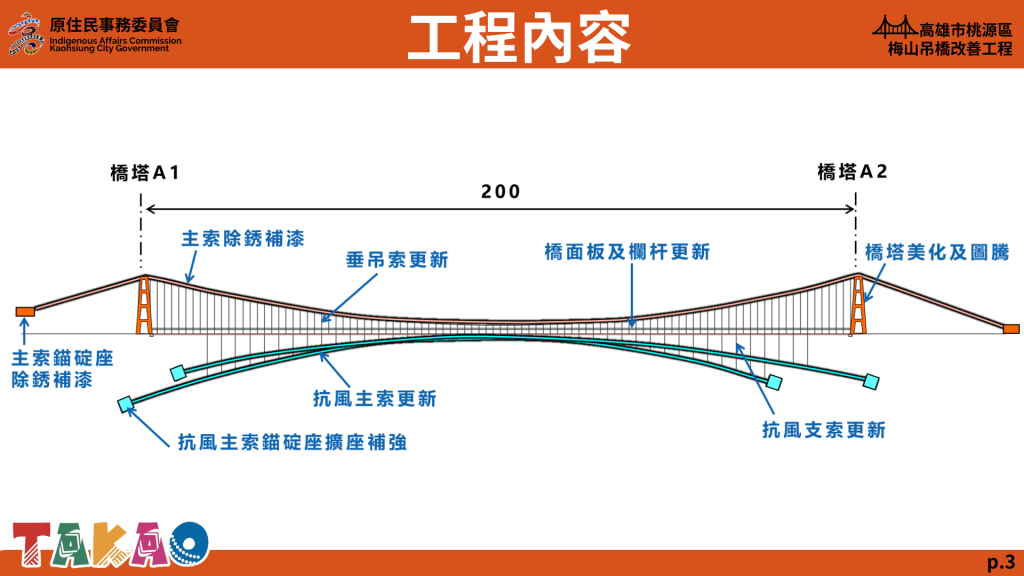
The NT$43.8 million reconstruction project will widen the bridge deck from 1.7 meters to 2.1 meters and allow it to carry small farm transport vehicles, trucks, and ambulances weighing up to 2.5 tons. Officials said the upgrade will improve the movement of crops and make travel safer for residents. The rebuilt bridge will also feature a stronger wind-resistant structure, added weighing and traffic signal systems, and Indigenous-themed visual elements.
Deputy Minister of the Council of Indigenous Peoples Kumu Hacyo (谷縱.喀勒芳安) said the central government had allocated NT$9.7 billion in special funding for Kaohsiung’s three Indigenous districts following Typhoon Danas, including NT$5.8 billion for Taoyuan District across 15 projects. The Meishan bridge reconstruction is one of those projects, he said.
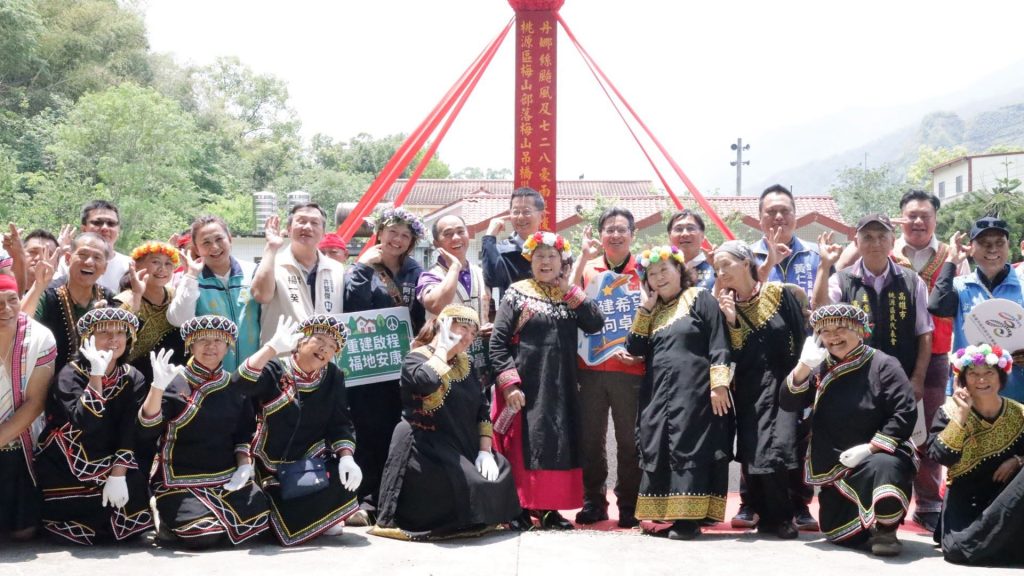
Kaohsiung City Councilor Kao Chung-te (高忠德), who lives in Meishan Village, said he was deeply moved to see new construction begin in his home community. He said the bridge is important not only for farm transport and daily travel, but also for long-term disaster prevention and the future development of small-scale agriculture and tourism in the area.
Aubs Takisvilainan (阿布斯), head of Kaohsiung’s Indigenous Affairs Commission, said many residents farm on the mountainside across from the bridge, growing green plums, red-fleshed plums, and high-mountain vegetables. He said the wider bridge will make it safer and easier for trucks and transport vehicles to move in and out, increasing shipping capacity and helping local industries.