
By KHT Staff. Images via Pingtung County Govt.
PINGTUNG — Coffee growers in Pingtung’s Indigenous townships are using the county’s terrain, climate, and local know-how to produce beans that are winning recognition both locally and nationally, according to the Pingtung County Government.
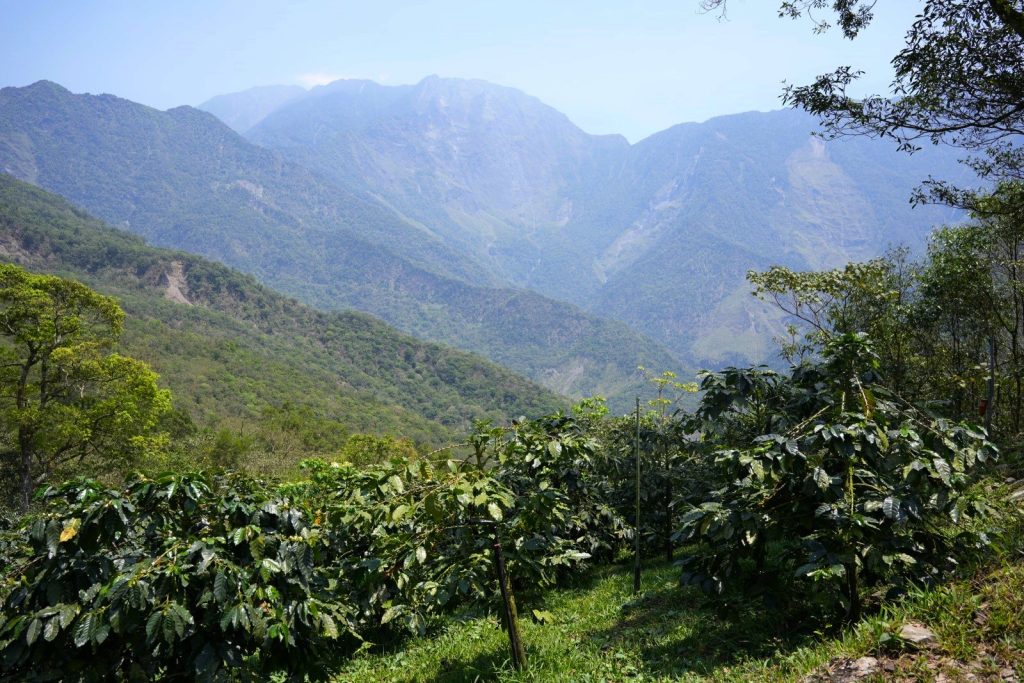
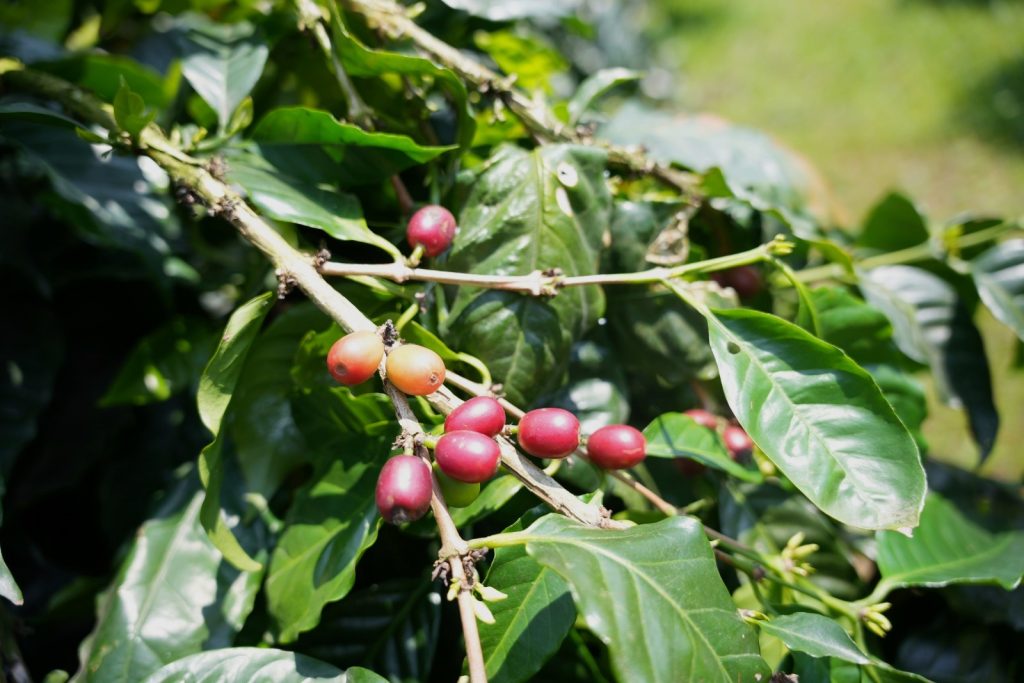
Pingtung is now one of Taiwan’s leading coffee-growing areas, and coffee has become an important industry in Indigenous communities. Through its annual premium coffee bean evaluation, the county says it has encouraged growers to adopt grading standards, improve quality, and raise market value.
One standout is Wangshang Coffee in Majia Township (瑪家鄉), a five-time Pingtung coffee evaluation champion. Its drying grounds are located on the Hengchun Peninsula, where owner Cho Yung-chang (卓永昌) has adapted a traditional local drying method to coffee processing.
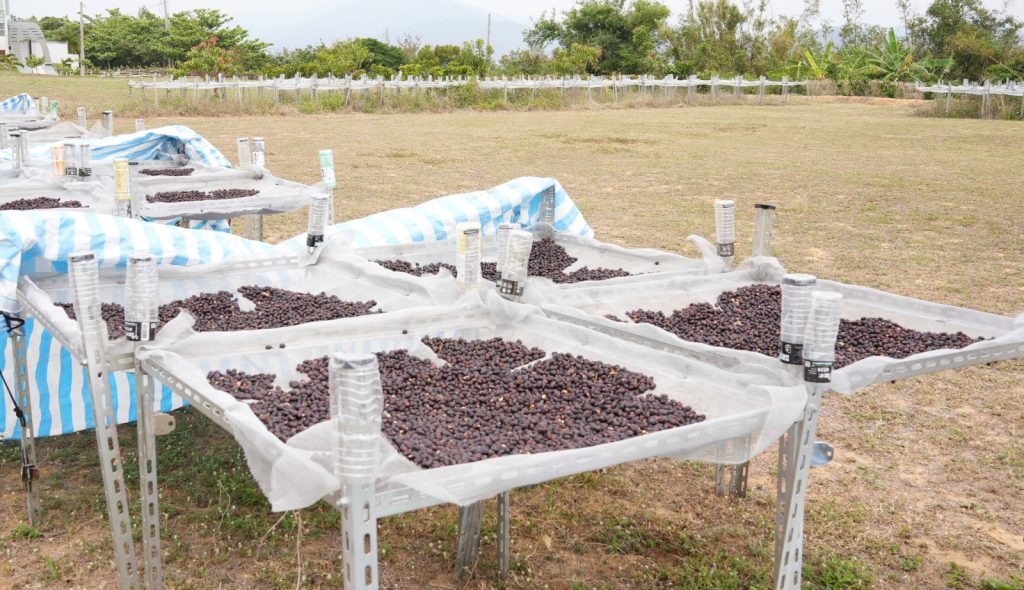
He said residents once used the strong seasonal luoshanfeng, or downslope winds, to dry betel nuts and later dried radish, and the same principle now helps dry coffee cherries naturally from November to April. After five years of experimentation, his Geisha coffee processed with the Hengchun wind-drying method earned special selection status in the Ministry of Agriculture’s Taiwan Coffee Assortment and Grading System.
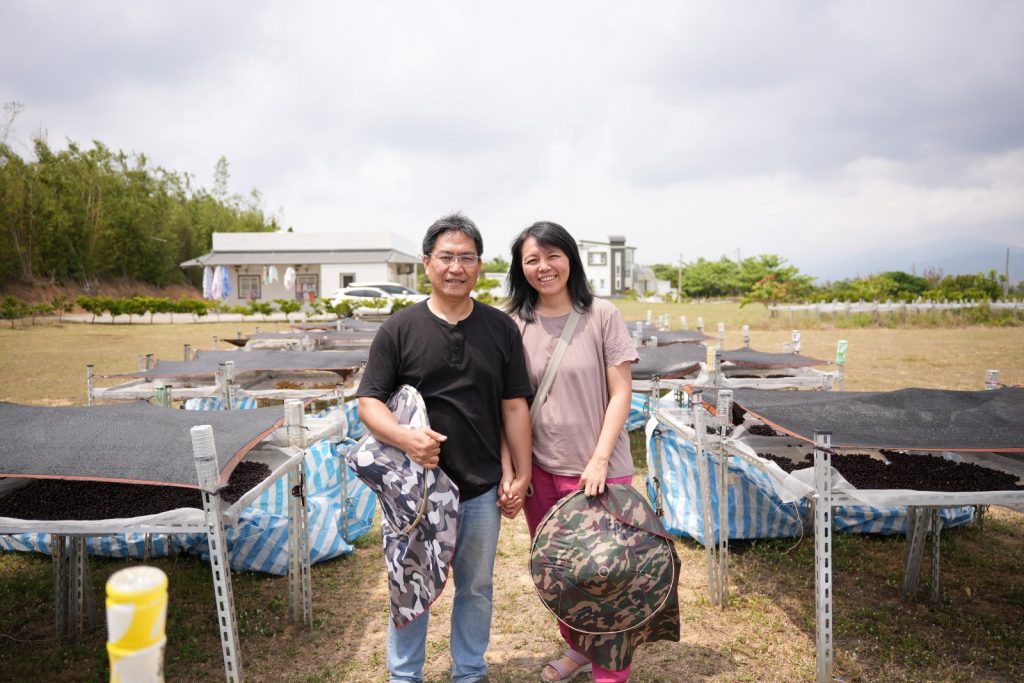
Cho said whole-fruit sun drying can be difficult in mountain growing areas because of clouds and humidity, forcing many farmers to rely on dryers that may damage flavor if temperatures are too high or the process moves too quickly. By contrast, he described the Hengchun wind as a natural drying system that helps prevent mold and produces a cleaner, richer flavor. He said strong varietals, natural farming, and better post-harvest processing have been key to competition success, though low yields and high costs remain a challenge.
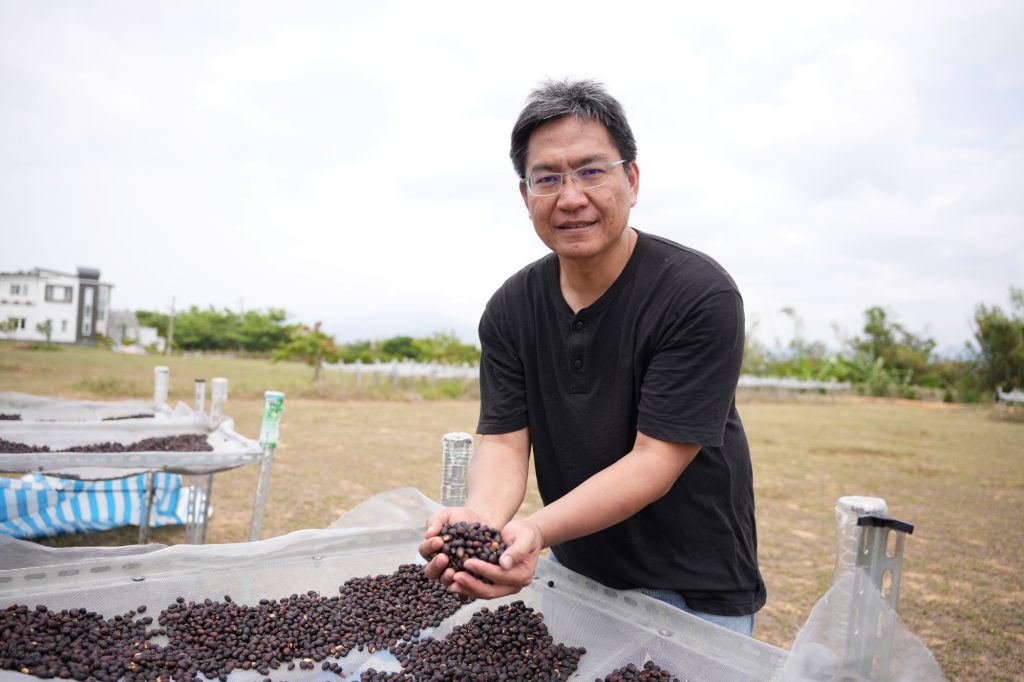
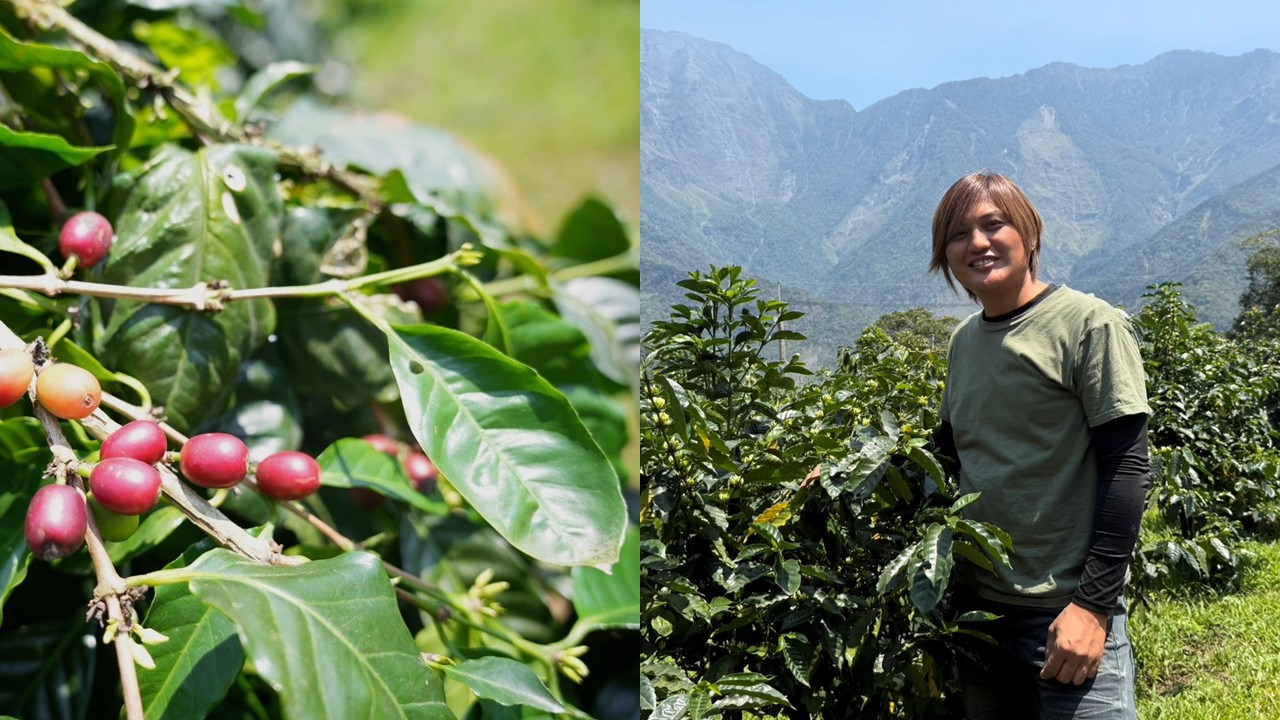
Another grower, Hsu Kai-lin (許鎧琳), runs Diwu Coffee Farm in Taiwu Township (泰武鄉) at an elevation of about 850 meters on the western side of Mount Dawu. Hsu returned home in 2013 after ending a career as a lighting technician and eventually moved from serving coffee to growing it.
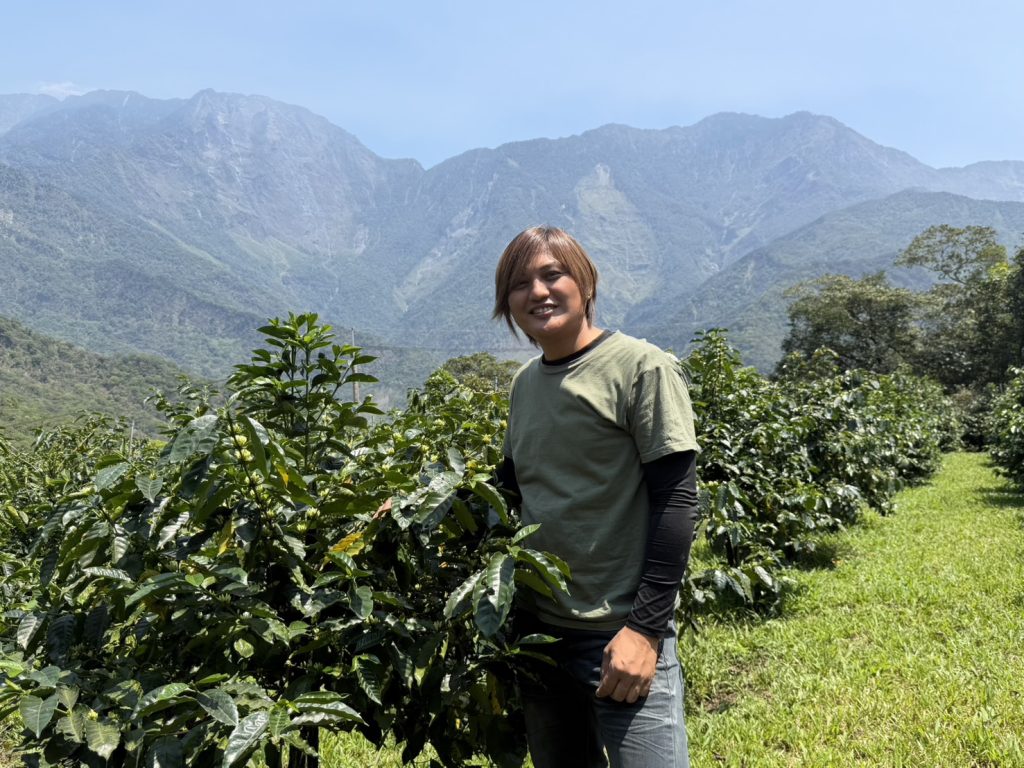
Hsu’s first year as a farmer was hit by severe drought, wiping out nearly all his newly planted seedlings, but he said support from the public sector and other resources helped him improve field management, and by his second year, he had already earned recognition in Pingtung’s coffee evaluation.
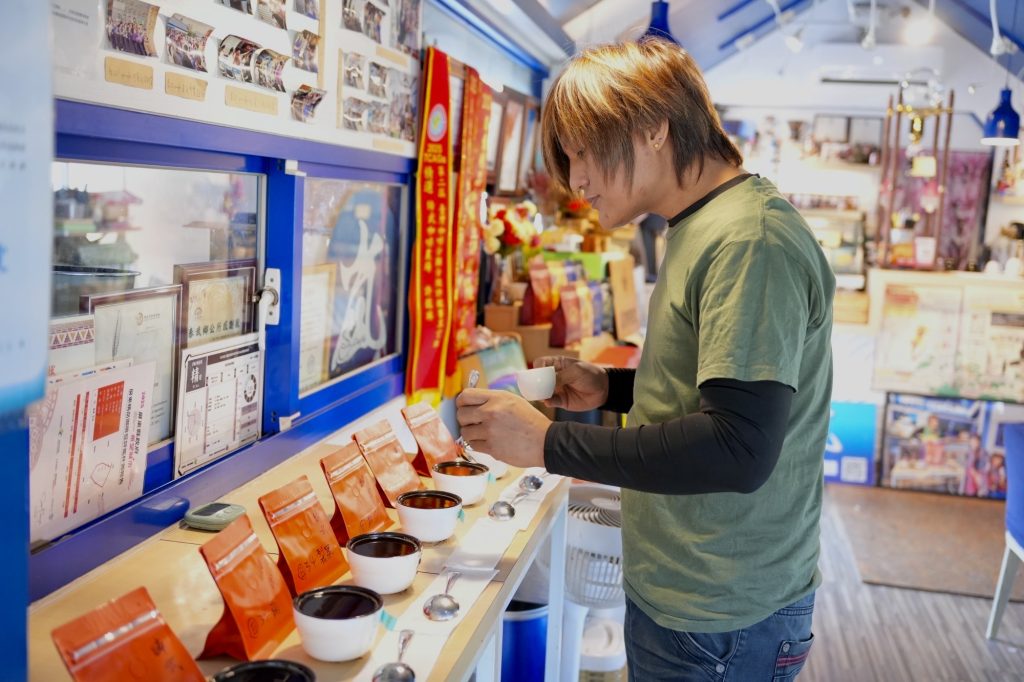
Compared with overseas coffee regions, he said, local culture can be a strong selling point. His farm has preserved a small number of Typica plants dating back to the Japanese colonial era, which he said helps create a historical connection for visitors, especially Japanese guests. He also offers tours to bring consumers closer to the place where the coffee is grown.
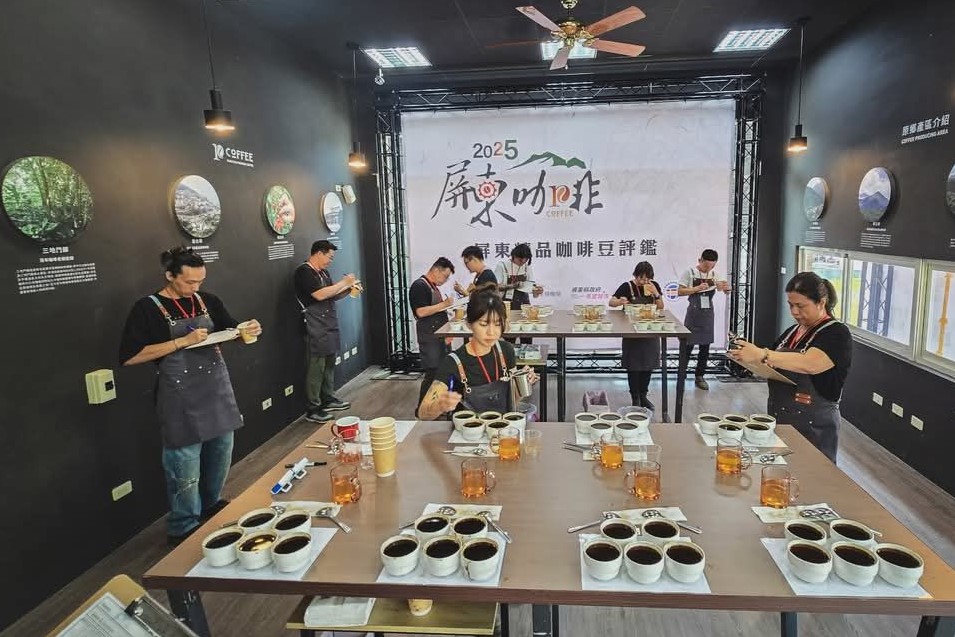
The county’s Indigenous Peoples Department said it has repeatedly taken high-quality coffee farmers and cooperatives to other cities and counties to promote Pingtung coffee, while continuing to organize the county’s premium coffee bean evaluation and buyer-matching events. This year’s evaluation begins April 29 and will run for three days, with judges selecting top prizes in several categories. A follow-up buyer-matching event will be held on May 2 at Pingtung Indigenous Goods Store, with a market and live music also planned.