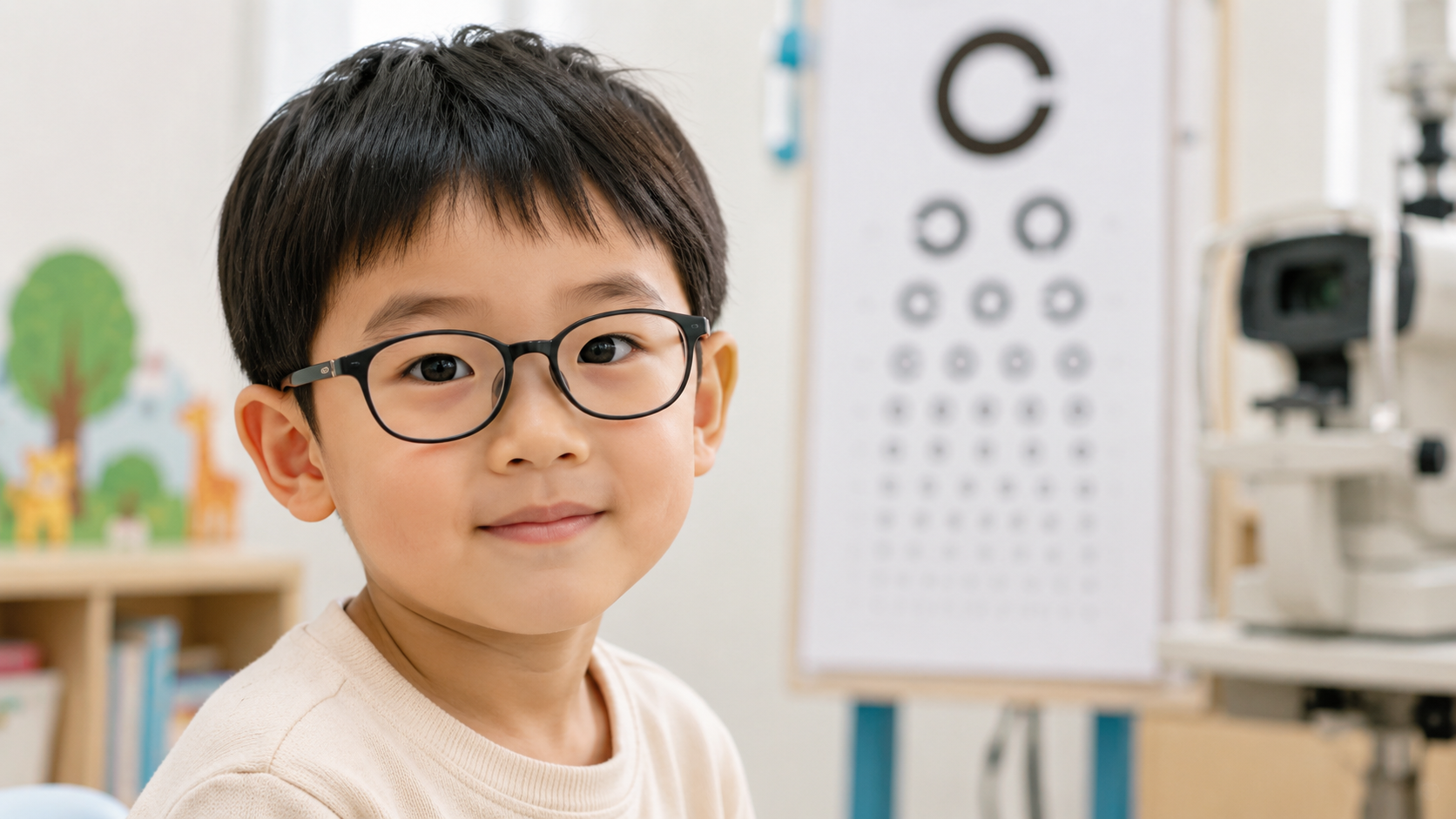
By KHT Staff. AI illustration image.
KAOHSIUNG — Nearly 60% of screened preschool children in a national pilot program have either myopia or signs of elevated myopia risk, according to the National Health Administration (國民健康署), UDN reported Thursday.
The agency said 14,570 kindergarten children were screened under the 2025-26 preschool vision-screening pilot program. Results showed 9.5% had already been diagnosed with myopia, while 48.5% were classified as being in a pre-myopia stage.
Combined, the figures mean about 58% of screened 5-year-olds were already near or inside a higher-risk category before entering elementary school.
The program was launched to move myopia prevention earlier, with ophthalmologists entering kindergartens to conduct cycloplegic refraction exams. The tests use eye drops to temporarily relax the focusing muscles of the eye, allowing doctors to better assess a child’s true refractive status and remaining farsightedness, often described as “hyperopic reserve.”
Health officials said the reserve is important because children may still appear to have normal vision on a standard eye chart while already showing signs that their eyes are lengthening too quickly.
National Health Administration Director-General Shen Ching-fen (沈靜芬) said Taiwan has a high prevalence of myopia, and that children who develop it earlier face a greater risk of severe myopia later in life.
Health officials warned that high myopia is not only a matter of thicker glasses. It can also increase the risk of cataracts, glaucoma, macular disease, retinal detachment, and vision loss.
The pilot program involved Taiwan University, the National Health Administration, and seven local governments. In Kaohsiung, the screening model used teams made up of ophthalmologists, optometrists, and nurses.
Other cities and counties used different approaches. Yunlin coordinated screening across kindergartens countywide, Tainan developed a joint screening model for rural areas, Taoyuan worked with local clinics, and Taichung used a LINE account to send eye-care information to parents.
Officials said parents should take part when kindergartens offer screening notices, and should not avoid the exam because of concerns over eye drops. Doctors said early screening, follow-up checks, more outdoor activity, and better daily eye habits can help reduce the risk of children developing more serious myopia later.
Source: United Daily News